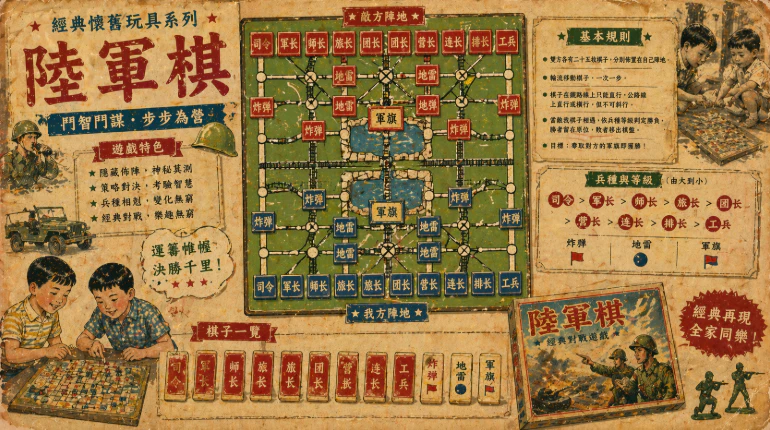

陸軍棋是一種結合策略與推理的經典棋盤遊戲,玩家在未知與隱藏中佈局與進攻,每一步都充滿判斷與心理博弈,展現思考的樂趣
Army Chess is a strategic board game built on hidden information and deduction, where every move involves anticipation, logic, and psychological play, creating a deeply engaging battlefield experience
中文
陸軍棋是一種以軍事對抗為主題的傳統棋盤遊戲,在華人社會中擁有長久的歷史與廣泛的玩家基礎,它不同於一般完全公開資訊的棋類遊戲,最大的特色在於棋子的身份在對局開始時是隱藏的,玩家需要透過記憶、推理與觀察來逐步掌握對手的佈局,遊戲開始前,雙方會在自己的陣地中安排不同階級的棋子,包括司令、軍長、師長以及工兵等,每個棋子都有其特定功能與強弱關係,而這些資訊只有自己知道,當棋子在棋盤上移動並與對方接觸時,才會揭示其身份並進行對決,這種設計使遊戲充滿不確定性與心理博弈,玩家不僅需要規劃進攻路線,也要保護關鍵棋子,避免在不利情況下被對手擊敗,陸軍棋的棋盤通常設有鐵路與公路兩種路徑,棋子的移動方式因路線不同而有所變化,增加了策略層次與變化性,特別是工兵可以在鐵路上自由移動,使其成為具有戰術價值的重要角色,遊戲的最終目標是奪取對方的軍旗,這一目標看似簡單,實際上卻需要經過多次試探與佈局,因為軍旗的位置隱藏在對方陣地之中,玩家必須透過不斷的探索與判斷,逐步逼近勝利,這種結合隱藏資訊與策略規劃的玩法,使陸軍棋不僅考驗運氣,更強調思考與決策能力,在過去的年代,陸軍棋常見於學校與家庭之中,孩子與朋友或家人對弈,在一來一往的對抗中培養邏輯思維與耐心,也學會面對勝負與調整策略,這種深度互動使遊戲具有長久吸引力,隨著電子遊戲的興起,傳統棋類的地位一度受到挑戰,但陸軍棋依然在許多玩家心中佔有一席之地,因為它提供的是一種無法被簡單取代的思考體驗,在每一次對局中,玩家都需要重新分析局勢、預測對手行動,並在有限資訊中作出決策,這種過程不僅是娛樂,更是一種智力訓練,回顧陸軍棋,我們看到的不只是棋盤上的對抗,而是一場關於觀察、推理與策略的思維競技,它提醒我們,在不確定中尋找答案,在變化中建立優勢,正是這款遊戲歷久不衰的核心魅力.
English Version
Army Chess is a traditional strategy board game centered on military confrontation, widely recognized across Chinese communities for its depth and complexity, what sets it apart from many other board games is its use of hidden information, where each player begins with their pieces concealed, requiring opponents to rely on memory, deduction, and observation to uncover the structure of the opposing formation, before the game begins, players arrange their ranks within their territory, including high-ranking officers, mid-level units, and specialized roles, each with distinct strengths and interactions, yet all of this remains unknown to the opponent until pieces engage in conflict, when two pieces meet, their identities are revealed and resolved according to predefined hierarchies, introducing an element of suspense and risk into every move, the board itself often features different types of paths, such as roads and railways, each affecting movement rules and adding layers of strategic planning, certain units have unique mobility advantages, allowing for unexpected maneuvers and tactical shifts, the ultimate objective is to capture the opponent’s flag, a goal that appears straightforward but requires careful planning, probing, and calculated risk-taking, as the flag’s location is hidden among the opponent’s pieces, players must gradually gather information, test defenses, and adapt their strategies as the game unfolds, this combination of hidden knowledge and strategic execution transforms Army Chess into a game of both intellect and psychology, where anticipation and deception play crucial roles, historically, the game has been a common presence in schools and households, offering a platform for players of different ages to engage in thoughtful competition, children learn logical reasoning, patience, and adaptability, while adults appreciate the mental challenge and depth, even as digital games have become dominant, Army Chess continues to hold relevance due to its unique ability to engage the mind in a tangible and interactive way, each match presents a new puzzle, requiring players to reassess, predict, and respond in real time, making it not only a form of entertainment but also a training ground for strategic thinking, looking back, Army Chess represents more than a game of pieces on a board, it is a contest of perception and decision-making, where success depends on understanding uncertainty and turning limited information into advantage.