
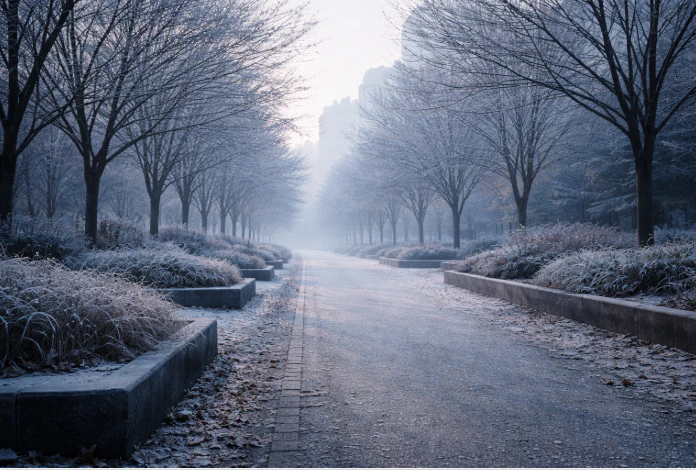
立冬|冬天開始與沉靜轉換 | Beginning of Winter | The Arrival of Stillness | 24節氣記憶系列 第19章

立冬,標誌著冬天正式開始。氣溫下降,萬物逐漸沉靜,城市與自然都進入一種收斂的節奏。
The Beginning of Winter marks the official arrival of the cold season. Temperatures drop, and both nature and the city enter a quieter, more restrained rhythm.
中文
立冬,是一個帶有明確分界感的節氣,它不像霜降那樣只是預示,而是正式宣告冬天的到來。當這一天出現,氣溫開始穩定地下降,冷不再只是清晨與夜晚的短暫感受,而是逐漸成為全天的主體。空氣變得乾冷而清透,風帶著明顯的寒意,吹過皮膚時讓人不自覺收緊身體。這種冷,與秋天的涼不同,它更直接,也更持續,使人無法忽視。立冬的光線也隨之改變,太陽的角度更低,日照時間縮短,白天顯得更加珍貴。陽光照在地面上時,帶著一種偏白的色調,缺乏夏天的溫暖感,卻多了一種清晰與銳利。影子變長,整個城市的輪廓更加分明,空間呈現出一種冷靜而理性的美感。城市中的節奏在立冬之後開始轉變,人們的活動逐漸減少戶外停留時間,更多時間回到室內,尋找溫暖與安靜。街道在傍晚變得較為冷清,商店的燈光顯得更加明亮,形成一種室內外對比。這種對比,使冬天的感覺更加強烈。對學生而言,立冬通常進入學期後段,天氣的寒冷讓人更加專注於室內活動,生活節奏變得穩定而規律。對上班族而言,立冬則是一種收束,年度的工作逐漸進入整理與結算階段,外在的寒冷與內在的收斂形成呼應。立冬同時帶著一種靜的力量,自然界的變化變得緩慢,樹木逐漸失去葉片,顏色退去,景象變得簡單而純粹。這種簡化,使視覺更加集中,也讓人更容易注意到細節。夜晚的立冬更加深刻,氣溫進一步下降,空氣變得乾燥而寒冷,聲音似乎被吸收,整個環境顯得格外安靜。這種安靜,不是空無,而是一種沉靜,讓人感受到時間的流動變得緩慢。立冬的記憶,往往與這種轉換有關,是從活動走向靜止,是從外在轉向內在,也是從熱鬧走向沉思。在這個節氣裡,人們開始重新安排生活,調整節奏,為接下來的寒冬做準備。立冬提醒我們,每一個季節都有其節奏,而冬天的節奏,是收斂、沉靜與內化。這不是結束,而是一種轉向,是為下一個循環所做的準備。
English Version
The Beginning of Winter represents a clear boundary within the seasonal cycle, marking not just a transition but the official arrival of winter. Unlike Frost’s Descent, which suggests an approach, this moment confirms the shift. As this period begins, temperatures drop more consistently, and the sensation of cold is no longer limited to mornings and evenings but becomes a constant presence throughout the day. The air turns dry and crisp, and the wind carries a distinct chill that prompts an immediate physical response. This cold differs from the coolness of autumn; it is more direct and sustained, making it impossible to ignore. Light also changes during this period. The sun sits lower in the sky, and daylight hours shorten, making each moment of brightness feel more limited and valuable. Sunlight appears paler, lacking the warmth of summer, yet offering a clarity that sharpens the visual environment. Shadows grow longer, and the outlines of buildings and landscapes become more defined, creating a calm and structured aesthetic. Urban rhythms begin to shift as well. People spend less time outdoors, gradually retreating into indoor spaces in search of warmth and comfort. Streets become quieter earlier in the evening, while indoor lighting becomes more prominent, emphasizing the contrast between interior warmth and exterior cold. This contrast intensifies the experience of winter. For students, this period often coincides with the later stages of the academic term, where routines are firmly established and focus turns inward. The colder weather supports a more stable and disciplined rhythm. For working adults, the Beginning of Winter signals a period of consolidation, as the year moves toward its conclusion and tasks shift toward completion and reflection. The external cold mirrors an internal sense of gathering and focus. This season also introduces a quiet strength. Natural changes slow significantly, trees lose their leaves, colors fade, and the landscape becomes simpler and more minimal. This simplicity draws attention to structure and detail, offering a different kind of visual clarity. Nights during this period deepen the experience. Temperatures drop further, the air becomes even drier, and the environment grows noticeably quieter, as if sound itself is softened by the cold. This quietness is not emptiness, but a form of stillness that allows for reflection. The memory of this season is often tied to this transition—from activity to stillness, from outward engagement to inward focus, from liveliness to contemplation. During this time, people reorganize their lives, adjust their pace, and prepare for the deeper cold ahead. The Beginning of Winter reminds us that each season carries its own rhythm, and winter’s rhythm is one of contraction, quietness, and internalization. It is not an ending, but a turning point, a preparation for the next cycle to come.