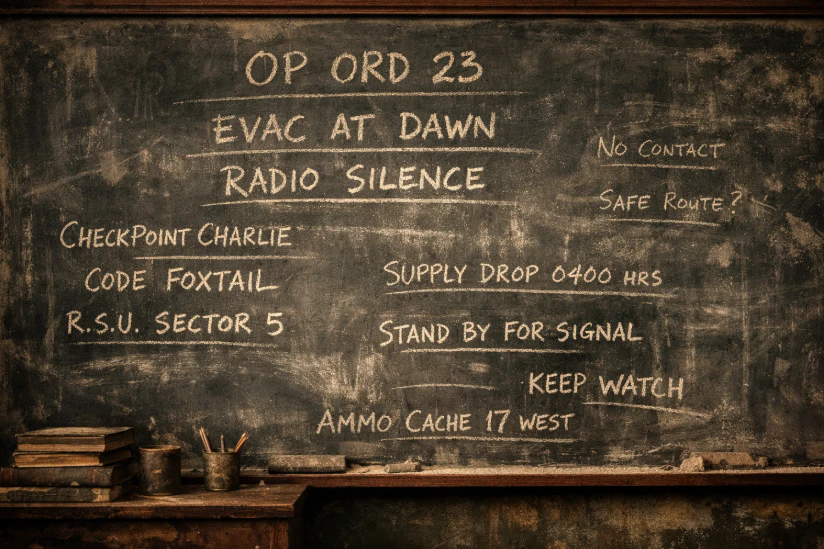

在一些歷史悠久的學校裡,黑板不只是教學工具,更像記錄時間的載體。有時候課室裡會出現一些不像現代語言的字跡,沒人知道是誰寫下,也無法完全解讀,留下無數想像空間。
In certain aging schools, blackboards seem to hold more than lessons. Unfamiliar markings occasionally appear—symbols that resemble no known language. Their origins remain unclear, inviting curiosity, unease, and endless speculation.
中文
在一些有歷史的學校之中,最普通不過的黑板,往往成為最奇怪的存在,尤其是那些已經使用了幾十年甚至接近百年的課室,牆壁可能翻新過,桌椅換過幾代,但黑板卻一直留在原位,像一個沉默的見證者,有人說黑板只是工具,但也有人覺得,它更像一種「記錄」,記錄著不同年代的學生、老師,甚至一些不屬於任何人的痕跡,有傳聞指,在某些舊校舍中,夜晚或清晨時分,黑板上會出現一些並非當天課堂留下的字跡,那些字不是常見的中文、英文,也不像數學公式或塗鴉,更像某種無法理解的符號,有時像古老文字,有時像隨意劃出的筆畫,但排列卻帶著某種規律,令人難以用「惡作劇」去解釋,有學生曾經在早上回到課室,發現黑板一角出現密密麻麻的細小字體,像是用粉筆寫成,但顏色比一般粉筆更淡,甚至有點像灰塵拼湊而成,老師擦掉後,第二天又在另一個位置出現,內容完全不同,卻同樣無法理解,有人試過拍照記錄,再逐個比對,發現這些字跡之間似乎沒有直接關聯,但某些符號卻會重複出現,像是一種未被認知的語言系統,亦有人認為這只是心理作用或光影錯覺,但當越來越多人在不同時間、不同班級看到類似現象時,事情就變得難以單純解釋,有些舊教師會低聲提起,以前學校還未翻新時,這些情況更常見,甚至有傳說指某些課室曾經在戰亂或特殊時期被用作其他用途,而黑板上留下的「字」,可能並非來自學生,而是某些過去留下的訊息,也有人提出另一種說法,認為這些符號其實是人類大腦在特定環境下產生的「補完」,當黑板表面出現磨損、粉塵殘留或細微裂痕時,人會不自覺將其解讀成有意義的圖案,就像看雲時會看到形狀一樣,但這種解釋仍然無法說明,為何不同人看到的內容會如此相似,甚至能夠描述出接近的排列方式,有些學生開始嘗試模仿這些字跡,把它們重新畫在紙上,卻發現很難完全重現那種「自然出現」的感覺,線條總是多了一點刻意,少了一種奇怪的流動感,也有人試過在黑板上刻意留下一些模糊的粉筆痕跡,希望觀察是否會「延續」出更多符號,但結果大多只是普通的污漬,沒有出現任何規律變化,隨著時間過去,這些現象並沒有被正式記錄或研究,更多只是流傳於學生之間的故事,有人當作笑談,有人卻記得很深,甚至多年後回想起來仍然覺得不安,特別是當你意識到,那些字並不是寫給任何人看,也不是為了傳達清晰的意思,它們只是「存在」在那裡,像某種被遺留下來卻無法被解讀的痕跡,而真正令人不安的,或許並不是那些看不懂的符號,而是當你站在黑板前,忽然有一瞬間覺得,那些字其實正在被「慢慢寫出來」,只是你無法確定,是誰在寫,亦無法確定,那些內容,是否本來就不屬於我們理解的範圍
English Version
In certain old school buildings, the blackboard often becomes more than a teaching surface—it turns into something quietly unsettling, especially in classrooms that have existed for decades, where generations of students have come and gone while the board itself remains unchanged, absorbing layers of chalk, erasures, and time, and although most would assume it is nothing more than a functional object, there are stories suggesting otherwise, accounts describing how unfamiliar markings occasionally appear without explanation, not written during lessons and not resembling any known language, these markings are neither English nor Chinese, nor are they equations or doodles, instead they seem like fragments of an unknown system, sometimes resembling ancient scripts, sometimes abstract strokes arranged with an odd sense of structure, making it difficult to dismiss them as random, there have been instances where students entered a classroom early in the morning only to find the board partially filled with faint, intricate symbols, almost as if formed from dust rather than chalk, and even after being wiped clean, similar markings would reappear in different areas on subsequent days, always different yet strangely consistent in style, some tried documenting these symbols, comparing photographs over time, noticing that certain shapes repeated while others evolved, suggesting a pattern that never fully revealed itself, skeptics argue that such experiences can be explained by perception, that the human brain tends to impose meaning onto randomness, especially on worn surfaces filled with residual chalk and scratches, much like seeing figures in clouds, but this explanation begins to falter when multiple individuals report seeing nearly identical arrangements independently, as if they were all interpreting the same invisible template, older teachers sometimes acknowledge these stories quietly, recalling that before renovations, such occurrences were mentioned more frequently, and in some versions of the story, the classroom itself once served a different purpose long before it became a place of learning, raising the possibility that what appears on the board may not originate from present-day activity at all, others approach it from a psychological perspective, suggesting that memory, suggestion, and environment combine to create a shared illusion, yet even then, it does not fully account for the consistency in description across different witnesses, some students have attempted to replicate the markings manually, sketching them onto paper or recreating them on the board, but they often find that something is missing, an intangible quality in the original forms that feels less deliberate, more organic, as if they were not drawn but emerged, experiments to trigger further appearances—leaving partial chalk traces or observing the board over extended periods—have yielded nothing beyond ordinary smudges, and so the phenomenon remains unverified, undocumented, and unresolved, existing somewhere between rumor and memory, dismissed by some and quietly remembered by others, and perhaps what makes it linger is not the mystery of what the symbols mean, but the unsettling possibility that they were never meant to be understood, that they are not messages in the traditional sense, but traces of something that simply exists alongside us, unnoticed most of the time, until one moment, standing alone in a quiet classroom, you begin to feel as though the board is not just holding marks from the past, but is in the process of receiving them, slowly, silently, from a source you cannot see and cannot name