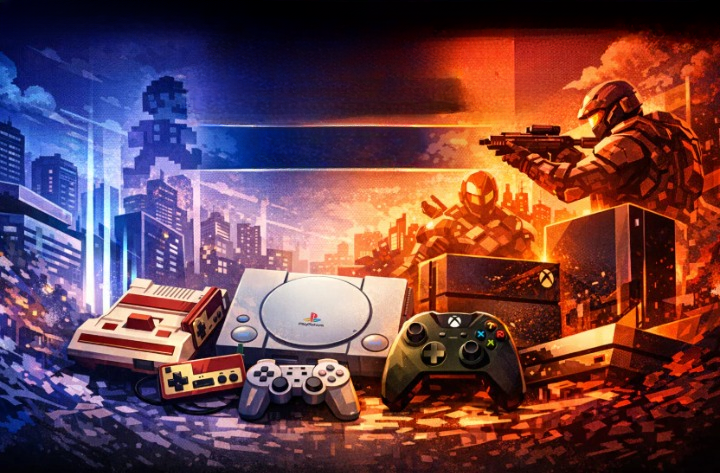
從紅白機到現代主機,平台之間的競爭不只決定市場,更深刻影響遊戲內容、技術發展與玩家文化。
From early consoles to modern platforms, competition has shaped not only the market but also game design, technology, and player culture.
中文正文(約1000字|不分段)
所謂「主機戰爭」,並不只是硬體銷量的競爭,而是一場關於生態、內容與未來方向的長期博弈。自從 Nintendo 推出 Famicom(紅白機)開始,家用遊戲市場逐漸成形,而平台之間的競爭也正式展開。早期的競爭核心在於「誰能提供更穩定與高品質的體驗」,這讓 Nintendo 建立了嚴格的遊戲審核制度,確保市場不再重蹈 Video Game Crash of 1983 的覆轍。然而競爭很快升級,當 Sega 推出 Mega Drive(Genesis)後,市場進入品牌與形象之戰,Sega以「更快、更酷」的形象挑戰Nintendo的家庭友好定位,這不只是行銷策略,更直接影響遊戲風格,例如動作速度更快、風格更前衛。進入3D時代,Sony 的 PlayStation 改變了整個產業結構,透過光碟媒體降低成本並吸引大量第三方開發者,讓平台競爭從「硬體性能」轉向「內容生態」,誰能擁有更多優質遊戲,誰就能贏得市場。這一點在 Final Fantasy VII 登陸PlayStation時表現得淋漓盡致,該作的轉平台直接改寫了主機格局。隨後 Microsoft 加入戰局,推出 Xbox,將線上服務與主機深度結合,特別是Xbox Live的出現,使「網絡連線」成為平台競爭的新標準,也改變了玩家的遊玩方式,讓遊戲從單機體驗轉向社交體驗。進入現代,平台競爭已不再只是主機之間的對抗,而是整個生態系統的較量,包括訂閱服務、雲端遊戲與跨平台策略,例如 Xbox Game Pass 強調內容庫,而 Nintendo 的 Nintendo Switch 則以玩法創新與便攜性取勝。這些策略背後,反映的是不同公司對「遊戲未來」的理解與押注。主機戰爭之所以重要,是因為它直接塑造了遊戲的樣貌,平台為了差異化,會鼓勵特定類型的遊戲發展,例如強調敘事、畫面或創新玩法,這些選擇最終影響玩家的期待與整個產業的方向。同時,競爭也促進技術進步,從2D到3D、從離線到在線、從實體到數位,每一次重大轉變背後,都有平台競爭的影子。然而,主機戰爭並非單純的勝負關係,而是一種推動產業前進的動力,正因為各平台不斷嘗試不同路線,遊戲世界才會如此多元。對玩家而言,這場戰爭的最大受益,正是更多選擇與更豐富的體驗,而對開發者來說,則意味著在不同平台規則之下,不斷尋找創新與突破的可能。
The so-called “console wars” are not merely about hardware sales, but about long-term competition over ecosystems, content, and the future direction of the industry. The modern home console market began to take shape when Nintendo launched the Famicom, establishing a stable and quality-controlled environment after the Video Game Crash of 1983. Early competition focused on reliability and quality, but it quickly evolved when Sega entered the market with the Mega Drive, positioning itself as faster and edgier compared to Nintendo’s family-friendly image. This rivalry influenced not only branding but also game design, encouraging different styles and pacing. The transition to the 3D era marked a major turning point with Sony’s PlayStation, which leveraged CD technology to reduce costs and attract third-party developers. This shifted competition from hardware capabilities to content ecosystems, where the availability of compelling games became the deciding factor. The release of Final Fantasy VII on PlayStation demonstrated how a single title could reshape platform dominance. Microsoft’s entry with the Xbox further transformed the landscape by integrating online services as a core feature, particularly through Xbox Live, which redefined gaming as a connected, social experience rather than an isolated one. In the modern era, platform competition extends beyond consoles into broader ecosystems, including subscription services, cloud gaming, and cross-platform strategies. Services like Xbox Game Pass emphasize access to large content libraries, while devices like the Nintendo Switch focus on hybrid play and innovation in form factor. These strategies reflect different visions of the future of gaming. Console wars matter because they shape what kinds of games get made. Platforms encourage certain types of experiences to differentiate themselves, whether through storytelling, graphical fidelity, or unique gameplay innovations. These decisions influence player expectations and drive industry trends. At the same time, competition accelerates technological progress, from 2D to 3D graphics, from offline to online play, and from physical media to digital distribution. Each major shift is closely tied to platform rivalry. Ultimately, console wars are not just about winners and losers, but about the continuous evolution of the medium. By pushing companies to innovate and compete, they create a richer and more diverse gaming landscape for players, while challenging developers to adapt and innovate within different platform ecosystems.