
清明節的私人記憶|那些在煙霧與細雨中被記住的家族時光 | Qingming Festival Memories|Personal Reflections, Ancestral Visits and Quiet Spring Moments |包羅萬有 第 15 章
清明節在中國人的節氣與節日之間,總有一種特別的氣氛。它既不是單純的節日,也不是單純的紀念日,而像是一條跨越時間的橋,把活著的人與離開的人重新連接起來。每當四月初的風開始帶著一點潮濕的氣味,城市裡的人便會忽然想起某些事情——祖先、家族、舊事,以及那些在記憶裡慢慢變得模糊的人。
小時候對清明節的理解其實很簡單。那是一個要早起的日子。大人們會在天還沒有完全亮的時候就開始準備東西:燒肉、雞蛋、蘋果、香燭、紙錢。塑膠袋裡裝滿各種供品,整齊又安靜地擺在桌子上。那種準備祭祖的氣氛帶著一點莊重,也帶著一點家庭式的忙碌。
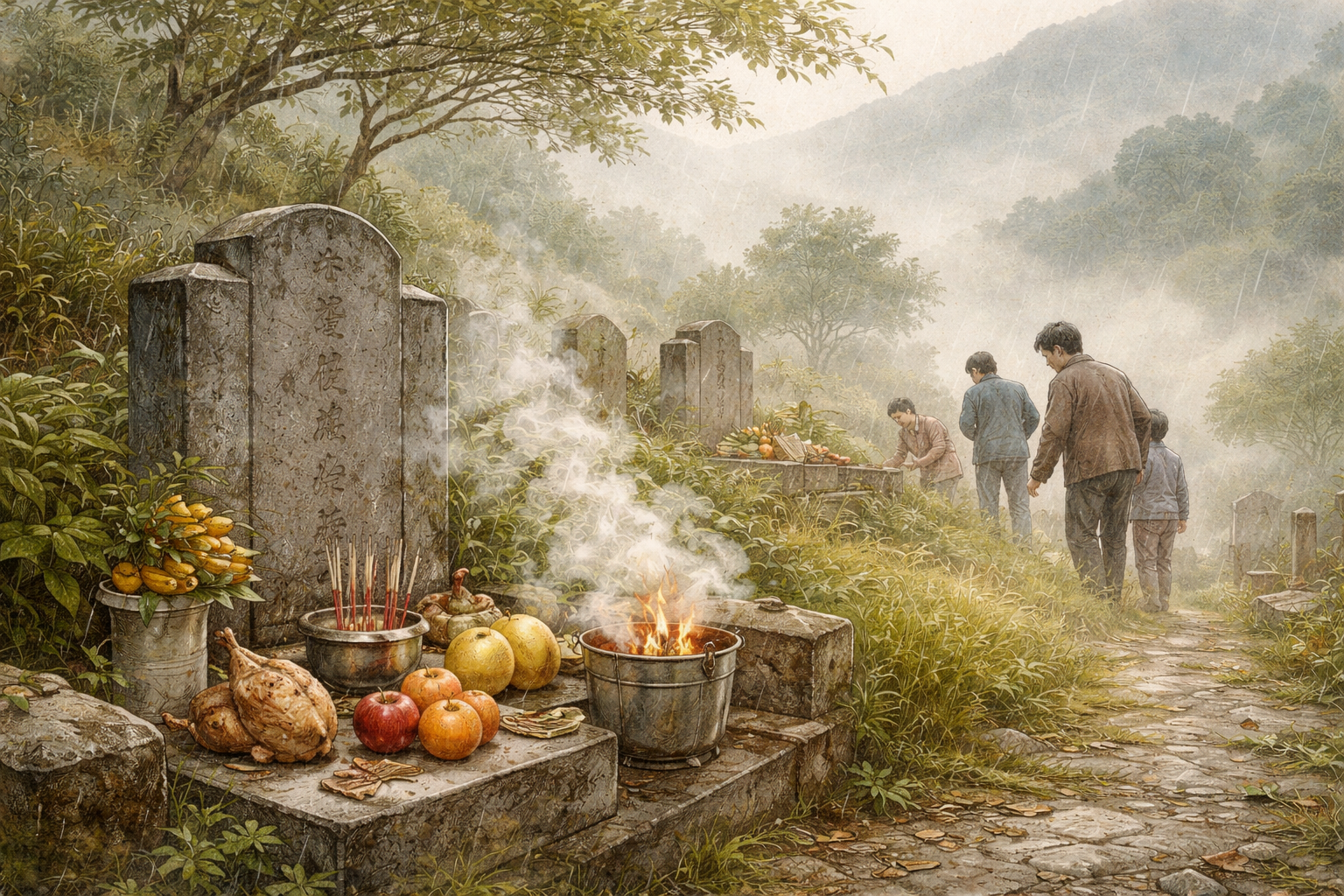
在很多人的記憶裡,清明節總是和山坡、墓園與細雨聯繫在一起。或許因為節氣本身就接近春雨時節,天空常常是灰白的,風輕輕吹著草地。走進墓園的時候,總能看到許多家庭一樣在忙著清理祖先的墓碑,有人拿著水桶,有人拿著抹布,有人把香點起。
小孩在那樣的場合通常顯得格外安靜。不是因為真的理解生死,而是因為氣氛讓人自然變得小心。當大人彎腰整理墓碑前的雜草,或是用水慢慢擦拭石碑上的名字時,小孩會開始注意到那些名字——祖父、曾祖父、某某太公。那時候第一次意識到,家族其實是一條很長的時間線,而自己只是其中一小段。
清明節的儀式其實很簡單。把墓碑清理乾淨,擺上食物,點上香燭,再把紙錢慢慢燒掉。煙霧從鐵桶裡升起,帶著一點紙張燃燒的味道。大人們會在煙霧前輕聲說幾句話,有時是報告近況,有時只是簡單地說一句「我們來看你了」。
小時候總覺得這些話很奇怪。因為墓碑後面並沒有任何人回答。但長大之後才慢慢理解,那些話其實不是說給墓碑聽的,而是說給自己的記憶。
很多家庭的清明節其實也是一種短暫的團聚。平日不常見面的親戚,會因為掃墓而聚在一起。有人帶來新的水果,有人帶來家裡做的食物。掃墓之後,大家常常會找個地方吃一頓飯。氣氛不再像墓園那樣安靜,而變得有點像普通的家庭聚餐。
也正是在那些飯桌上,小孩開始聽到家族的故事。有人會說起祖父年輕時如何從鄉下來到城市,也有人提起某位親戚以前的趣事。那些故事有時很零碎,但慢慢拼起來,便成了一幅屬於家族的歷史。
清明節的記憶也常常帶著味道。燒紙錢的煙味、青草的味道、剛切開的水果香氣,甚至還有山坡泥土的濕氣。多年之後,只要聞到類似的味道,人就會忽然想起那樣的一天。
隨著城市發展,很多人已經不再像以前那樣到山上掃墓。有些墓園變成了整齊的紀念花園,有些家庭選擇用花束取代香燭。儀式看似簡化了,但那種記憶的延續卻沒有真正消失。
對很多人來說,清明節其實是一年裡少數會停下來思考時間的日子。平常生活忙碌,很少有人會想到幾十年前甚至幾百年前的家族。但當站在墓碑前,看著那些刻在石頭上的年份,人會忽然明白自己所在的位置——既是後人,也是未來某一天會被記住的人。
也許正因為如此,清明節總帶著一點溫柔的哀愁。它不是悲傷,而是一種對時間的理解。那些離開的人不再參與今天的生活,但他們留下的名字、故事與習慣,仍然在家庭裡慢慢流動。
很多年之後,人們可能記不清某一次掃墓的細節,但會記得那種氣氛:灰色的天空、山坡的風、煙霧在空氣裡慢慢飄散。那是一種很安靜的記憶。
清明節或許正是這樣的一天——它提醒人們,生命並不是孤立存在的。每一代人都在時間裡接過一點東西,再把它交給下一代。墓碑上的名字只是石刻,但在記憶裡,它們仍然是活著的一部分。
當春天的雨再次落下,人們帶著香燭與花束走向墓園,其實是在完成一個很古老的動作:記住過去,然後繼續向前走。
English Version
As spring unfolds with gentle warmth and the landscape begins to soften with new growth, the Qingming Festival introduces a deeply personal and reflective dimension to the seasonal cycle, where memory, place, and quiet ritual converge in a way that is both intimate and culturally significant. Unlike festivals characterized by vibrant public celebration, Qingming is often experienced through individual or family-centered actions, most notably the act of visiting ancestral graves, which transforms physical movement into a journey through memory and connection. The process of traveling to cemeteries or hillside burial sites becomes an essential part of the experience, where paths, surroundings, and even the weather contribute to a sense of atmosphere that frames the act of remembrance. Cleaning graves, arranging offerings, and spending time in silence or conversation are gestures that carry emotional weight, reflecting a relationship with the past that is maintained through presence rather than abstraction. These actions are not merely obligations but opportunities to reconnect with family history, to acknowledge continuity, and to engage with a sense of identity that extends beyond the immediate moment. The environment during Qingming plays a subtle yet powerful role, as the clarity of spring light, the movement of air, and the presence of greenery create a setting that feels both calm and transitional, reinforcing the idea of renewal while simultaneously holding space for reflection on what has passed. This coexistence of life and memory gives the festival its distinctive emotional tone, where the act of remembering is not separated from the awareness of change and growth. In urban contexts, Qingming presents a unique interaction between modern infrastructure and traditional practice, as families navigate city spaces, transportation systems, and organized cemeteries to fulfill rituals that originated in more rural settings, demonstrating how cultural practices adapt while preserving their essential meaning. The simplicity of the festival’s actions contributes to its accessibility, requiring minimal structure yet offering profound significance, allowing individuals to participate in ways that align with their own experiences and interpretations. Food and offerings, while present, serve a supporting role, emphasizing intention rather than spectacle, and reinforcing the quiet nature of the occasion. Conversations during Qingming often carry a reflective tone, shaped by shared memories, stories, and the passage of time, where the act of speaking becomes another form of remembrance. At the same time, moments of silence are equally meaningful, allowing individuals to engage internally with thoughts and emotions that may not be easily expressed. The festival also highlights the importance of continuity across generations, as younger family members are introduced to traditions through participation, observation, and shared experience, ensuring that cultural knowledge is transmitted not through formal instruction but through lived practice. In a broader cultural sense, Qingming represents a balance between remembrance and renewal, where the acknowledgment of the past coexists with the awareness of the present and the unfolding of the future. It offers a pause within the rhythm of life, creating space for reflection that is often absent in daily routines, and encouraging a reconnection with both personal history and the natural environment. Ultimately, Qingming is not defined by grand gestures or visual spectacle, but by its ability to create meaningful moments through simplicity, where actions such as walking, cleaning, offering, and remembering come together to form an experience that is deeply human, quietly powerful, and enduring across time.