
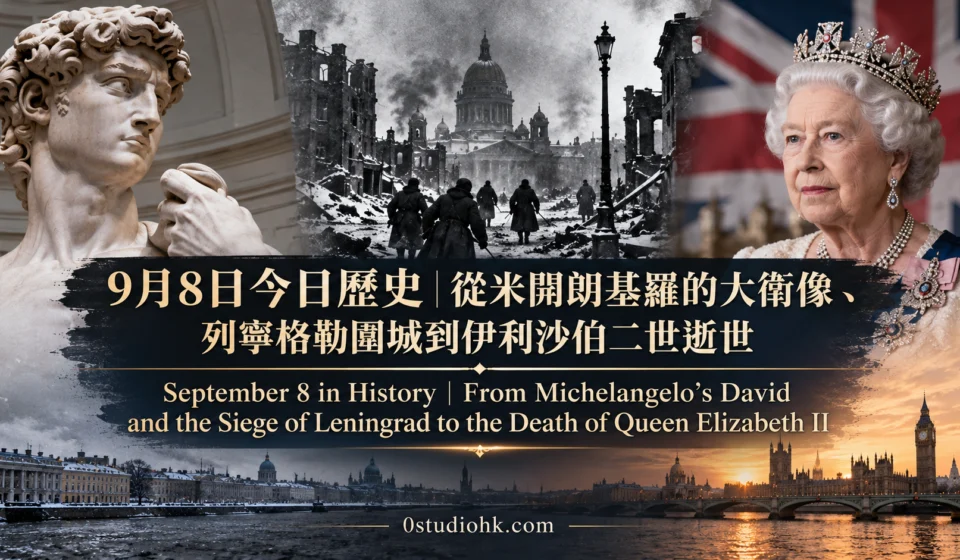
9月8日今日歷史|從米開朗基羅的大衛像、列寧格勒圍城到伊利沙伯二世逝世|September 8 in History|From Michelangelo’s David and the Siege of Leningrad to the Death of Queen Elizabeth II

9月8日連結藝術、戰爭、自然災害、政治與王室歷史,從大衛像揭幕到倫敦王室時代落幕,每一刻都值得回望。
September 8 brings together art, war, disaster, politics and royalty, linking Michelangelo’s masterpiece with events that reshaped nations and generations.
中文版本
9月8日是一個橫跨藝術、城市發展、戰爭、自然災害、政治、流行文化與王室歷史的重要日子。1504年9月8日,米開朗基羅最著名的作品之一《大衛像》在意大利佛羅倫斯的領主廣場正式向公眾揭幕。這座以卡拉拉大理石雕成的巨大雕像高約17呎,呈現聖經人物大衛迎戰巨人歌利亞前的緊張一刻。雕像原本被構想為放置在佛羅倫斯大教堂高處的作品,但完成後,人們認為它具有如此強烈的藝術與象徵力量,最後決定將它安放在領主廣場,成為佛羅倫斯共和國的重要公共象徵。米開朗基羅並不是單純雕刻一個宗教人物,而是透過人體比例、肌肉結構、表情與姿態,把勇氣、警覺和決心凝聚在一塊大理石之中。《大衛像》後來成為文藝復興藝術最具代表性的作品之一,也讓後世看見藝術如何超越宗教故事本身,成為城市身份與文化記憶的一部分。 1664年9月8日,北美殖民地的歷史出現另一個重要轉折。當時荷蘭人在北美建立的新尼德蘭殖民地,其首府新阿姆斯特丹在英國艦隊壓力下向英軍投降,城市其後改名為紐約。這次權力轉移並不只是城市換了一個名字,而是反映17世紀歐洲列強在北美爭奪土地、貿易路線與殖民利益的局勢。今天全球最著名的城市之一紐約,正是在這段荷蘭與英國殖民歷史交替的過程中逐漸形成自己的身份。 1900年9月8日,美國德州加爾維斯敦遭遇歷史上最具破壞性的自然災害之一。大西洋形成的颶風經過墨西哥灣後,在9月8日登陸加爾維斯敦附近,以極強風力及超過15呎的風暴潮席捲城市。當時加爾維斯敦是一個重要港口與商業中心,但城市地勢低平,面對巨大的海水倒灌幾乎毫無抵抗能力。大量房屋被摧毀,道路與通訊中斷,許多居民在短時間內失去家園。美國國家氣象局資料顯示,這場災害造成至少6,000人死亡,而其他歷史估計則把死亡人數推算至6,000至12,000人之間,使1900年加爾維斯敦颶風成為美國歷史上最致命的天氣災害之一。 這場災難同時改變了加爾維斯敦的城市發展方向。災害之後,人們開始重新思考沿海城市如何面對颶風、風暴潮與海平面風險,城市防洪工程亦逐漸受到重視。今天人們談論極端天氣、城市韌性及氣候風險時,1900年的加爾維斯敦仍然是一個重要歷史案例。它提醒我們,天氣預報、通訊、城市規劃和防災系統並不是抽象的公共政策,而可能直接決定災害來臨時有多少人能夠安全逃生。 1935年9月8日,美國路易斯安那州參議員 Huey Long 在州議會大樓遭槍擊,約30小時後傷重死亡。Huey Long是一位極具爭議的政治人物,他以民粹式政治風格、強勢的個人領導和「Share Our Wealth」等政策主張而聞名。他的政治生涯顯示,美國政治不只是政黨之間的競爭,同時也是個人魅力、貧富差距、社會改革與權力集中的角力。 1941年9月8日,第二次世界大戰進入極其殘酷的一章,德軍開始圍困蘇聯城市列寧格勒,即今天的聖彼得堡。列寧格勒是蘇聯重要的工業城市,也是文化與歷史中心。德軍向城市推進後,9月8日正式形成包圍,城市與外界的大部分陸路交通被切斷。這場圍城後來持續872天,成為第二次世界大戰中最漫長、最慘烈的城市圍困之一。城市居民面對轟炸、嚴寒、疾病和嚴重糧食短缺,日常生活逐漸變成一場單純的生存鬥爭。 冬季來臨後,糧食配給下降至極低水平,居民需要在極端寒冷中尋找燃料和食物。有人燃燒家具取暖,有人依靠有限的麵包配給維持生命。列寧格勒的工廠即使在如此惡劣的環境下仍然努力生產軍需品,普通市民、工人、婦女與兒童都被迫承擔戰爭帶來的巨大壓力。1944年1月,蘇軍終於突破德軍包圍,這場長達872日的悲劇告一段落。列寧格勒圍城造成約一百萬蘇聯人死亡,成為戰爭史上關於飢餓、堅忍與城市生存最令人震撼的案例之一。 1943年9月8日,第二次世界大戰又迎來重要政治轉折。盟軍將軍艾森豪威爾公開宣布意大利已向盟軍投降。意大利政府早前秘密與盟軍談判停戰,但消息公布後,納粹德國立即採取行動,德軍迅速接管意大利北部及中部多個地區。意大利的投降並沒有立即結束戰爭,反而令意大利半島成為盟軍與德軍繼續交戰的重要戰場。這段歷史說明,在世界大戰中,一個國家的軍事投降並不一定代表戰爭立即結束,反而可能引發新的政治真空與軍事行動。 1965年9月8日,美國加州德拉諾葡萄工人罷工開始。超過2,000名菲律賓裔美國農業工人拒絕繼續工作,抗議低工資及惡劣工作條件。這場行動後來與其他農業工人組織的運動結合,最終成為美國農業勞工權益史的重要一頁。它提醒人們,一些看似局部的勞工行動,可以逐漸轉化成影響全國的社會運動,並改變人們對最低工資、勞工組織和農業工人權利的理解。 1966年9月8日,美國電視觀眾首次看到《星空奇遇記》(Star Trek)。這套科幻劇集最初只播出三季,卻在之後數十年逐漸發展成全球最具影響力的科幻娛樂品牌之一。《Star Trek》表面上講述太空探索與星際文明,但作品經常借助外星種族、未來科技和宇宙冒險討論種族、戰爭、和平、政治、倫理及人類未來。它的真正影響力並不只是創造了多少電影與電視作品,而是讓科幻故事成為思考現實社會問題的一種方式。 1974年9月8日,美國總統 Gerald Ford 宣布全面赦免前總統 Richard Nixon,赦免他在任內可能犯下的聯邦罪行。Nixon在水門事件醜聞中面臨彈劾壓力,最終於1974年8月辭職,成為美國歷史上首位辭職的總統。Ford的赦免決定當時引起巨大爭議,有人認為這是為國家政治創傷畫上句號,有人則認為這削弱了政治人物必須承擔法律責任的原則。數十年後,這項決定仍然是美國政治史上最具爭議的總統特赦之一。 2022年9月8日,英國及全球再次迎來一個歷史轉折。英國女王伊利沙伯二世在蘇格蘭巴爾莫勒爾堡逝世,終年96歲。白金漢宮在當日早些時候公布,醫生對女王健康狀況感到憂慮,並建議她接受醫療監察;其後王室正式宣布她離世。 伊利沙伯二世於1952年登基,成為英國歷史上在位時間最長的君主之一,她的統治跨越第二次世界大戰後的重建、冷戰、英國殖民帝國的轉型、歐洲政治變化以及數碼時代的來臨。她的去世不只是王室家族的一次變化,也象徵一個跨越70年的歷史時代正式結束。她在位期間見證英國社會由廣播與黑白電視年代走向互聯網、智能電話與社交媒體時代,而英國君主制本身亦不斷調整角色,以適應現代社會。9月8日因此成為英國近代史上一個極具象徵性的日期。回望這一天,可以看到完全不同的人類經歷在同一個日期交會:1504年的《大衛像》代表文藝復興對人體、藝術與城市文化的重新想像;1664年的新阿姆斯特丹易名紐約,反映殖民力量如何塑造現代城市;1900年的加爾維斯敦颶風提醒人類自然力量與防災能力的重要性;1941年的列寧格勒圍城則展示戰爭如何把整座城市變成生存戰場;1966年的《星空奇遇記》把人類對未來的想像帶入大眾文化;1974年的尼克遜特赦揭示政治權力與法律責任之間的複雜關係;而2022年伊利沙伯二世的離世,則讓一個延續數十年的英國王室時代正式落幕。9月8日因此不只是日曆上的一個日期,而是一條連接藝術、城市、自然、戰爭、政治、科技與王室的歷史線索。每一個事件都發生在不同時代,卻共同提醒我們:世界並不是突然改變的,而是由無數個重要時刻慢慢累積而成。
English Version
September 8 brings together an unusually wide range of stories from world history, connecting Renaissance art, colonial expansion, natural disasters, wartime survival, labour rights, television, presidential power and the British monarchy. One of the most famous events associated with the date took place in Florence in 1504, when Michelangelo’s David was unveiled to the public. Carved from a massive block of Carrara marble, the statue stands around 17 feet tall and depicts the biblical David before his confrontation with Goliath. The work had originally been intended for a high position on Florence Cathedral, but its extraordinary scale and artistic power led officials to place it in the Piazza della Signoria instead. David soon became much more than a religious sculpture. For the people of Florence, the figure represented courage, vigilance and the ability of a smaller power to confront a stronger opponent. Michelangelo transformed a biblical story into a powerful statement about human strength, concentration and determination. Over the centuries, David became one of the defining achievements of Renaissance sculpture and an enduring example of how art can become part of a city’s political and cultural identity. In 1664, September 8 marked another important transformation, this time in the history of North America. New Amsterdam, the Dutch capital of the colony of New Netherland, surrendered to an English naval force. The settlement was subsequently renamed New York. The change reflected the wider competition among European powers for territory, trade and influence in North America during the seventeenth century. What later became one of the world’s most important cities therefore passed through a period of Dutch and English rivalry before developing its distinctive identity. The name New York would eventually become associated with finance, immigration, culture, commerce and global influence, but its early history was rooted in the shifting colonial ambitions of European powers. September 8, 1900, brought one of the deadliest natural disasters in United States history. A powerful hurricane reached Galveston, Texas, after crossing the Gulf of Mexico and struck the low-lying coastal city with devastating winds and a massive storm surge. Galveston was an important port and commercial centre, but its geography left it highly exposed to rising seawater. Buildings were destroyed, communications collapsed and large sections of the city were overwhelmed. The U.S. National Weather Service estimates that at least 6,000 people died, while historical estimates have placed the death toll between roughly 6,000 and 12,000. The disaster remains one of the most important events in the history of American hurricane preparedness. The Galveston catastrophe also changed the future of the city. In its aftermath, engineers and civic leaders increasingly recognised the need for stronger coastal protection and better disaster planning. The city later developed major protective infrastructure, including a seawall and a large-scale grade-raising project. The lessons of 1900 continue to matter because coastal communities around the world still face the same basic challenge: natural hazards become far more dangerous when dense populations and critical infrastructure are concentrated in vulnerable locations. Galveston demonstrated that forecasting, communication, evacuation planning and physical protection can be as important as the storm itself. On September 8, 1935, Louisiana Senator Huey Long was shot inside the Louisiana State Capitol. He died approximately thirty hours later. Long was one of the most controversial and powerful political figures of his era, known for his populist style, strong personal control and ambitious proposals aimed at reducing economic inequality. Supporters viewed him as a champion of ordinary people, while critics accused him of authoritarian political methods. His career illustrated the tension between popular politics, economic inequality, social reform and concentrated political power during the difficult years of the Great Depression. September 8, 1941, marked the beginning of one of the most devastating episodes of the Second World War: the siege of Leningrad. German forces surrounded the Soviet city, then known as Leningrad and today called St Petersburg. The city was a major industrial centre as well as a cultural and historical landmark. Once the siege began, most land routes connecting Leningrad with the rest of the Soviet Union were cut. What followed lasted 872 days and became one of the longest and most destructive urban sieges in modern history. Civilians faced artillery bombardment, air raids, extreme cold, hunger and disease. As winter deepened, food supplies became desperately limited. Civilian rations were reduced to tiny quantities of bread, while residents burned furniture and books for heat. Workers continued producing military equipment under extraordinary conditions, and ordinary citizens were drawn into the struggle simply to keep the city functioning. The siege was finally broken in January 1944 as Soviet forces pushed German troops away from the city. Around one million Soviet people are estimated to have died during the siege, making it one of the most terrible examples of the human cost of total war. September 8, 1943, brought another major wartime turning point. Allied commander Dwight Eisenhower publicly announced Italy’s surrender to the Allies. The Italian government had secretly negotiated an armistice, but the announcement immediately triggered a German military response. German forces moved to occupy large parts of Italy, while the Allies prepared further operations on the peninsula. Italy’s surrender therefore did not bring an immediate end to fighting. Instead, the country became another major battlefield between Allied and German forces. The episode demonstrated how a military surrender can create an entirely new strategic situation rather than simply ending a war. In 1965, September 8 became significant in the history of American labour rights when Filipino-American farm workers began a major grape strike in Delano, California. More than 2,000 workers refused to continue working in protest against low wages and poor conditions. Their action eventually became connected with a broader agricultural labour movement and helped draw national attention to the difficult lives of farm workers. The Delano strike demonstrated how a local workplace dispute could grow into a wider social movement and contribute to long-term changes in the way Americans viewed agricultural labour, union organisation and workers’ rights. Exactly one year later, September 8, 1966, marked the television premiere of Star Trek. The original series lasted only three seasons, but its influence expanded dramatically after cancellation. It eventually became one of the most recognisable science-fiction franchises in popular culture. Star Trek used futuristic technology, alien civilisations and space exploration to examine questions that were very much about the present: racism, war, political conflict, ethics, cooperation and the future of humanity. Its lasting importance lies not simply in the number of television series and films it produced, but in its ability to use science fiction as a way of discussing real social and political issues. On September 8, 1974, U.S. President Gerald Ford issued a full pardon to former President Richard Nixon for any federal crimes Nixon might have committed while in office. Nixon had resigned one month earlier after the Watergate scandal produced overwhelming political pressure and the prospect of impeachment. Ford argued that the pardon was necessary to bring an end to the national divisions created by Watergate. The decision was deeply controversial. Supporters believed Ford was attempting to help the country move forward, while critics argued that Nixon should have faced legal accountability. The controversy surrounding the pardon continues to make it one of the most debated acts of presidential clemency in American history. September 8, 2022, became a defining date in modern British history when Queen Elizabeth II died at Balmoral Castle in Scotland at the age of 96. Earlier that day, Buckingham Palace announced that doctors were concerned about her health and that she was under medical supervision. The official announcement of her death followed later in the day. Elizabeth II had become queen in 1952 and went on to reign for more than seven decades. During her reign, Britain experienced enormous changes: the post-war recovery, the transformation of the British Empire and Commonwealth, the Cold War, the expansion of European integration, the rise of mass television, the arrival of the internet and the emergence of the smartphone and social media age. Her death therefore represented more than the passing of a monarch. It marked the end of an era experienced by several generations of British citizens. September 8 became a date associated with the closing of one of the longest chapters in modern British constitutional history. Looking across the centuries, September 8 reveals how different aspects of human civilisation can intersect on a single date. Michelangelo’s David represents the Renaissance belief in artistic achievement and human potential. The transformation of New Amsterdam into New York shows how colonial competition helped shape modern cities. The Galveston hurricane demonstrates the destructive power of nature and the importance of disaster preparedness. The siege of Leningrad reveals the terrible consequences of modern total war. Star Trek demonstrates the ability of popular culture to imagine humanity’s future while questioning its present. The Nixon pardon illustrates the difficult relationship between political power, accountability and national reconciliation. Finally, the death of Queen Elizabeth II symbolises the closing of a seventy-year royal era. September 8 is therefore more than a date on a calendar. It is a thread connecting art, cities, nature, war, labour, politics, technology and monarchy. These events took place under completely different circumstances, yet together they show how history develops: not through one single turning point, but through countless moments that gradually reshape the world and the way people understand it.
總評
9月8日橫跨藝術、災難、戰爭、政治、科技與王室,是一個充滿時代轉折的日期,也讓我們看見歷史如何塑造今日世界。
September 8 captures remarkable turning points in art, disaster, war, politics, technology and royalty, offering a powerful reminder of how the past continues to shape the modern world.