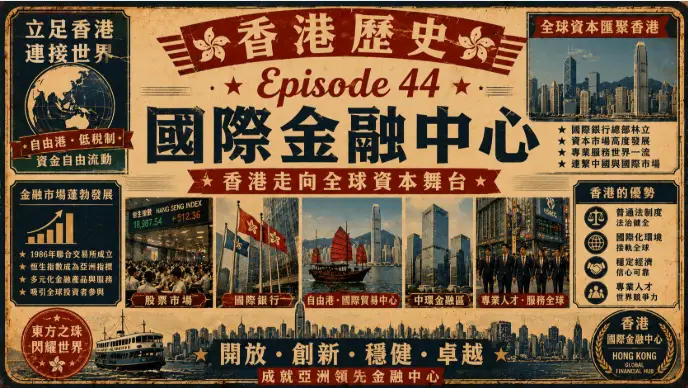
1980年代開始,香港逐漸由工業城市轉型為國際金融中心。銀行、股票市場與跨國企業迅速發展,讓香港成為全球資本與亞洲經濟的重要交匯點。
Beginning in the 1980s, Hong Kong rapidly evolved into one of the world’s leading financial centers. Expanding banks, stock markets, and international business networks transformed the city into a major gateway for global capital in Asia.
中文
香港成為國際金融中心,並非一夜之間完成,而是經過數十年經濟轉型與國際化發展逐步形成。到了1970年代後期,隨著製造業逐漸北移中國內地,香港開始由工業城市轉向以金融、貿易與服務業為主的新經濟模式。這種轉變,不但改變香港經濟結構,也重新塑造整座城市的國際地位。香港能夠成為國際金融中心,其中一個重要原因是自由經濟制度。當時香港維持低稅率、自由港政策與資金自由流動,吸引大量外國銀行與跨國企業進駐。中環地區開始迅速發展,高樓大廈與現代商業中心陸續興建。匯豐銀行、中銀大廈、怡和與置地等大型企業,逐漸成為香港金融與商業象徵。維多利亞港兩岸的天際線,也在1980年代開始形成國際都市形象。股票市場發展同樣是香港金融崛起的重要部分。香港股票交易早於19世紀已開始,但真正高速發展是在1970年代後期。隨著大量本地企業與地產公司上市,股市成交額不斷增加。1986年,香港聯合交易所正式成立,整合原有多間交易所,令金融市場制度更成熟。恆生指數亦逐漸成為亞洲重要股市指標。許多市民開始投資股票,希望分享經濟繁榮成果。銀行業在這段時期亦急速擴張。香港作為亞洲國際貿易中心,需要大量金融服務支援航運、進出口與外匯交易。來自英國、美國、日本與其他地區的銀行紛紛在香港設立分行。中環金融區每日聚集大量銀行職員、股票經紀與商業人士,形成香港典型商業都市景象。隨著經濟起飛,香港人的生活方式亦逐漸改變。白領階層與專業人士人數增加,寫字樓文化開始普及。中環、金鐘與灣仔成為金融商業核心地區。大型商場、高級酒店與國際品牌逐漸進駐香港,城市消費文化進一步國際化。1980年代的香港,不但經濟繁榮,也開始建立國際城市形象。另一方面,中國改革開放亦為香港金融業帶來巨大機遇。香港成為中國企業與外資之間的重要橋樑。大量中國公司開始利用香港作為融資平台,香港股票市場與銀行體系因此快速擴大。1990年代前後,中資企業上市潮令香港進一步成為亞洲資本市場核心。香港的法律制度、普通法體系與國際化商業環境,亦增加外國投資者信心。除了金融發展,香港政府亦加強基建與國際交通網絡。啟德機場成為亞洲最繁忙國際機場之一,港口與金融市場互相配合,令香港成為全球物流與資本流動中心。電訊與資訊科技發展,亦讓香港與世界市場保持緊密聯繫。雖然金融繁榮帶來大量財富,但同時亦令樓價與生活成本持續上升。貧富差距問題逐漸明顯,部分市民難以分享到金融發展成果。然而大部分香港人仍然對經濟前景保持樂觀,認為香港擁有國際優勢與自由市場制度。到了1990年代,香港已被視為世界最重要金融中心之一,與紐約、倫敦、新加坡等城市並列。這段金融崛起歷史,不只是經濟數字成長,更象徵香港由工業港口城市走向國際資本舞台的重要轉變。從維港兩岸高樓到繁忙交易大堂,從中環寫字樓到全球資金流動,香港逐漸建立屬於自己的國際金融中心地位,也成為現代香港最鮮明的城市形象之一。
English Version
Hong Kong’s rise as an international financial center was the result of decades of economic transformation, global trade expansion, and strategic positioning within Asia. By the late twentieth century, the city had evolved far beyond its earlier identity as a manufacturing and shipping hub. Finance, banking, and international business gradually replaced factories as the driving force behind Hong Kong’s economy, reshaping both the skyline and the lifestyle of the city. One of the key reasons for Hong Kong’s financial success was its economic system. The territory maintained low taxation, free-market policies, minimal trade restrictions, and unrestricted capital movement. These conditions attracted international banks, investment firms, insurance companies, and multinational corporations from around the world. Districts such as Central and Admiralty transformed into dense financial zones filled with modern office towers, luxury hotels, and corporate headquarters. Buildings like the HSBC Headquarters and the Bank of China Tower became symbols of Hong Kong’s growing global influence. The stock market played a major role in the city’s financial expansion. Although stock trading had existed in Hong Kong since the colonial era, rapid modernization began during the 1970s and 1980s. Property developers, shipping companies, industrial firms, and later Chinese enterprises increasingly listed on the local market. In 1986, the Hong Kong Stock Exchange was formally unified, helping improve transparency and market organization. The Hang Seng Index emerged as one of Asia’s most closely watched financial indicators. Ordinary residents also became more interested in investing, reflecting the growing culture of wealth creation during the economic boom years. Banking activity expanded alongside the stock market. As one of Asia’s busiest trade centers, Hong Kong required sophisticated financial services to support shipping, currency exchange, imports, exports, and international investment. Major banks from Britain, the United States, Japan, and Europe established operations in the city. Central District became known for its fast-paced office culture where bankers, brokers, accountants, and business executives filled the streets each working day. The rise of the financial sector also changed the social structure of Hong Kong. White-collar employment increased rapidly, and professional careers became more desirable for younger generations. Shopping malls, luxury retail, international restaurants, and modern office lifestyles became part of urban culture. The city’s image shifted from an industrial economy to a sleek international metropolis associated with ambition, speed, and global commerce. China’s economic reforms beginning in 1978 created even greater opportunities for Hong Kong. The territory became a crucial gateway connecting mainland China with international capital markets. Foreign investors used Hong Kong to enter China, while Chinese companies relied on Hong Kong for fundraising, banking, and global financial access. By the 1990s, listings of mainland Chinese enterprises significantly strengthened Hong Kong’s position within Asia’s financial system. Investors also trusted Hong Kong because of its legal framework, independent courts, and internationally recognized commercial environment. Infrastructure development supported this transformation as well. Kai Tak Airport became one of the busiest international airports in Asia, while the port, telecommunications systems, and transport networks reinforced Hong Kong’s role as a center of global connectivity. Information and financial transactions moved rapidly between Hong Kong and the world’s major economies. Despite growing prosperity, the rise of finance also created new social challenges. Property prices climbed sharply, living costs increased, and inequality became more visible across society. Nevertheless, optimism about Hong Kong’s future remained strong throughout much of the period. By the end of the twentieth century, Hong Kong was widely recognized as one of the world’s leading financial centers alongside cities such as New York, London, and Singapore. The rise of Hong Kong finance was therefore more than an economic story alone. It represented the city’s transformation from a postwar industrial colony into a globally connected center of capital, commerce, and international influence.