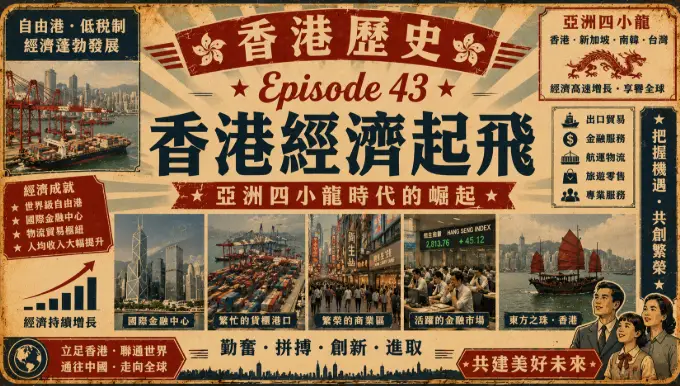
1970至1980年代,香港經濟進入高速增長時期。工業、金融、貿易與服務業迅速發展,讓香港由戰後工業城市逐步成為國際金融與商業中心。
During the 1970s and 1980s, Hong Kong experienced extraordinary economic growth. Expanding industries, global trade, and financial development transformed the city into one of Asia’s most influential commercial and financial hubs.
中文
1970年代至1980年代,被視為香港經濟起飛的重要黃金時代。經歷戰後工業化與城市改革後,香港逐漸由一個以製造業為主的工業城市,發展成亞洲最具活力的經濟中心之一。短短數十年間,香港經濟高速成長,人民生活水平大幅改善,「亞洲四小龍」的名號亦開始聞名世界。香港經濟能夠迅速崛起,首先與出口工業成功有密切關係。早於1960年代,香港製造的成衣、玩具、塑膠產品與電子產品已大量出口歐美市場。到了1970年代,出口產業進一步擴張,貨櫃碼頭與維多利亞港每日都有大量貨船進出。葵涌貨櫃碼頭逐漸成為世界最繁忙港口之一,香港亦成為亞洲重要轉口中心。大量工廠與商業公司為市民提供工作機會,令失業率保持較低水平。與此同時,香港政府維持低稅率與自由貿易政策,吸引大量外國資金與企業進駐。當時香港被視為亞洲最自由開放的經濟體之一,銀行、航運公司與跨國企業紛紛在香港設立地區總部。中環開始出現更多現代化商業大廈,城市天際線逐漸改變。匯豐銀行總行、中銀大廈等建築,象徵香港邁向國際金融中心的重要發展。1978年中國改革開放後,香港經濟更迎來新機遇。大量香港工廠開始北移至珠江三角洲地區,以降低生產成本。香港本地則逐漸轉型為金融、物流、貿易與服務業中心。香港商人利用鄰近中國的地理優勢,成為中國與世界市場之間的重要橋樑。這種特殊角色,令香港在亞洲經濟中地位進一步提升。經濟繁榮亦深刻改變香港人的日常生活。1970年代後期開始,越來越多家庭能夠購買電視、雪櫃、冷氣機與私人電話。大型百貨公司、商場與超級市場逐漸普及,消費文化快速興起。銅鑼灣、尖沙咀與旺角成為繁忙商業區,霓虹燈夜景開始成為香港國際形象之一。粵語流行曲、電視劇與電影工業亦隨著經濟發展而進入黃金年代。無綫電視、嘉禾電影與大量本地明星,逐漸把香港娛樂文化推向亞洲。另一方面,香港經濟起飛亦帶來不少社會問題。樓價與租金開始持續上升,貧富差距依然存在。許多基層工人雖然生活較戰後年代改善,但仍需要長時間工作。工廠工人、的士司機、小販與辦公室職員共同構成香港典型忙碌都市生活。快速發展亦令環境污染與交通擠塞問題逐漸惡化。不過整體而言,大部分市民對未來仍然充滿信心。1980年代的香港,開始建立「東方之珠」國際形象。高樓大廈、繁忙港口與自由經濟制度,令香港成為全球最受矚目的亞洲城市之一。許多外國媒體形容香港是一座充滿機會與活力的城市。這種經濟奇蹟背後,除了自由市場制度,也來自無數香港人的努力與拼搏。由工廠工人到商界人士,由移民家庭到新一代專業人士,大家共同參與建立香港繁榮時代。香港經濟起飛,不只是數字上的增長,更是一段關於奮鬥、轉型與城市自信形成的重要歷史。直到今天,1970至1980年代的繁榮歲月,仍然被許多人視為香港最具代表性的黃金年代之一。
English Version
The economic rise of Hong Kong during the 1970s and 1980s became one of the most remarkable success stories in modern Asia. In only a few decades, the city transformed itself from a crowded manufacturing colony into a globally connected financial and commercial powerhouse. This period of rapid growth reshaped not only the economy, but also the lifestyle, culture, and international reputation of Hong Kong. By the 1970s, Hong Kong’s export industries had already established a strong global presence. Factories producing garments, electronics, plastics, toys, and household goods supplied markets across Europe and North America. Cargo ships moved continuously through Victoria Harbour while the expanding Kwai Chung Container Terminal became one of the busiest shipping hubs in the world. Manufacturing created employment for huge numbers of residents, allowing many working-class families to improve their living conditions for the first time. At the same time, the colonial government maintained policies favoring low taxation, free trade, and minimal market restrictions. These conditions attracted foreign investment and encouraged multinational corporations to establish regional operations in Hong Kong. Banking, shipping, insurance, and international trade all expanded rapidly. Central District evolved into a modern financial center filled with skyscrapers, corporate headquarters, and international banks. Buildings such as the HSBC Headquarters and later the Bank of China Tower symbolized the city’s rising global importance. A major turning point came after China introduced economic reforms in 1978. Hong Kong businesses quickly recognized new opportunities across the border. Many manufacturers relocated production facilities into the Pearl River Delta where labor and land costs were lower. Hong Kong itself gradually shifted away from traditional manufacturing toward finance, logistics, international trade, and professional services. The city became an important gateway connecting China’s opening economy with international markets. This unique position strengthened Hong Kong’s influence throughout Asia and the wider world. Economic prosperity also transformed daily life for ordinary residents. During the late 1970s and 1980s, televisions, refrigerators, air conditioners, and telephones became increasingly common in middle-class households. Shopping malls, supermarkets, and department stores spread across urban districts, encouraging the rise of modern consumer culture. Areas such as Causeway Bay, Tsim Sha Tsui, and Mong Kok developed into energetic commercial centers illuminated by famous neon signs and crowded streets. Entertainment industries flourished alongside economic expansion. Cantonese pop music, television dramas, and Hong Kong cinema entered a golden era that reached audiences throughout Asia. Companies such as TVB and Golden Harvest helped establish Hong Kong as a major center of regional popular culture. Yet rapid economic growth also brought new challenges. Property prices and rents rose steadily, creating pressure for lower-income families. Long working hours remained common for factory laborers, office employees, taxi drivers, and small business owners. Pollution and traffic congestion became increasingly visible in the expanding city. Despite these problems, public optimism remained strong throughout much of the period. Hong Kong gained an international reputation as the “Pearl of the Orient,” admired for its energy, efficiency, and economic dynamism. Foreign journalists and investors often described the city as one of the world’s most vibrant urban economies. Behind the impressive skyline and booming trade statistics stood the efforts of millions of ordinary residents. Migrant families, factory workers, entrepreneurs, professionals, and small shop owners all contributed to the city’s success. The story of Hong Kong’s economic boom is therefore more than a financial achievement alone. It represents a period when confidence, ambition, and hard work combined to transform a once-struggling colony into one of Asia’s most influential global cities.