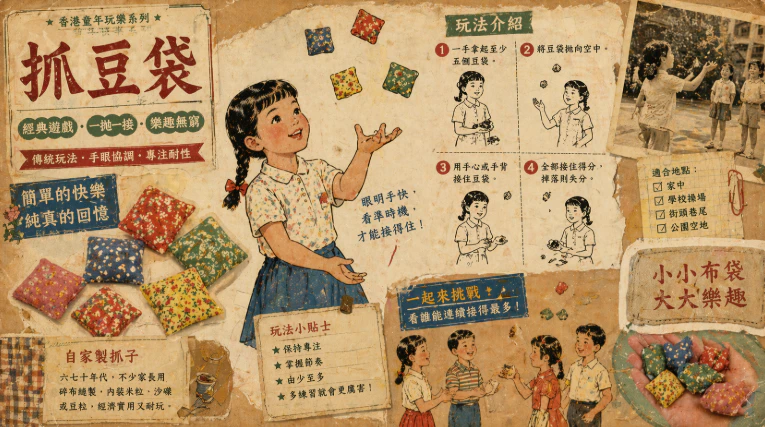

抓豆袋是一種簡單卻充滿節奏感的傳統遊戲,透過拋接之間的手眼協調與專注,孩子在遊戲中培養技巧與耐性,也在反覆嘗試中找到純粹的快樂
Hacky sack is a simple yet rhythmic traditional game where tossing and catching sharpen coordination and focus, allowing children to develop skill and patience while discovering joy through repeated play
中文
抓豆袋,又稱抓子或沙包,是一種歷史悠久且廣受歡迎的民間遊戲,在香港六七十年代尤其盛行,成為許多人成長記憶中的一部分,這種遊戲看似簡單,只需幾個裝有米粒、沙礫或豆子的布包,卻蘊含豐富的技巧與節奏,玩家通常會將五個或以上的豆袋拋向空中,再迅速用手心或手背接住,過程中講求眼明手快與節奏掌握,每一次成功接住都帶來成就感,而失手則成為下一次挑戰的起點,這種反覆練習與進步的過程,使遊戲不斷吸引人投入其中,在物資相對匱乏的年代,許多家庭會親手製作抓豆袋,利用碎布縫製成小袋,再填入沙粒或豆子,既經濟又實用,也讓玩具多了一份溫度與情感,孩子拿著這些由家人製作的玩具,在街頭巷尾或學校操場上與朋友一同遊玩,形成一種自然的社交場景,抓豆袋不僅是個人技巧的展現,更是一種群體互動的媒介,大家會互相比較技巧、分享玩法,甚至發展出不同難度的規則,例如加入更多豆袋或改變接法,讓遊戲層次更加豐富,這種自由延伸的玩法正是傳統遊戲的魅力所在,它不受固定規則限制,而是隨著玩家的想像與能力不斷變化,隨著科技進步與電子娛樂的興起,像抓豆袋這樣的傳統遊戲逐漸淡出日常生活,但它所代表的價值並未消失,反而在懷舊文化與教育活動中再次被重視,因為它不僅鍛鍊身體協調與專注力,也強調耐性與持續練習的重要性,在今日重新回看抓豆袋,我們看到的不只是簡單的拋接遊戲,而是一種關於節奏、技巧與成長的過程,它提醒我們,真正的樂趣往往來自最簡單的動作與最純粹的投入,在快速變化的世界中,這種慢節奏的遊戲反而顯得更加珍貴,因為它讓人重新感受到身體與時間的連結,以及與他人共同遊戲的真實互動.
English Version
Hacky sack, also known as beanbag toss or juggling stones, is a traditional game with deep roots in everyday life, especially popular in Hong Kong during the 1960s and 1970s, where it became a defining element of childhood experiences, the game requires only a handful of small fabric bags filled with rice, sand, or beans, yet within this simplicity lies a surprisingly rich system of coordination, rhythm, and skill, players toss several beanbags into the air and attempt to catch them with the palm or back of the hand, relying on timing, precision, and quick reflexes, each successful catch brings a sense of accomplishment, while each failure encourages another attempt, creating a natural cycle of practice and improvement that keeps players engaged, in times when resources were limited, many families crafted their own beanbags using scraps of fabric, sewing them by hand and filling them with whatever materials were available, this process not only made the toys accessible but also added emotional value, as each handmade object carried a personal touch, children would bring these beanbags outdoors, playing in streets, playgrounds, or schoolyards, turning the game into a shared social activity, it was not just about individual skill but also about interaction, comparison, and creativity, players would challenge each other, invent new rules, and increase the difficulty by adding more beanbags or changing the method of catching, demonstrating the flexibility and adaptability of traditional play, unlike structured games with fixed rules, hacky sack evolves with its players, shaped by imagination and ability, as digital entertainment gradually replaced physical play, traditional games like this faded from everyday life, yet their significance remains, and in recent years they have been rediscovered through nostalgia and educational contexts, valued for their ability to develop coordination, concentration, and perseverance, revisiting hacky sack today reveals more than just a simple tossing game, it represents a rhythm of learning, a process of growth, and a connection between body and mind, it reminds us that enjoyment does not require complexity, but rather presence, repetition, and engagement, in a fast-paced modern world, such slow and tactile forms of play have become increasingly meaningful, offering a way to reconnect with both ourselves and others through simple, shared experiences.