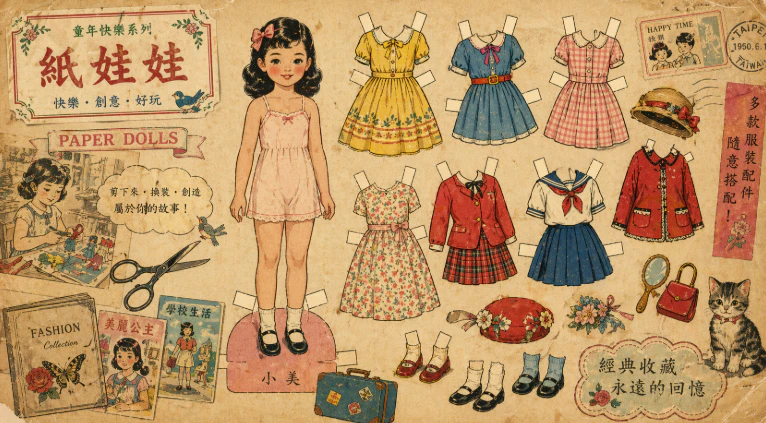
紙娃娃是一種簡單卻充滿魔力的玩具,一張紙上承載角色與服裝,讓孩子透過剪裁與搭配創造屬於自己的故事,在沒有螢幕的年代,它是一種純粹而深刻的想像練習
Paper dolls are simple yet magical toys, where a single sheet holds characters and costumes that invite children to create their own stories through cutting and dressing, representing a pure and imaginative form of play from a time before screens shaped entertainment
中文
紙娃娃是一種源遠流長的紙製玩具,在不同文化中都有其獨特發展,而在華人社會中,它往往被稱為公仔紙,成為許多人童年中不可或缺的一部分,一張薄薄的印刷紙上,通常會出現一個或多個人物角色,以及一系列精緻設計的服裝與配件,透過剪刀將人物與衣物剪下,再利用紙片上的小摺片固定,孩子可以自由地為角色換上不同造型,從日常服飾到華麗舞台裝,甚至幻想中的服裝,每一次更換都是一種新的身份與情境,這種玩法不需要複雜規則,卻能帶來無限變化,紙娃娃的魅力不在於物件本身,而在於它所提供的創作空間,孩子不只是玩家,更是設計者與說故事的人,他們會為角色設定背景,安排生活,甚至編織完整的故事世界,有時候是一場校園日常,有時候是一段奇幻冒險,亦可能是一個理想化的生活想像,這些故事並不需要被記錄,卻在遊戲過程中自然形成並消散,成為成長的一部分,紙娃娃同時也是一種社交媒介,孩子之間會交換不同款式的公仔紙,分享彼此的角色與故事,甚至一起創作新的玩法,這種互動建立了一種屬於童年的共同語言,在物質條件有限的年代,紙娃娃的低成本與易取得性,使它能廣泛流行於不同背景的家庭,無論是在文具店購買,還是從雜誌附錄剪下,甚至自己動手繪製,紙娃娃都能以不同形式存在,隨著科技發展,電子遊戲逐漸成為主流娛樂,紙娃娃的使用逐漸減少,但它並未消失,而是轉變為一種懷舊與文化象徵,在當代設計與藝術領域中,紙娃娃被重新詮釋,結合復古風格與現代插畫,成為收藏品或創作媒介,讓這種看似簡單的玩具重新獲得價值,回望紙娃娃,我們看到的不只是童年的娛樂工具,而是一種關於創造與想像的方式,它提醒我們,真正的遊戲並不依賴技術,而是來自人內心的自由與好奇,這種能力無論在任何時代都同樣重要
English Version
Paper dolls have a long and diverse history across cultures, evolving into different forms while maintaining their core appeal as imaginative toys, in many Asian communities they are known as printed cutout figures, becoming a defining part of childhood for generations, each sheet typically presents one or more characters accompanied by a selection of carefully illustrated outfits and accessories, children cut out the figures and attach clothing using folded tabs, allowing them to change appearances endlessly, from everyday wear to elaborate costumes or entirely fantastical designs, each transformation represents a new identity, a new narrative, and a new world waiting to unfold, the simplicity of the format is precisely what makes it powerful, there are no strict rules, no predefined outcomes, only open-ended creativity, the child becomes not just a player but also a designer, storyteller, and director, building scenes and scenarios that reflect both reality and imagination, sometimes these stories mirror daily life, sometimes they explore dreams, adventures, or idealized worlds, and while they may never be written down, they shape the way children think, create, and express themselves, beyond individual play, paper dolls also function as a shared cultural experience, children exchange different sets, compare designs, and collaborate in storytelling, forming a social layer that extends the life of the toy beyond a single sheet of paper, their affordability and accessibility played a key role in their widespread popularity, available in stationery shops, magazines, or even handmade at home, paper dolls crossed economic boundaries and became a truly universal form of play, as digital entertainment rose to dominance, traditional toys like paper dolls gradually faded from everyday use, yet they have not disappeared, instead they have been rediscovered and reimagined within contemporary art and design, where their nostalgic qualities are combined with modern aesthetics to create collectible works and creative expressions, today paper dolls stand as more than relics of the past, they represent a timeless approach to creativity, reminding us that meaningful play does not depend on technology but on imagination, curiosity, and the ability to transform simple materials into entire worlds