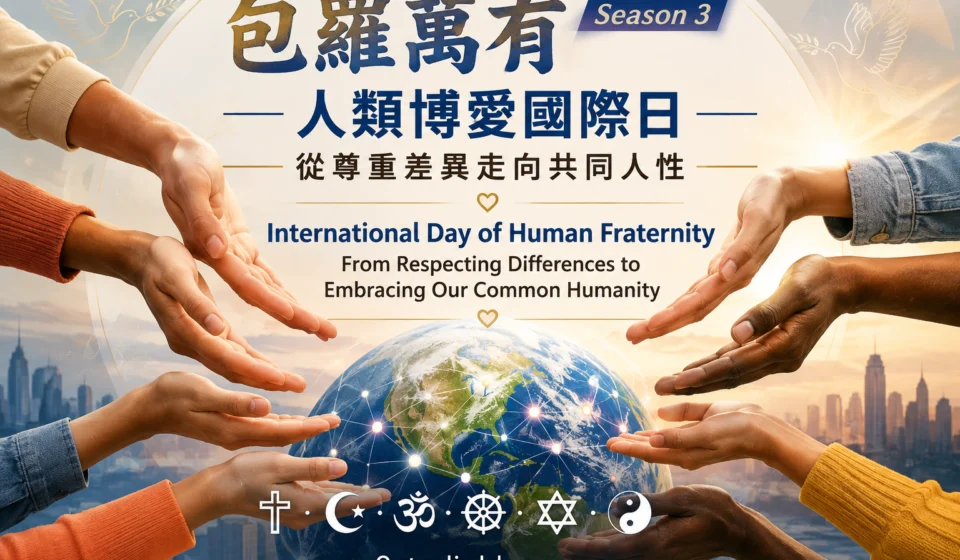
包羅萬有 Season 3 | 人類博愛國際日 從尊重差異走向共同人性 | International Day of Human Fraternity|From Respecting Differences to Embracing Our Common Humanity
中文:每年2月4日的人類博愛國際日,提醒世界超越宗教、文化與國界差異,以尊重、理解與和平重新看見人類共同的價值。
English:Observed every 4 February, the International Day of Human Fraternity invites us to look beyond religious and cultural differences and rediscover the values that unite us as one human family.
中文版本
人類博愛國際日是聯合國為推動和平、理解、包容與不同文化及宗教之間對話而設立的國際日,每年2月4日舉行,自2021年開始正式紀念。聯合國大會在2020年12月21日通過第75/200號決議,決定把2月4日定為人類博愛國際日,並鼓勵各國、聯合國系統相關組織、其他國際組織及民間社會參與紀念活動。這個日期並非偶然,因為2019年2月4日,教宗方濟各與愛資哈爾大伊瑪目艾哈邁德・塔伊布在阿拉伯聯合酋長國阿布扎比會面,並共同簽署《世界和平與共同生活的人類博愛文件》,提出不同宗教、文化與社會背景的人可以透過對話、互相理解與合作,共同尋找和平共處的道路。聯合國其後把這份精神與跨宗教、跨文化對話的重要性納入相關決議之中,將人類博愛提升為一項值得全世界持續關注的價值。 所謂「博愛」,並不是要求所有人變得一模一樣,也不是要求人們放棄自己的文化、信仰、語言或生活方式,而是在差異存在的情況下,仍然承認彼此同樣擁有尊嚴與應受尊重的權利。世界本來就是由不同民族、宗教、文化、語言和歷史組成,如果我們只願意接受與自己相同的人,社會便很容易形成隔閡;相反,如果我們願意理解別人的背景,即使不完全認同對方,也可以保持基本的尊重與溝通。這正是人類博愛國際日所希望強調的精神。聯合國第75/200號決議特別指出,教育對培養寬容、消除基於宗教或信仰的歧視具有重要作用,同時鼓勵推動跨宗教及跨文化對話,以促進和平、社會穩定、尊重多樣性和相互理解。 在現代社會,這種理念比以往任何時候都更具現實意義。科技令世界各地的人可以在幾秒之內互相聯繫,但聯繫增加並不代表理解自然增加。一句訊息、一段影片或一則社交媒體內容,都可能被快速傳播,也可能在缺乏背景資料的情況下造成誤解。不同群體之間的偏見,有時更會透過網絡被放大,形成恐懼、敵意甚至仇恨。聯合國秘書長安東尼奧・古特雷斯在2026年人類博愛國際日訊息中指出,文化與宗教差異有時會被利用來助長戰爭,或把政治及經濟問題歸咎於其他群體,而科技亦可能被用來煽動仇恨和散播恐懼。因此,他呼籲人們更加努力尋找共同點,以寬容、好奇心和尊重多樣性取代恐懼與分裂。 這一點其實並不遙遠。人類每天都會遇到與自己不同的人,在工作場所、學校、社區、交通工具、商店以及網絡世界裡,我們不一定知道對方來自哪裡,也未必了解對方的家庭背景和人生經歷。可是,一個簡單的禮貌、一句願意聆聽的說話、一個不急於判斷的態度,都可以成為建立信任的開始。博愛並不一定需要宏大的國際會議才能實踐,它同樣存在於日常生活之中。當我們願意聽完別人的說法,當我們面對不同文化時先嘗試理解而不是嘲笑,當我們發現偏見時願意重新思考,當我們在別人遇到困難時伸出援手,這些看似微小的行動,其實都在建立一個更加包容的社會。人類博愛也與「和平」有密切關係。和平不只是沒有戰爭,更包括人與人之間能否以尊重和對話處理分歧。當不同群體願意坐下來交流,便有機會發現彼此除了差異之外,也擁有許多共同需要,例如安全、家庭、教育、工作、健康、尊嚴以及對未來的希望。這些共同的人性經驗,可以成為跨越分歧的橋樑。聯合國亦指出,人類博愛的核心包括自由、正義、民主、寬容、團結、合作、多元、文化多樣性、對話與理解等價值,並希望營造有利於和平的國際與社會環境。 值得注意的是,人類博愛並不只屬於某一個宗教或文化。聯合國在相關決議中承認不同宗教與信仰群體對人類社會所作出的貢獻,並強調不同宗教之間的對話,可以幫助人們更深入理解人類共同擁有的價值。 因此,這個國際日可以被視為一個共同的平台:有信仰的人可以從自己的傳統出發,沒有宗教信仰的人也可以從人權、尊嚴、平等與相互尊重出發,一起思考人類應該如何相處。人類博愛最重要的地方,也許正是它沒有要求我們消除所有差異,而是提醒我們不要讓差異成為仇恨的理由。世界上不會因為一個國際日而立即停止戰爭,也不會因為一句口號便消除所有歧視,但國際日的價值正在於提醒人們:一些重要的理念需要被反覆談論、教育和實踐。聯合國設立國際日的目的之一,就是提高公眾對重要議題的認識、凝聚政治意願與資源,以及肯定人類共同努力所取得的成果。 從這個角度看,人類博愛國際日並不是一個只停留在日曆上的日子,而是一個值得我們重新思考「人與人應該如何相處」的機會。當世界面對戰爭、仇恨言論、文化衝突、宗教偏見以及網絡資訊快速擴散等問題時,真正困難的並不是知道「和平」兩個字,而是如何在現實生活中保持理性、尊重與同理心。人類博愛的精神,就是在這些困難之中尋找共同的人性。2026年的聯合國訊息再次把平等、尊嚴與相互理解放在核心位置,並呼籲人們拒絕恐懼與分裂,以寬容、好奇和尊重多樣性建立共同的未來。 對普通人而言,這份理念可以很簡單:不因陌生而敵視,不因不同而否定,不因立場不同便忘記對方同樣是一個人。當我們願意多了解一步、多聆聽一句、多尊重一點,博愛便不再只是一個國際組織使用的概念,而可以成為每個人日常生活的一部分。人類社會真正需要的,也許不是所有人都擁有相同的想法,而是在不同想法之間仍然保留溝通的空間。這正是人類博愛國際日最值得留下的訊息:我們可以不同,但仍然可以互相尊重;我們可以有不同信仰和文化,但仍然可以共同生活;我們可以對世界有不同看法,但仍然可以承認彼此的人性與尊嚴。當這種態度從一個人開始,再由家庭、學校、社區、城市和國家逐步延伸,和平便不再只是遙遠的理想,而有機會成為日常生活中一點一滴累積出來的現實。
English Version
The International Day of Human Fraternity is observed every year on 4 February as a United Nations occasion dedicated to dialogue, mutual respect, tolerance, cultural understanding and peaceful coexistence. The United Nations General Assembly established the day through resolution 75/200, adopted on 21 December 2020, with the observance beginning in 2021. The resolution encourages governments, UN organizations, international institutions and civil society to promote activities that strengthen interreligious and intercultural dialogue. The choice of 4 February has a significant background. On 4 February 2019, Pope Francis and the Grand Imam of Al-Azhar, Sheikh Ahmad al-Tayyeb, met in Abu Dhabi in the United Arab Emirates and signed the document entitled “Human Fraternity for World Peace and Living Together”. Their meeting became an important reference point for international efforts to encourage dialogue between religions and cultures. The United Nations resolution specifically recognizes this initiative and connects it with the broader goal of creating greater understanding, respect for diversity, peace and social stability. Human fraternity does not mean that everyone must think alike, share the same religion or abandon their cultural identity. Its deeper meaning lies in recognising that differences can exist without destroying our sense of common humanity. People may come from different countries, speak different languages, follow different traditions or hold very different beliefs, yet still share fundamental needs such as safety, dignity, family, education, opportunity and hope for the future. Respecting another person therefore does not require complete agreement. It begins with accepting that the other person has the same basic human worth. This principle is particularly important in a world where people are connected more closely than ever before. Digital technology allows information, opinions and images to travel across borders almost instantly, but rapid communication does not automatically produce genuine understanding. A message can be shared thousands of times before its context is understood, and cultural or religious differences can easily be turned into stereotypes. Online discussions can sometimes encourage people to see those who disagree with them as enemies rather than as fellow human beings. The United Nations has repeatedly emphasized the importance of education, tolerance and dialogue in confronting this problem. Resolution 75/200 highlights education as an important tool for promoting tolerance and reducing discrimination based on religion or belief, while also encouraging interreligious and intercultural dialogue as a way to support peace, mutual respect and social stability. The message is especially relevant in 2026. In his message for the International Day of Human Fraternity, UN Secretary-General António Guterres emphasized equality, dignity and mutual understanding. He warned that cultural and religious differences can be manipulated to intensify conflict or blame particular groups for wider political and economic problems, while technology can also be used to spread hatred and fear. His appeal was to search harder for common ground and to choose tolerance, curiosity and respect for diversity instead of fear and division. These ideas may sound international and political, but human fraternity is also an everyday matter. We encounter people who are different from us at work, in schools, neighbourhoods, shops, public transport and online communities. We may know very little about their personal histories or the experiences that shaped their opinions. A simple act of courtesy, however, can create the beginning of trust. Listening before judging, asking questions instead of making assumptions, learning about another culture rather than mocking it, and offering help when someone is struggling are all practical expressions of fraternity. Grand declarations are important, but the spirit behind them becomes meaningful only when it enters ordinary life. Human fraternity is also closely connected with peace. Peace should not be understood only as the absence of armed conflict. It also involves the ability to manage disagreements without hatred, humiliation or violence. When people from different communities are given opportunities to meet and speak honestly, they may discover that beneath their differences are many shared concerns. Parents want their children to be safe. Workers want dignity and stability. Young people want opportunities. Communities want security and a future. These common experiences can become bridges across cultural and religious boundaries. The United Nations describes values connected with human fraternity in terms that include freedom, justice, democracy, tolerance, solidarity, cooperation, pluralism, cultural diversity, dialogue and understanding. Importantly, the idea does not belong exclusively to one faith or one region of the world. The United Nations recognizes the contribution of people from different religions and beliefs and the role that dialogue between religious communities can play in identifying values shared across humanity. This makes the International Day of Human Fraternity relevant to both religious and non-religious people. A person may approach the idea through faith, while another may approach it through human rights, equality, dignity or social responsibility. The common point is the belief that differences should not automatically become reasons for discrimination or hostility. An international day cannot end a war simply because it appears on a calendar, nor can a slogan remove prejudice overnight. Its value is different. International observances create opportunities to educate the public, encourage discussion, build political commitment and remind societies of principles that can easily be forgotten during periods of crisis. The United Nations describes international days as occasions to raise awareness, mobilize political will and resources, and reinforce achievements that belong to humanity as a whole. Seen in this way, the International Day of Human Fraternity is not merely a date to remember. It is an invitation to reconsider how human beings live together. At a time when wars, discrimination, hate speech, religious prejudice and rapidly spreading online misinformation can deepen divisions, the challenge is not simply to say that peace is desirable. The greater challenge is to practise patience, respect and understanding when disagreement becomes uncomfortable. Human fraternity asks people to look for the person behind the label, the story behind the stereotype and the shared humanity behind the difference. The 2026 United Nations message again places equality, dignity and mutual understanding at the centre of the observance, encouraging people to reject fear and division and to build a future based on compassion and equal rights. For ordinary people, the principle can be remarkably simple: do not treat someone as an enemy merely because they are unfamiliar; do not deny someone’s humanity because their beliefs are different; and do not allow disagreement to erase basic respect. Fraternity grows through small decisions made every day. It can begin with listening carefully, checking information before sharing it, learning about another culture, speaking respectfully about people with different beliefs, or helping someone without first asking whether they belong to our own group. None of these actions is dramatic, but together they create a social environment in which difference does not automatically lead to division. The world does not need everyone to have identical opinions. It needs people to preserve the space for dialogue even when opinions are far apart. That may be one of the most important lessons of the International Day of Human Fraternity: we can be different and still respect one another; we can have different religions and still share the same society; we can disagree about politics, culture or the future and still recognize one another as human beings. When that attitude moves from individuals to families, schools, communities, cities and nations, peace becomes more than an abstract ideal. It becomes something built gradually through everyday choices, mutual respect and the willingness to see our differences without forgetting what we share.
總評
中文版本:人類博愛國際日提醒我們,真正的和平不是消除差異,而是在差異之中保持尊重、理解與對話,讓共同人性成為連結世界的橋樑。
English:The International Day of Human Fraternity reminds us that peace does not require identical beliefs. It requires the courage to respect differences while protecting the dignity and humanity we all share.