
動漫是怎樣誕生的?動畫製作流程與創作起源解析 | How Anime Was Born: The Origins and Evolution of Japanese Animation【動漫遊】001
動畫的創作是一個漫長而複雜的過程,從最初的一個念頭開始,到最終呈現在觀眾眼前的作品,其中包含了許多環節,每個環節都需要創作者投入大量的時間與精力。動畫誕生的過程,不僅僅是技術的堆疊,更是一種藝術與情感的交織。
Anime did not emerge overnight—it evolved through decades of experimentation, cultural influence, and technological change. From early hand-drawn films to a global industry, its origins reveal a story of creativity shaped by history, laying the foundation for one of the most influential forms of storytelling today.
首先,動畫的起點往往是一個模糊的概念。這可能是一個場景、一句對話,甚至是一種難以言喻的氛圍。創作者在腦海中捕捉到這些靈感,開始構思故事的框架。這種模糊的概念並不完整,但它足以驅使創作者繼續探索,並逐漸將這些片段拼湊成一個具有邏輯性的故事。
接下來是文字的部分。故事被寫下來,角色開始有了名字和性格,世界也逐漸有了邊界。文字是動畫創作的基石,它為畫面提供了方向和細節。雖然文字本身並不等於動畫,但它是創作過程中不可或缺的一環。藉由文字,創作者能夠更清晰地表達自己的想法,也能讓其他參與製作的人共同想像這個世界。
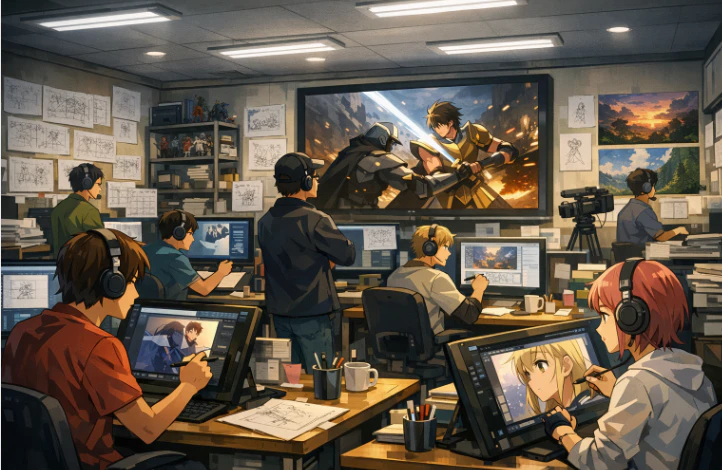
分鏡是動畫製作的重要階段之一。在這個階段,創作者將故事分解成一格一格的畫面,並設計角色的動作和表情。動畫的核心在於動作,而動作本身並非單一的存在,而是由無數瞬間組成。每一秒鐘的動畫都需要多張畫面來填滿,這使得分鏡設計成為一個極其細緻且耗時的工作。透過分鏡,創作者能夠掌握整體敘事的節奏,也能確保每一個細節都符合故事需求。
在分鏡完成後,動畫師開始進行繪製工作。這是一個需要高度專業技術的環節,每一張畫面都必須精準地表現角色的動作、表情以及背景細節。動畫師需要具備深厚的繪畫功底,同時也要理解運動的原理和角色的情感表達。這個過程雖然枯燥,但正因為有了這些細緻入微的努力,動畫才能呈現出流暢且生動的效果。
聲音是動畫製作中不可忽視的一部分。配音演員透過聲音賦予角色生命,他們不僅需要精準地表達對白,還要傳遞角色的情感和性格。音樂則為畫面增添了情感和氛圍,它可以引導觀眾的情緒,強化故事的張力或舒緩緊張感。在聲音與畫面完美融合的一刻,動畫才真正具備了完整性,也才有了打動人心的力量。
然而,動畫的誕生並不僅僅止步於製作完成。它真正的生命力來自於觀眾的觀看與共鳴。當作品被呈現於螢幕上,當觀眾停下腳步駐足欣賞,當某一句對白或某一個場景深深印刻在記憶中,動畫才算完成了它最後的一步。創作者提供了素材,而觀眾則透過自己的視角和情感,使作品變得鮮活且有意義。
整個動畫製作過程中,不僅需要技術上的精湛,更需要創作者對故事、角色以及觀眾心理的深刻理解。這種理解使得動畫不僅僅是一種視覺藝術,更成為了一種情感交流的媒介。每一部成功的動畫作品背後,都凝聚著創作者們無數次嘗試與調整的努力。
動畫的誕生並非一夜之間的奇蹟,它是數十人甚至數百人共同努力的結晶。在這個過程中,每一位參與者都扮演著不可或缺的角色。他們用自己的專業技能和熱情,將一個抽象的概念轉化為具體且生動的影像。而觀眾則透過自己的生活經驗和情感共鳴,使作品得以延續下去。
總結來說,動畫誕生是一個充滿挑戰但又充滿希望的過程。它不僅僅是技術與藝術的結合,更是一種人類情感與創意的展現。當畫面開始流動,而觀眾願意停下來觀看,那一刻,動畫便真正誕生了。這種誕生並非某一瞬間,而是一段持續流動且被感知到的時間,它讓我們看見創作者們對於藝術與生命的不懈追求。
English Version
The birth of anime is not a single moment but a gradual evolution shaped by artistic ambition, technological innovation, and cultural exchange. In the early 20th century, Japan began experimenting with animation techniques inspired by Western pioneers, particularly the works of Walt Disney. Early Japanese animators studied these methods while adapting them to local artistic traditions and storytelling approaches. The result was not a simple imitation, but the beginning of a distinct visual language that would eventually define anime. One of the earliest known Japanese animated works is often attributed to Jun’ichi Kōuchi and his contemporaries, who created short films using rudimentary techniques such as cut-out animation and chalk drawings. These early experiments were limited by both technology and resources, yet they demonstrated a growing interest in the medium’s potential. Unlike large-scale Western productions, early Japanese animation was often produced with minimal budgets, encouraging creators to develop efficient and innovative methods. This constraint would later become a defining feature of anime’s style. The development of anime accelerated in the post-war period, when Japan underwent rapid social and economic transformation. During this time, animation became a means of both entertainment and cultural expression. A key figure in this transition was Osamu Tezuka, often referred to as the “God of Manga.” Tezuka introduced a new approach to animation through works like Astro Boy, which combined cinematic storytelling with cost-effective production techniques. By limiting the number of frames and reusing visual elements, Tezuka made it possible to produce serialized animation for television, bringing anime into everyday life. Astro Boy marked a turning point, establishing many of the conventions that would define anime for decades. Its success demonstrated that animation could sustain long-form narratives and reach a wide audience. More importantly, it showed that anime could develop its own identity, distinct from Western animation. While Disney emphasized fluid motion and realism, anime embraced stylization, expressive character design, and narrative depth. This divergence allowed anime to explore a broader range of themes, from science fiction and fantasy to social issues and personal drama. As the industry grew, new creators expanded upon these foundations. Directors and artists experimented with different genres, visual styles, and storytelling techniques, pushing the boundaries of what animation could achieve. The rise of television in Japan further accelerated this growth, creating a demand for new content and encouraging the development of studios dedicated to animation production. By the 1970s and 1980s, anime had established itself as a major cultural force within Japan, with influential works spanning a wide range of genres. The global expansion of anime began in earnest during the late 20th century. Advances in distribution, including home video and later digital platforms, allowed anime to reach international audiences. Series and films gained popularity beyond Japan, introducing viewers around the world to its unique style and storytelling approach. This global reach was further enhanced by the internet and streaming services, which made anime more accessible than ever before. Today, platforms such as Netflix and Crunchyroll play a significant role in bringing anime to a global audience. The evolution of anime is also closely tied to technological advancements. From traditional hand-drawn animation to digital production, each stage of development has expanded the possibilities of the medium. While the core principles of anime remain rooted in its early innovations, modern techniques allow for greater detail, complexity, and efficiency. Despite these changes, the emphasis on storytelling and emotional expression continues to define the medium. What makes anime particularly distinctive is its ability to balance artistic constraint with creative freedom. Limited resources in its early history led to stylistic choices that became strengths rather than weaknesses. The focus on composition, character expression, and narrative depth allowed anime to convey powerful ideas without relying solely on technical realism. This approach has enabled anime to explore a wide range of themes, appealing to audiences of different ages and backgrounds. Ultimately, the birth of anime reflects a process of adaptation and reinvention. It emerged from a combination of external influence and internal innovation, evolving into a medium that is both uniquely Japanese and globally resonant. Its history is not just about the development of a form of entertainment, but about the creation of a cultural language—one that continues to grow and transform in response to the world around it.