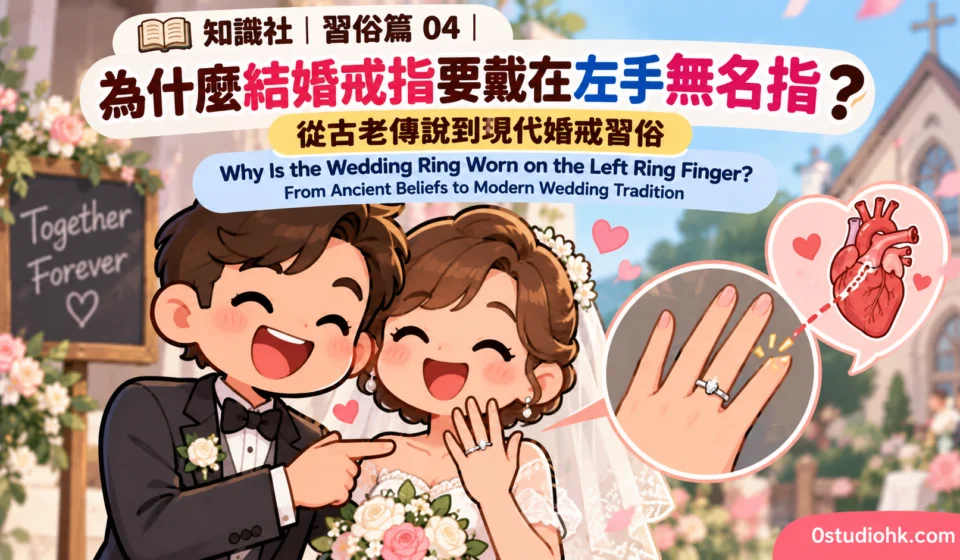
知識社|習俗篇 04 | 為什麼結婚戒指要戴在左手無名指?|從古老傳說到現代婚戒習俗 | Why Is the Wedding Ring Worn on the Left Ring Finger?|From Ancient Beliefs to Modern Wedding Tradition
結婚戒指戴在左手無名指,是許多人從小就習以為常的婚姻象徵。但為什麼偏偏是左手、偏偏是無名指?答案並不是一條「通往心臟的愛情血管」,而是歷史、傳說與文化習慣共同形成的結果。
Wearing a wedding ring on the left ring finger feels almost universal in many Western cultures. But why this particular finger? The answer is not a special vein leading directly to the heart, but a fascinating mixture of ancient belief, religious custom and centuries of social tradition.
中文版本
結婚戒指戴在左手無名指,今天看起來就像一條不需要解釋的規矩。求婚時戒指套上手指,婚禮交換戒指時再把它戴好,婚後也一直保留在同一隻手上。很多人甚至從來沒有想過,為什麼不是右手食指、右手無名指,或者其他手指?其實,婚戒應該戴在哪一隻手、哪一根手指,世界各地並沒有統一答案。不同國家和文化都有自己的傳統,例如部分歐洲國家、俄羅斯及一些其他地區,結婚戒指便常常戴在右手無名指。因此,「左手無名指」並不是全世界共同遵守的婚姻規則,而主要是西方文化中逐漸形成的一種習慣。關於左手無名指最著名的說法,是古人相信這根手指有一條特殊的血管,可以直接通往心臟。這條傳說中的血管後來常被稱為「愛情之脈」,拉丁文稱為 vena amoris,意思就是「愛之靜脈」。按照這個浪漫的想像,戒指戴在這根手指上,就像把愛情直接與心臟連結起來,因此特別適合用作婚姻戒指。不過,這個說法在現代解剖學角度並不成立。左手無名指並沒有一條特殊的靜脈直接通往心臟;人體的靜脈系統比這個浪漫故事複雜得多。換句話說,「愛情之脈」是一個流傳已久的文化傳說,而不是醫學事實。那麼,既然血管的故事不是真的,為什麼這個傳統仍然流傳下來?其中一個重要原因,是古代婚姻儀式和戒指本身早已具有象徵意義。在古羅馬社會,戒指可以作為婚姻或承諾的象徵,戒指本身代表一種關係的建立。戒指是圓形的,沒有明顯的起點和終點,因此很容易被賦予永恆、完整和長久的意義。當戒指套上手指,也代表一種承諾正式成立。到了基督教婚禮傳統發展之後,婚戒在西方婚禮中的地位進一步確立。婚禮儀式中的戒指交換,逐漸成為夫妻互相承諾的重要象徵。不過,左手無名指的使用並不是所有基督教傳統都完全一致,也曾經存在不同的做法。某些婚禮儀式甚至會在交換戒指時依次觸碰不同手指,再最後把戒指戴到無名指。這些儀式經過不同時代和地區的演變,最終才慢慢形成我們今天熟悉的習慣。另一個原因,是習俗本身具有非常強的「延續性」。當父母這樣戴、祖父母這樣戴,下一代自然也會照着做。到了近代,婚紗、婚禮攝影、電影、電視和廣告進一步強化了這種形象。當人們看到新娘伸出左手,鏡頭特寫無名指上的戒指,觀眾不用任何解釋,就知道這是一段婚姻關係的象徵。戒指於是由私人飾物變成一種人人都能理解的社會符號。有趣的是,無名指在中文裡本身就是一個很有意思的名稱。它不像拇指、食指、中指、小指那樣直接描述用途或位置,而是叫作「無名指」。英文則直接稱為 ring finger,意思就是「戴戒指的手指」。這種不同的命名方式,也反映不同語言和文化如何理解身體與習俗。至於為什麼是「左手」,除了傳統延續之外,也與不同歷史時期對左右兩邊的文化觀念有關。在一些西方文化裡,右手長期被視為較正式、公開或具有力量的一邊,而左手則可能承載不同的象徵意義。不過,這些觀念在不同時代和社會之間差異很大,因此不能簡單說「古人一定認為左手代表愛情」。真正可以確定的是,婚戒戴在哪隻手是一種文化選擇,而不是人體結構所規定的事情。今天,世界各地的婚戒佩戴方式其實相當多元。有些地方習慣左手,有些地方習慣右手,有些人因工作、宗教、家庭傳統或個人喜好而選擇不同方式。甚至有人把訂婚戒指和結婚戒指分別戴在不同手指,再按照自己的生活習慣重新安排。因此,左手無名指並不是婚姻的「唯一正確答案」。它之所以成為許多人熟悉的選擇,是因為歷史傳統、宗教儀式、浪漫傳說和現代流行文化長期疊加,最後形成了一個非常強烈的共同印象。最有趣的地方,反而是那條「愛情之脈」的傳說。即使現代人知道它並不符合真正的人體解剖結構,這個故事仍然沒有完全消失。因為習俗很多時候並不是靠科學真理來維持,而是靠故事、象徵和情感來流傳。戒指戴在左手無名指,真正重要的可能從來不是那裡是否存在一條神秘血管,而是兩個人願意把一枚圓形戒指套在手上,代表彼此的承諾。圓形沒有終點,因此很自然地被理解為永恆;戒指每天都戴在手上,又讓一份婚姻承諾成為日常生活的一部分。幾百年來,人們不斷重複這個動作,於是它慢慢成為我們今天所熟悉的婚姻象徵。也許我們不再相信愛情有一條特殊血管直通心臟,但當一對新人在婚禮上交換戒指,然後看着彼此手上的戒指時,那個動作本身仍然具有非常強的意義。它提醒我們,很多習俗之所以能夠流傳,不是因為它們永遠保持原貌,而是因為每一代人都會重新賦予它們新的意義。
English Version
Wearing a wedding ring on the left ring finger is so familiar in many Western societies that it can seem like a universal rule. A proposal often ends with a ring being placed on this finger, and during the wedding ceremony the couple may exchange rings and continue wearing them there for years. Yet there is nothing in human anatomy that requires a wedding ring to be worn on this particular finger. In fact, wedding-ring customs vary considerably around the world. In several European countries, Russia and other regions, for example, wedding rings are traditionally worn on the right ring finger. The idea of the left ring finger is therefore a cultural tradition rather than a universal rule. One of the most famous explanations is the ancient belief in a special vein running directly from the ring finger to the heart. This legendary vessel became known as the vena amoris, or “vein of love”. The romantic idea was simple: because the finger was supposedly connected directly to the heart, placing a wedding ring there would create a physical symbol of love and devotion. Unfortunately for the story, modern anatomy does not support it. There is no special vein running directly from the left ring finger to the heart. The veins of the human body form a much more complex network. The vena amoris is therefore best understood as a romantic cultural belief rather than a medical fact. If the famous vein is not real, why did the tradition become so powerful? One important reason is that rings had symbolic significance long before modern wedding ceremonies developed. In ancient Roman society, rings could be associated with marriage, agreements and personal commitments. The circular shape of a ring also made it an obvious symbol of continuity. A circle has no obvious beginning or end, so it could naturally represent permanence, completeness and an enduring relationship. Placing a ring on someone’s finger could therefore become a visible sign of a promise. As Christian wedding traditions developed in Europe, the exchange of rings became increasingly important within Western marriage ceremonies. Couples could use the ring as a physical reminder of their vows and commitment. However, Christian traditions were not completely uniform, and the exact finger or hand used for a wedding ring varied across different periods and regions. Some ceremonies even involved touching or moving through several fingers before finally placing the ring on the ring finger. Over centuries, these practices gradually changed, and particular customs became established in different communities. Tradition itself is another powerful reason why the left ring finger became so familiar. Children see their parents wearing wedding rings in a particular way, then grow up and repeat the same practice. Grandparents, relatives and friends reinforce the pattern. Eventually, a custom can become so familiar that people no longer ask where it came from. Modern photography, cinema, television and advertising have strengthened this visual language even further. A close-up of a bride’s left hand with a ring immediately communicates marriage without the need for explanation. The ring has therefore become more than jewellery; it has become a widely recognised social symbol. The finger itself also has an interesting linguistic history. In English it is commonly called the “ring finger”, directly linking the finger with its traditional use. In Chinese, however, it is known as the “nameless finger”, or 無名指. Different names reveal how different cultures describe and interpret the same part of the human body. The choice of the left hand is also connected to historical cultural ideas about left and right, although these ideas varied considerably between societies and periods. In some Western traditions, the right hand was associated with public action, strength or formal gestures, while the left could carry different symbolic meanings. It would therefore be misleading to claim that ancient people universally believed the left hand represented romantic love. What can be said more confidently is that the choice of hand developed through cultural practice rather than anatomy. Today, wedding-ring customs are more diverse than ever. Some people wear their rings on the left, others on the right, while some choose a different arrangement because of religion, family tradition, work or personal preference. Engagement rings and wedding rings may also be worn together or separately. There is therefore no single “correct” finger for a wedding ring. The left ring finger became particularly influential in many Western societies because historical practice, religious ceremony, romantic storytelling and modern popular culture gradually reinforced one another. Perhaps the most interesting part of the story is that the vena amoris legend has survived even though modern science has shown that the anatomy behind it is not real. Cultural traditions do not always survive because their original explanations are scientifically accurate. They survive because stories and symbols can carry emotional meaning. A ring placed on the finger represents a promise, while its circular shape naturally suggests continuity and permanence. Wearing it every day turns a wedding promise into something visible and familiar in ordinary life. The tradition has therefore become much larger than the old story about a mysterious vein. Today, when two people exchange rings during a wedding ceremony, the important part is not whether the ring is connected to the heart by a special blood vessel. The meaning comes from the commitment represented by the gesture. A couple chooses to place a small circle of metal on their hands and carry that symbol with them through everyday life. After generations of repetition, the action has become one of the world’s most recognisable signs of marriage. We may no longer believe that a special vein carries love directly from the finger to the heart, but the story remains memorable because it expresses something people have wanted to believe for centuries: that love, commitment and the heart should somehow be connected. The enduring tradition of the wedding ring shows that customs do not have to remain scientifically literal to remain meaningful. They survive because each generation gives old symbols new emotional significance.
總結
左手無名指並沒有神秘的「愛情血管」,婚戒位置主要源於歷史、宗教與文化傳承。戒指的圓形象徵延續與承諾,才是習俗真正長久的意義。
The left ring finger has no special vein connecting it directly to the heart. The tradition developed through history, religion and culture, while the ring itself became a lasting symbol of love, continuity and commitment.