
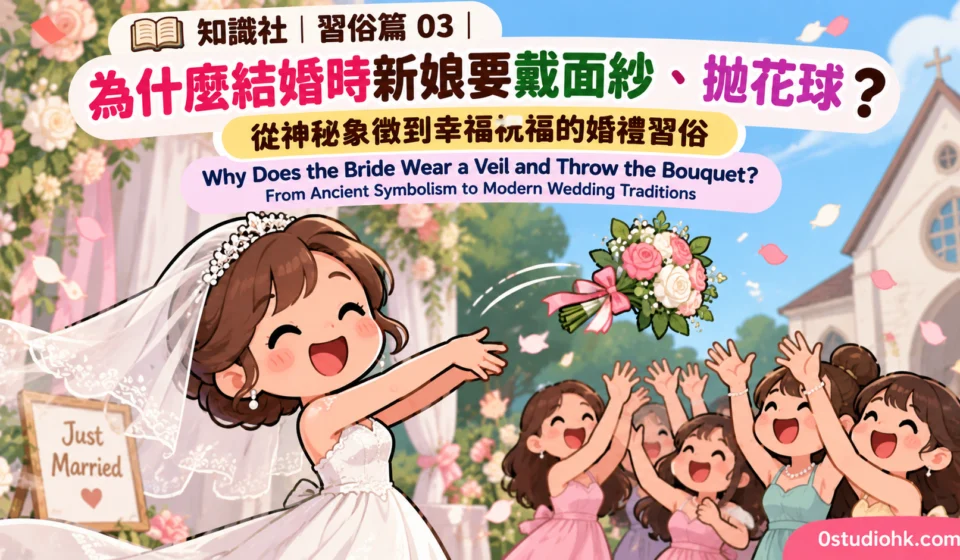
知識社|習俗篇 03 | 為什麼結婚時新娘要戴面紗、拋花球?|從神秘象徵到幸福祝福的婚禮習俗 | Why Does the Bride Wear a Veil and Throw the Bouquet?|From Ancient Symbolism to Modern Wedding Traditions

婚禮上,新娘戴面紗、拋花球,都是非常熟悉的畫面。但面紗原本未必只是為了美麗,花球也不只是婚禮裝飾,兩項習俗背後都藏着不同時代對婚姻、祝福與幸福的想像。
The bridal veil and bouquet toss are familiar scenes at weddings around the world. Yet neither tradition began simply as decoration. Each reflects older ideas about marriage, good fortune, protection and the hope for a happy future.
中文版本
婚禮是一個充滿象徵意義的場合,而新娘戴面紗和拋花球,正是其中最容易令人聯想到婚禮的兩項習俗。今天的新娘戴上白色面紗,通常被認為是婚紗造型的一部分,配合頭紗、花球和婚紗,形成我們熟悉的婚禮形象;但如果回到較早期的歷史,面紗的意義其實遠比「漂亮」複雜。不同文明都有遮蓋頭部或面容的婚禮習俗,因此並不存在一個所有婚禮面紗都可以追溯到的單一來源。在古代婚姻文化中,面紗有時與新娘的身份轉變、端莊、神秘感,以及保護新娘免受邪惡力量影響的民間信仰有關。古羅馬婚禮中便存在新娘以特殊頭巾或布料覆蓋頭部的習俗;而在其他文化裡,婚禮遮面亦可能代表新娘由未婚身份進入婚姻生活。至於「防止邪靈」的說法,經常出現在現代婚禮習俗的介紹中,但這類解釋涉及不同年代和文化的民間信仰,不能簡單說成所有新娘戴面紗都是為了驅邪。到了近代,面紗逐漸與新娘的婚紗造型、莊重感和浪漫形象結合起來。十九世紀英國維多利亞女王的婚禮對西方白色婚紗形象產生很大影響,白色逐漸成為許多人心目中婚禮的重要顏色,而面紗亦逐步成為新娘服飾的一部分。到了今天,面紗可以很長,也可以只覆蓋頭髮甚至完全不遮面,設計形式已經非常自由。它的意義也從身份、傳統和象徵,轉變成美感、浪漫和個人選擇。另一項有趣的婚禮習俗,就是拋花球。婚禮結束或接近結束時,新娘會背向未婚女性賓客,把手上的花球向後拋出,大家爭相伸手接住。現代流行文化通常把這個動作解釋為一種有趣的「預測」:誰接到花球,下一個結婚的人可能就是她。不過,這並不是一條真正的命運規則,而是一種民間傳統和娛樂性的說法。花球習俗的歷史同樣不是只有一個簡單來源。歐洲婚禮文化中,花卉長期具有祝福、生命、繁衍和幸福等象徵意義,而婚禮上的花束也逐漸成為新娘造型的重要部分。較早期的婚禮習俗中,人們甚至會相信接觸新娘或取得她身上的某些物品可以帶來好運,因此婚禮上的物品有時會成為賓客爭取的對象。到了後來,為了避免賓客直接拉扯新娘的衣服或搶奪她身上的物品,花球逐漸成為一件可以被拋出的象徵物。於是,新娘把花球交給下一位可能迎來幸福的人,便成為一個既熱鬧又容易參與的婚禮遊戲。值得注意的是,今天拋花球的意義已經發生變化。過去婚姻往往被視為人生的重要社會安排,而現代社會對婚姻、單身和人生選擇的看法更加多元,因此「接到花球就一定會結婚」已經不再被所有人認真看待。很多婚禮甚至會取消拋花球,或者邀請所有單身及非單身朋友一起參與,讓它變成單純的娛樂環節。這正好反映了習俗會隨着社會改變而改變。同一個動作,幾百年前可能具有強烈的信仰和社會意義,今天則可能只剩下歡樂、拍照和製造回憶的作用。面紗和花球雖然看似完全不同,但它們其實都有一個共同點:把婚姻這個抽象的人生轉變,變成看得見、摸得到、可以參與的儀式。面紗覆蓋新娘,象徵她站在婚姻開始的門檻;花球從新娘手中飛向賓客,則把幸福和祝福由新人延伸到其他人身上。當花球飛到半空、賓客笑着伸手搶接時,大家未必真的相信誰接到便會成為下一位新娘,但那一刻卻可以分享婚禮的喜悅。其實,很多傳統習俗都有類似的變化。它們最初可能源於信仰、社會制度或生活需要,經過一代又一代的傳承後,原來的原因逐漸淡化,新的文化意義卻慢慢形成。今天的新娘可以選擇戴面紗,也可以選擇不戴;可以拋花球,也可以把花球送給親友。習俗不一定要一成不變,才能繼續存在。真正讓它們留下來的,是人們願意在重要的人生時刻,透過一些共同的動作表達祝福。面紗讓新娘在婚禮中擁有一種特別的儀式感,而花球則把現場氣氛推向歡樂高潮。從古代的象徵,到近代的婚禮文化,再到今天充滿個人選擇的婚禮,兩項習俗都在不斷改變。也許我們已經未必相信面紗可以保護新娘免受神秘力量侵擾,也未必相信接到花球真的可以預告婚期,但當新娘轉身把花球拋向人群時,大家仍然會笑着向前伸手。因為習俗真正留下來的,往往不是最初那個原因,而是它帶來的共同記憶、祝福和歡樂。
English Version
A wedding is filled with symbolic gestures, and few are more recognisable than the bride wearing a veil and later throwing her bouquet towards the guests. Today, the veil is usually regarded as part of the bridal look, while the bouquet is an elegant accessory that completes the ceremony. Historically, however, both customs carried meanings that went far beyond appearance. Veiling has existed in wedding traditions across different societies, so there is no single origin that explains every bridal veil used throughout history. In some ancient cultures, covering the bride’s head or face could represent modesty, mystery, a change of social status or the transition from unmarried life into marriage. Some traditions have also been associated with beliefs about protecting the bride from harmful supernatural forces. Ancient Roman wedding customs, for example, included distinctive head coverings for brides. Other cultures developed their own forms of bridal covering for religious, social or symbolic reasons. Modern explanations sometimes suggest that the veil was universally intended to protect a bride from evil spirits, but this is too broad a claim. Ideas about supernatural protection varied greatly between cultures and historical periods. Over time, the veil became increasingly connected with the visual language of the modern Western wedding. During the nineteenth century, Queen Victoria’s famous wedding helped popularise the image of a white wedding dress in Western culture, and the veil became increasingly associated with the romantic bridal appearance. Today, veils can be extremely long, short, transparent, decorative or even positioned entirely behind the head. Some brides choose to cover their faces, while others wear a veil simply because they like the style. The symbolic meaning has therefore become much more flexible. It can suggest tradition, elegance, romance or simply personal preference. The bouquet toss has a different history but has also changed considerably over time. Towards the end of a wedding celebration, the bride traditionally turns her back to a group of guests and throws her bouquet into the air. People then compete to catch it. Popular culture often presents the custom as a playful prediction: whoever catches the bouquet will supposedly be the next person to marry. This is a folk belief rather than a genuine prediction of the future. Flowers themselves have long carried symbolic meanings connected with beauty, life, happiness and good fortune, making them natural elements of wedding celebrations. Earlier European wedding customs also included the idea that obtaining something belonging to the bride could bring good luck. This sometimes led guests to reach for parts of the bride’s clothing or other personal items. Over time, the bouquet provided a much more convenient object for this playful pursuit. Instead of pulling at the bride’s dress or competing for something she was wearing, guests could simply try to catch the flowers she threw into the crowd. The bouquet toss therefore developed into a lively wedding activity that allowed guests to participate directly in the celebration. Its meaning has also changed as society has changed. Marriage is no longer viewed in exactly the same way it was in earlier generations, and being single is not necessarily regarded as a temporary stage before marriage. As a result, fewer people take the traditional prediction literally. At many modern weddings, the bouquet toss has become simply a fun photo opportunity and a way of involving friends and family. Some couples choose not to include it at all, while others invite everyone to participate regardless of relationship status. This flexibility demonstrates an important feature of cultural traditions: they evolve when society evolves. A ritual may begin with a serious belief or social purpose, yet centuries later it can survive mainly because people enjoy the experience. The veil and bouquet may appear to have completely different functions, but both transform marriage from an abstract life event into something visible and memorable. The veil creates a distinctive ceremonial moment for the bride, while the bouquet travels from the bride into the crowd, symbolically extending the celebration and good wishes to others. When the flowers fly through the air and guests reach up to catch them, most people are not seriously calculating who will marry next. They are simply sharing a moment of laughter and excitement. This is often how traditions survive. The original reason may become less important, while the emotional meaning becomes stronger. A bride today may wear a veil because it connects her with generations of brides before her, or simply because she loves the way it looks. She may throw her bouquet because it is a playful tradition, or she may choose to give the flowers to someone special instead. Tradition does not necessarily require every detail to remain unchanged. What matters is that people continue to find meaning in the ritual. The veil, once connected with ideas of status, modesty, mystery or protection, has become a flexible symbol of bridal identity. The bouquet, once associated with good fortune and the bride’s special status, has become a joyful object that can be shared with the wedding guests. Neither custom has a single meaning today, and that is precisely what makes them interesting. They demonstrate how human traditions can travel through centuries while adapting to new beliefs, values and lifestyles. We may no longer believe that a veil can protect a bride from supernatural danger, and we may not seriously believe that catching a bouquet predicts the next wedding. Yet when a bride turns around and sends the flowers flying into the crowd, people still laugh, cheer and reach for them. The lasting power of these traditions lies not necessarily in the beliefs that created them, but in their ability to turn an important moment into a shared memory of happiness, friendship and hope.
總結
新娘面紗曾承載身份、莊重與保護等象徵,花球則與祝福和好運相連。今天兩者更多代表浪漫、歡樂與婚禮記憶,反映習俗會隨時代改變。
The bridal veil and bouquet once carried deeper ideas about status, protection and good fortune. Today they mainly express romance, celebration and shared memories, showing how traditions evolve with society.