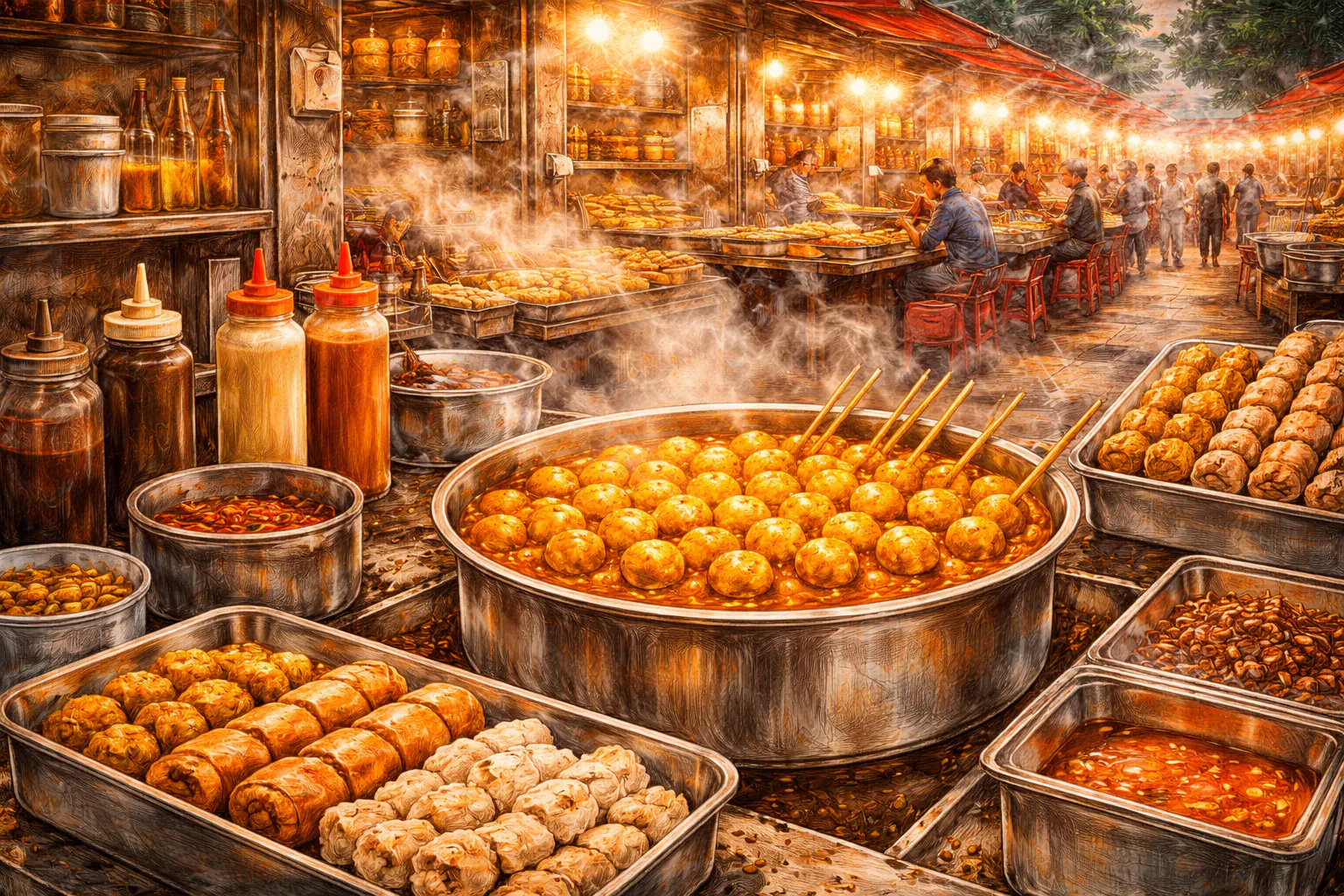
在香港的街頭小食文化中,魚蛋檔一直佔有重要位置。滾燙的咖喱湯中,一串串金黃色魚蛋散發着濃郁香氣,吸引無數行人停下腳步。學生放學後、上班族下班途中、逛街的市民,都曾在街角魚蛋檔前排隊,買上一串熱騰騰的小食。簡單的一串魚蛋,不僅價格親民,也承載着香港街頭生活的熱鬧氣氛。回望香港魚蛋檔的年代,那些飄散在街道上的咖喱香味,成為城市最熟悉的集體記憶。
On the vibrant streets of Hong Kong, fish ball stalls once filled the air with the rich scent of curry and the rhythm of everyday life. These humble roadside vendors offered more than quick snacks—they created shared moments across generations. With each skewer dipped in fragrant sauce, they captured the pulse of the city and the warmth of its people.
在香港繁忙的街道上,有一種味道幾乎人人熟悉,那就是魚蛋的咖喱香。無論是在學校附近、地鐵出口,還是在熱鬧的商業街區,魚蛋檔總是吸引不少食客駐足。
魚蛋,是香港最具代表性的街頭小食之一。雖然製作簡單,但它在香港飲食文化中佔有重要地位。對許多人來說,一串熱騰騰的魚蛋,就是街頭生活最真實的味道。
魚蛋的歷史可以追溯到早期的漁村時代。當時漁民為了保存魚肉,會把魚肉打成魚漿,再製成不同形狀的食品。隨着時間推移,魚漿製品逐漸發展成今天常見的魚蛋。
到了二十世紀中期,香港城市人口快速增加,街頭小販文化也逐漸興盛。一些小販開始在街邊售賣魚蛋,並加入咖喱湯煮熟,形成獨特的風味。
咖喱魚蛋很快受到市民歡迎。小販通常把魚蛋放在大鍋裡慢慢煮着,湯汁香味濃郁。顧客只需用竹籤串起幾顆魚蛋,就可以邊走邊吃。
這種方便又便宜的小食,很快成為學生與年輕人最喜愛的街頭食品之一。在放學時間,許多學校附近的魚蛋檔都會排起長隊。
魚蛋檔的攤位通常不大,多是一個簡單的小車或小攤。鍋裡冒着熱氣,旁邊擺放醬油、辣椒醬與甜醬等調味料。香味常常飄散到整條街道。
對很多香港人來說,魚蛋檔不只是賣食物的地方,也是街頭生活的一部分。朋友相約逛街時,常常會一起買魚蛋,一邊聊天一邊吃。
魚蛋的味道也有不同變化。有些魚蛋加入辣味咖喱,有些則配上甜醬或沙嗲醬。不同小販的配方各有特色,因此吸引不同顧客。
在香港的夜市與節日活動中,魚蛋檔更是不可缺少的存在。燈光下的小攤檔排成一列,熱氣與香味交織,形成充滿活力的街頭景象。
然而,隨着城市管理制度的改變,街頭小販數量逐漸減少。許多魚蛋檔被要求搬入固定店舖或熟食市場。
儘管如此,魚蛋依然是香港最受歡迎的小食之一。不少小食店與餐廳仍然提供咖喱魚蛋,讓人們可以繼續品嚐這種熟悉的味道。
近年來,香港魚蛋甚至在海外受到關注。在一些外國城市,也可以看到售賣咖喱魚蛋的小店,吸引當地人與遊客品嚐。
對許多香港人來說,魚蛋的味道代表着童年與青春。放學後的街角、與朋友分享的小食、以及忙碌城市中的片刻休息,都與魚蛋緊密相連。
即使時代改變,魚蛋依然在香港街頭散發香味。那些簡單的竹籤與小鍋,見證着城市生活的變化。
回望香港魚蛋檔的年代,可以看到一座城市最親切的一面。那些排隊的人群、熱氣騰騰的鍋與飄散的咖喱香,構成了街道最生動的畫面。
在香港人的記憶裡,一串魚蛋或許只是小食,但它卻連結着無數日常片段。那些平凡的味道,也因此成為城市最珍貴的文化記憶。
English Version
In the crowded and energetic streets of Hong Kong, fish ball stalls stood as one of the most iconic symbols of local street food culture. Known for their unmistakable aroma of curry sauce simmering over portable stoves, these stalls drew people in from a distance, guiding them by scent as much as by sight. The fish balls themselves were simple—bouncy, smooth, and served hot on skewers—but when coated in thick, spicy curry, they transformed into something deeply satisfying. Affordable, quick to prepare, and easy to eat on the go, they became a staple for people from all walks of life. Students, workers, tourists, and residents alike would pause at these stalls, if only for a brief moment, to enjoy a familiar taste that felt both comforting and alive. The appeal of fish ball stalls extended far beyond their flavor. They were embedded within the flow of the city, positioned at street corners, near transport hubs, and along busy sidewalks where life never seemed to slow down. Vendors worked with practiced efficiency, turning skewers, ladling sauce, and serving customers in rapid succession. Yet, within this fast-paced exchange, there remained a sense of familiarity. Regular customers were often greeted with recognition, their preferences remembered without needing to be spoken. These small gestures created a quiet sense of belonging, transforming a simple transaction into a shared experience. The origins of Hong Kong’s fish ball culture can be traced back to a time when resourcefulness defined daily life. Made from inexpensive fish paste, fish balls were an accessible source of protein for many working-class families. Vendors adapted by adding curry sauce, a bold and flavorful addition that elevated the dish while keeping it affordable. Over time, this combination became a defining feature of Hong Kong street food, blending practicality with creativity. It was a reflection of a city that continuously reinvented itself, finding ways to create richness from simplicity. As Hong Kong developed into a modern metropolis, the landscape of street food began to change. Increasing regulation, concerns over hygiene, and the restructuring of public spaces gradually reduced the number of traditional street stalls. In their place, licensed shops and food chains offered more standardized versions of fish balls, often within enclosed environments. While these establishments maintained the flavor to some extent, they lacked the spontaneity and immediacy of the original street-side experience. The act of standing on a busy pavement, holding a skewer of steaming fish balls while surrounded by the sounds of traffic and conversation, became less common. What faded was not just a type of stall, but a way of engaging with the city. Despite these transformations, fish balls remain one of the most enduring symbols of Hong Kong’s culinary identity. Their presence continues in various forms, from traditional shops to modern reinterpretations, yet their cultural meaning is deeply tied to the streets where they first gained popularity. For many, the taste of curry fish balls is inseparable from memory—of childhood afternoons, of bustling neighborhoods, and of a city that felt immediate and alive. The sensory experience—the heat of the skewer, the spice of the sauce, the rhythm of the surroundings—creates a vivid connection to the past that cannot be easily replaced. Remembering the era of fish ball stalls is, in many ways, remembering the heartbeat of Hong Kong itself. It is about recognizing how small, everyday experiences contribute to a collective identity. These stalls, modest in appearance and simple in offering, played a significant role in shaping the city’s cultural landscape. They remind us that food is not only about nourishment, but about connection, memory, and the shared spaces that bring people together. Even as the physical presence of these stalls becomes less visible, their legacy continues to live on in the stories people tell, the flavors they seek, and the enduring image of steam rising from a corner of the street.