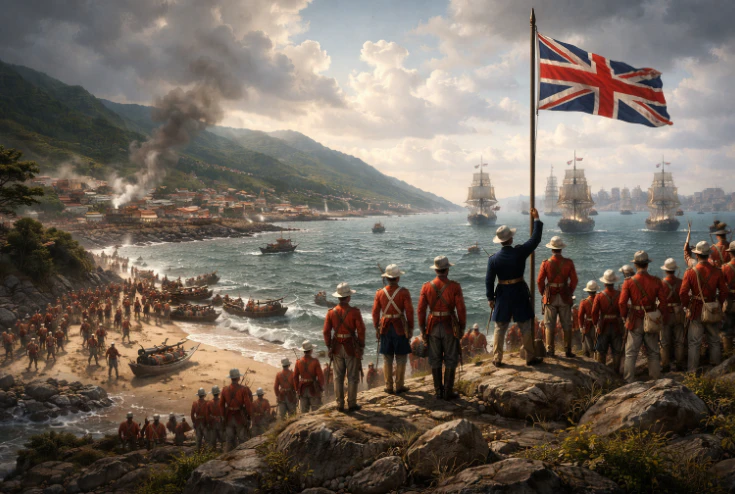
1841年英國佔領香港島,標誌香港歷史的重要轉折,由漁村逐步轉變為國際港口。
In 1841, Britain occupied Hong Kong Island, marking a historic turning point as it evolved from a fishing village into a global port.
在鴉片戰爭爆發後,中英衝突迅速升級,英軍憑藉強大的海軍力量沿中國沿海推進,並逐步掌握戰略主動權。1841年初,英國決定佔領香港島,作為軍事基地與遠東貿易據點,這一決策深受香港優越地理位置影響,香港島位於珠江口外,擁有天然深水港,既便於軍艦停泊,也利於商船往來,對英國而言具有極高戰略價值。1841年1月,英軍在香港島西北部水域登陸,迅速控制主要據點,清軍抵抗有限且組織鬆散,未能形成有效防禦。同年1月26日,英國正式宣佈佔領香港島,並舉行升旗儀式,象徵主權轉移的開始,這一天後來被視為香港開埠的重要起點。隨後,英國派遣查理·義律作為全權代表,開始規劃香港的行政與貿易發展,初期的香港仍然是一個人口稀少、基礎設施簡陋的小島,但憑藉其港口優勢,很快吸引了大量外國商人與華人移民聚集。英國政府逐步建立殖民地管治架構,包括設立總督制度、引入英國法律體系,以及發展港口設施,使香港逐漸轉變為自由貿易港。隨著鴉片戰爭持續進行,清政府在戰場上節節敗退,最終於1842年與英國簽訂《南京條約》,正式割讓香港島予英國,從法律上確立英國對香港的統治。這一條約不僅改變了香港的政治地位,也對中國的主權造成深遠影響,標誌著近代中國被迫打開國門,進入不平等條約體系。英國佔領香港島後,迅速推動港口建設與城市規劃,中環一帶逐漸發展成為商業核心區,維多利亞港成為遠東最繁忙的港口之一,吸引來自世界各地的商人、銀行與航運公司進駐,香港逐漸由一個邊陲小島轉型為國際貿易樞紐。這一歷史事件不僅奠定了香港作為國際城市的基礎,也深刻影響了其文化、經濟與社會結構,形成中西交匯的獨特特色,並延續至今。英國佔領香港島是鴉片戰爭的重要結果之一,也是香港歷史發展的關鍵起點,其影響不僅局限於19世紀,更塑造了香港在全球格局中的角色與定位,成為理解近代東亞歷史不可或缺的一環。
English Version
Following the outbreak of the Opium War, tensions between Britain and the Qing Empire escalated rapidly, with British naval forces advancing along China’s coastline and gaining strategic superiority. In early 1841, Britain made the decisive move to occupy Hong Kong Island, recognizing its exceptional geographic advantages as both a ռազմական基地 and a commercial hub in East Asia. Situated at the mouth of the Pearl River Delta, Hong Kong Island possessed a deep natural harbor that was ideal for anchoring warships and facilitating international trade, making it an invaluable asset for British imperial interests. In January 1841, British forces landed on the northwestern shores of the island and quickly secured control over key positions, encountering limited and disorganized resistance from Qing troops. On January 26, 1841, Britain formally proclaimed its occupation of Hong Kong Island and raised its flag, marking the symbolic beginning of colonial rule and what would later be regarded as the founding moment of modern Hong Kong. Soon after, Charles Elliot was appointed as the British plenipotentiary responsible for administering the newly occupied territory and laying the groundwork for its development. At the time, Hong Kong was sparsely populated and lacked infrastructure, but its strategic harbor soon attracted foreign merchants, traders, and Chinese migrants seeking economic opportunities. The British administration gradually established a colonial governance system, including the appointment of governors, the introduction of British legal institutions, and the expansion of port facilities, transforming Hong Kong into a free port that encouraged global commerce. As the Opium War continued, the Qing dynasty suffered repeated military defeats and was eventually forced to negotiate peace, culminating in the Treaty of Nanking in 1842, which formally ceded Hong Kong Island to Britain and legitimized British rule. This treaty not only altered Hong Kong’s political status but also significantly undermined China’s sovereignty, marking its reluctant entry into a system of unequal treaties and global diplomacy. Following the occupation, Britain accelerated urban planning and infrastructure development, with areas such as Central emerging as commercial centers and Victoria Harbour becoming one of the busiest ports in the Far East. The influx of international businesses, financial institutions, and shipping companies further solidified Hong Kong’s transformation from a peripheral island into a global trading hub. The British occupation of Hong Kong Island was therefore not merely a consequence of war but a defining moment that shaped the city’s identity, economic trajectory, and cultural hybridity. Its legacy extended far beyond the 19th century, positioning Hong Kong as a vital link between East and West and a key player in global trade networks, making it an essential chapter in the study of modern East Asian history.