
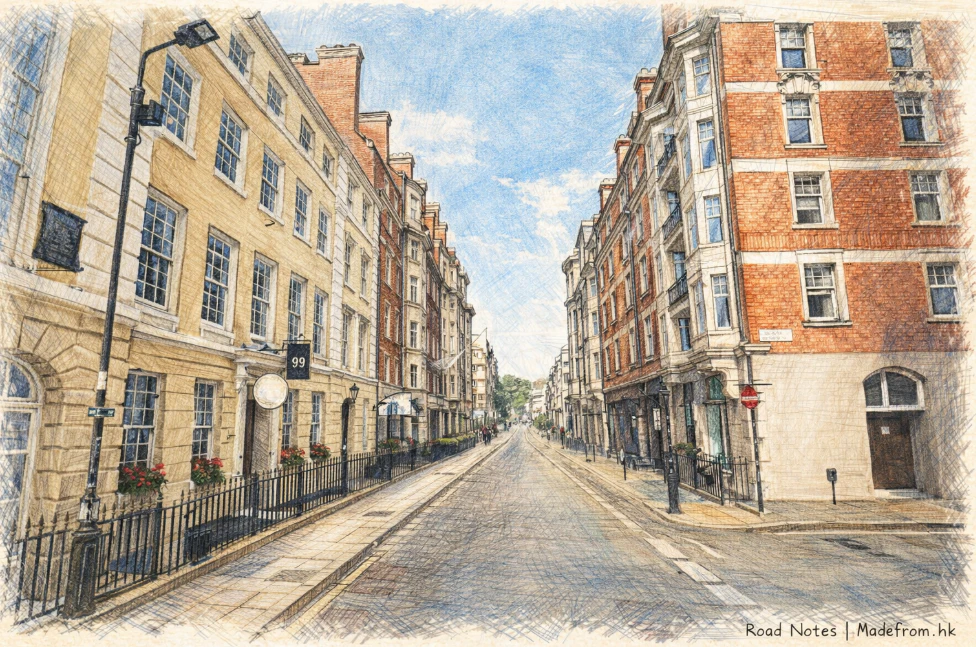
【街道筆錄】倫敦大羅素街:博物館與歷史交織的文化軸線 | Great Russell Street London: A Cultural Spine of Museums and Memory
在倫敦布魯姆斯伯里區的靜謐街道上,大羅素街像一本攤開的歷史書,連接著學術、文化與帝國記憶,而街道盡頭的大英博物館,正靜靜見證著世界文明的流動。
In Bloomsbury, London, Great Russell Street unfolds like a quiet narrative of knowledge and empire, where history lingers in architecture and thought, and the British Museum stands as a silent guardian of global memory.
中文
Great Russell Street 位於倫敦市中心布魯姆斯伯里(Bloomsbury)區,是一條看似平靜卻蘊含深厚文化與歷史意義的街道,其名稱來自英國貴族羅素家族,該家族自17世紀起便掌握該區大量土地,並透過城市規劃將布魯姆斯伯里發展為一個結合住宅、學術與文化的地區,而Great Russell Street正是這一規劃的重要組成部分。街道的形成可追溯至17至18世紀倫敦城市擴展時期,當時隨著人口增加與貴族土地開發,布魯姆斯伯里逐漸從郊區轉變為具有規劃性的城市區域,街道以寬闊筆直的設計為主,反映出當時對秩序與空間的重視。Great Russell Street 最重要的歷史地標,無疑是於1753年成立並於1759年對外開放的大英博物館,這座博物館不僅是英國最具代表性的文化機構之一,更象徵著帝國時期對世界文明的收集與展示,其存在使Great Russell Street成為全球學者、旅人與文化愛好者匯聚之地。在19世紀,隨著工業革命與城市化加速,布魯姆斯伯里逐漸形成濃厚的學術氛圍,附近聚集了出版機構、學院與知識分子,Great Russell Street 也因此成為思想交流的重要空間之一。進入20世紀後,倫敦經歷戰爭與重建,該區雖受到一定程度破壞,但整體街道格局與文化定位得以保留,並在戰後持續發展為文化與教育中心。從城市變化角度來看,Great Russell Street 見證了倫敦由帝國首都轉型為全球文化都市的過程,昔日象徵權力與收藏的博物館,如今逐漸轉化為公共教育與文化交流的平台,而街道周邊也由貴族住宅區轉為混合用途空間,融合旅遊、學術與日常生活。街道特色方面,Great Russell Street 擁有典型倫敦建築風格,紅磚與石材立面交錯,建築高度整齊,街道寬敞而具有秩序感,沿街可見書店、咖啡館與文化機構,營造出一種安靜卻充滿思想流動的氛圍,而博物館宏偉的古典立面更為整條街增添歷史重量與視覺焦點。今日的 Great Russell Street,不僅是一條交通道路,更是一條文化軸線,它連接著過去與現在,將帝國歷史、學術傳統與現代城市生活融合在一起,在遊客與學者的步伐之中,這條街依然持續書寫著屬於倫敦的故事,讓人不禁在行走之間感受到時間的層層堆疊與文明的延續。
English Version
Great Russell Street, located in the Bloomsbury district of central London, is far more than a simple urban thoroughfare—it is a cultural artery shaped by aristocratic influence, intellectual life, and the evolving identity of the city itself. Its name originates from the Russell family, one of Britain’s most influential aristocratic lineages, who owned and developed much of Bloomsbury from the 17th century onward. Through deliberate urban planning, the area transformed from semi-rural land into a structured district characterized by order, symmetry, and purpose. Great Russell Street emerged during this expansion, reflecting the ideals of clarity and proportion that defined London’s growth at the time. The street’s most defining landmark is the British Museum, established in 1753 and opened to the public in 1759, which positioned the area as a global center of knowledge and cultural accumulation. During the height of the British Empire, the museum symbolized not only scholarship but also the reach of imperial power, gathering artifacts from across continents into a single institutional space. This presence attracted scholars, writers, and thinkers, gradually shaping Bloomsbury into a hub of intellectual and literary activity. By the 19th century, the surrounding area was filled with publishing houses, academic institutions, and salons of discussion, reinforcing the street’s role as a place where ideas circulated freely. The 20th century brought both disruption and renewal, as London endured wartime damage and subsequent reconstruction, yet Great Russell Street retained its structural coherence and cultural significance. Over time, the meaning of the space evolved—what was once tied closely to aristocracy and empire became increasingly accessible, transforming into a public and educational environment. Today, the street embodies a layered identity, where heritage coexists with modern urban life. Architecturally, it showcases classic London elements: red brick façades, stone detailing, and consistent building lines that create a sense of visual rhythm. Cafés, bookstores, and cultural venues line the street, offering a quieter, reflective atmosphere compared to the city’s busier commercial areas. The British Museum remains its focal point, anchoring the street both physically and symbolically. In the present day, Great Russell Street stands as a bridge between eras—a place where history is not confined to the past but continues to inform the present. Walking along it feels like moving through a continuum of knowledge, where each building and corner carries echoes of intellectual pursuit and cultural exchange that define London’s enduring character.