
Hellenistic Age

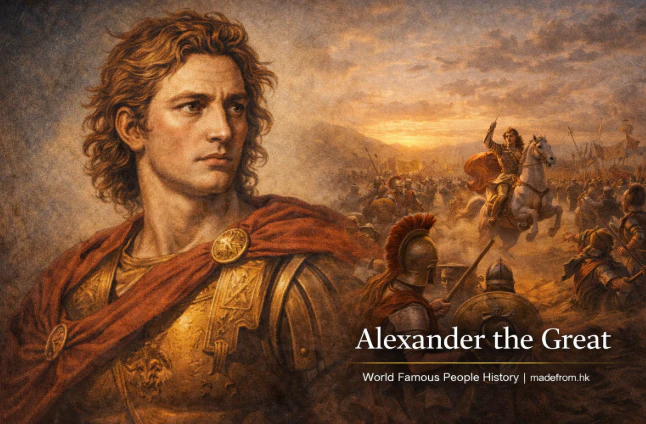
亞歷山大大帝|征服世界的馬其頓王與希臘化時代的開創者English: Alexander the Great | Conqueror of Empires and Founder of the Hellenistic Age | 世界名人錄

亞歷山大大帝是古代最偉大的軍事統帥之一,以驚人的征戰速度建立橫跨歐亞非的大帝國,開啟希臘文化全球傳播的新時代。

Alexander the Great was one of history’s greatest military commanders, whose rapid conquests created a vast empire and ushered in the spread of Greek culture across three continents.

中文

Alexander the Great生於公元前356年,是古馬其頓王國的國王,也是人類歷史上最具傳奇色彩的征服者之一。他是國王腓力二世之子,自幼接受優秀教育,其導師為著名哲學家亞里士多德,使他在軍事才能之外,亦具備廣博的知識與文化視野。年僅二十歲時,亞歷山大繼承王位,迅速平定內部叛亂並統一希臘城邦,隨後展開對波斯帝國的遠征。他的軍事才能極為卓越,善於運用戰術與心理戰,在伊蘇斯戰役與高加米拉戰役中擊敗波斯國王大流士三世,成功摧毀當時世界上最強大的帝國之一。亞歷山大不僅是一位征服者,也是一位具有遠見的統治者,他在征戰過程中建立多座以自己命名的城市,其中最著名的是埃及的亞歷山大城,成為日後文化與學術的重要中心。他推行融合政策,鼓勵希臘文化與東方文明交流,使希臘語成為廣泛使用的通用語,開啟了所謂的「希臘化時代」。這一時期,藝術、科學與哲學得到空前發展,對後世西方文明產生深遠影響。亞歷山大的軍隊遠征至印度河流域,創下當時前所未有的地理擴張,但長期戰爭亦令士兵疲憊,最終迫使他停止東進並返回巴比倫。在公元前323年,亞歷山大於巴比倫突然去世,年僅32歲,其死因至今仍有多種推測,包括疾病或中毒。由於未明確指定繼承人,他的帝國迅速分裂為多個由將領統治的王國,形成「繼業者時代」。儘管帝國短暫,亞歷山大的影響卻極為深遠,他改變了世界政治版圖,促進東西方文化交流,並塑造了後世對英雄與征服者的想像。他的事蹟被後人不斷傳頌與神話化,成為歷史與傳說交織的象徵人物。


English Version

Alexander the Great was born in 356 BCE and became one of the most legendary military leaders in history. As the son of King Philip II of Macedon, he received an exceptional education under the guidance of the philosopher Aristotle, which shaped both his intellectual curiosity and strategic thinking. At the age of twenty, Alexander ascended to the throne and quickly secured his power by suppressing rebellions and uniting the Greek city-states. He then embarked on an ambitious campaign against the Persian Empire, which was the dominant power of the time. Demonstrating extraordinary military brilliance, Alexander achieved decisive victories at battles such as Issus and Gaugamela, defeating King Darius III and dismantling the Persian Empire. His conquests extended across Asia Minor, Egypt, Mesopotamia, and into the Indian subcontinent, creating one of the largest empires in the ancient world. Beyond his achievements as a conqueror, Alexander was also a visionary leader who sought to integrate diverse cultures within his empire. He founded numerous cities, many named Alexandria, with the most famous in Egypt becoming a major center of learning and culture. By promoting the spread of Greek language and ideas, he initiated the Hellenistic Age, a period characterized by the blending of Greek and Eastern traditions, which had a profound influence on art, science, and philosophy. Despite his successes, the relentless pace of his campaigns eventually exhausted his troops, leading to a halt in further expansion. In 323 BCE, Alexander died unexpectedly in Babylon at the age of 32, under circumstances that remain debated, including theories of illness or poisoning. Without a clear successor, his empire quickly fragmented among his generals, giving rise to the Hellenistic kingdoms. Although his empire was short-lived, Alexander’s legacy endured, reshaping the political and cultural landscape of the ancient world. His life has since been immortalized in history and legend, symbolizing ambition, leadership, and the enduring impact of human vision.