
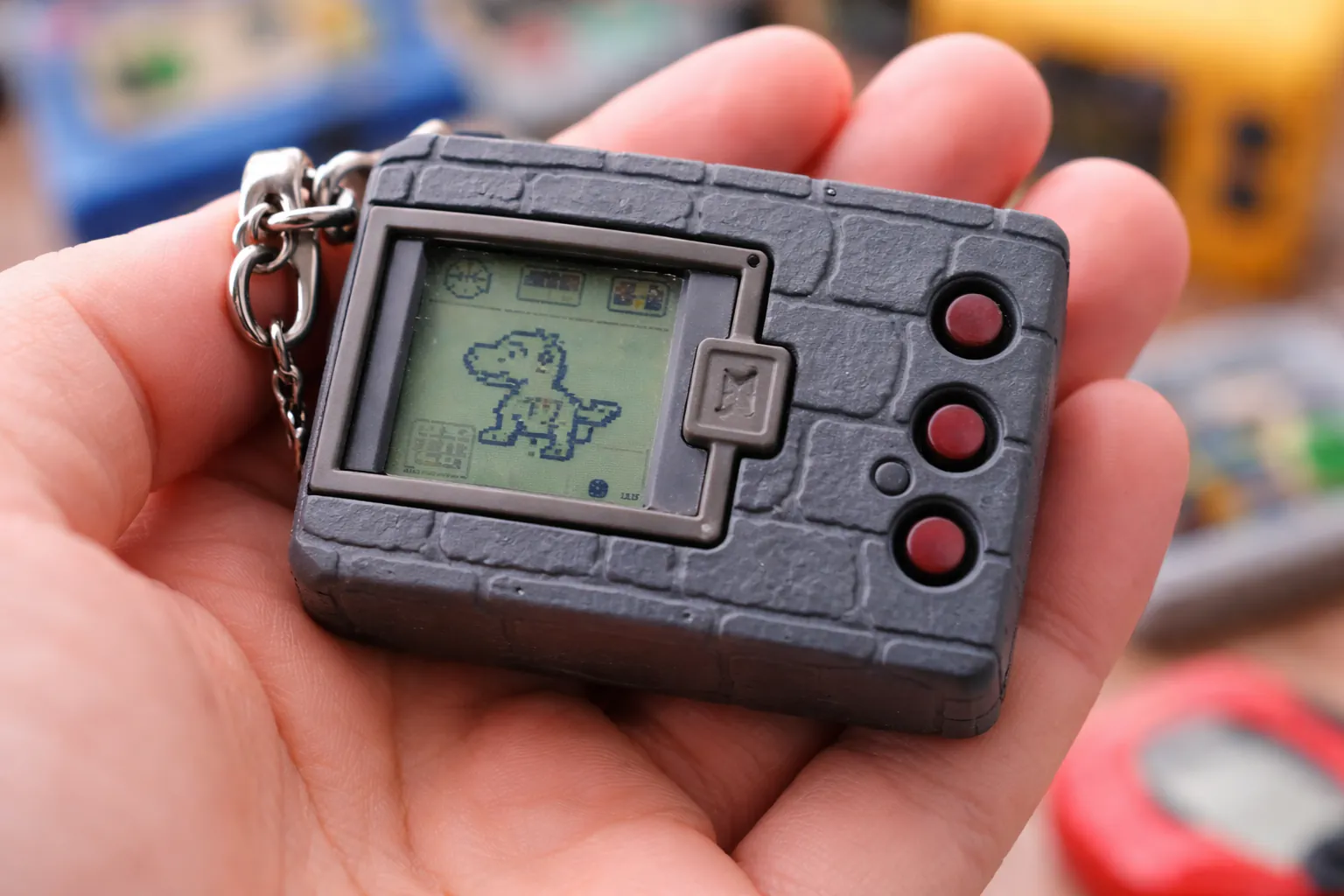

暴龍機的出現,無疑是電子玩具史上的一個重要里程碑。1997年,Bandai推出了名為Digital Monster的虛擬寵物裝置,這款裝置後來被大家親切地稱為「暴龍機」。它的問世不僅改變了電子玩具的遊戲方式,也重新定義了玩家與虛擬生物之間的互動關係。
在暴龍機之前,電子寵物的概念主要集中在模擬生命的照顧上。像是更早期的他媽哥池,玩家的責任是餵食、清理、陪伴它,讓它健康成長。但暴龍機卻在此基礎上進一步推進,它不僅僅是需要照顧的虛擬生命,更是一個能夠進化、戰鬥,並且與其他玩家互動的數碼生物。這種全新的設計理念,使得暴龍機迅速成為日本乃至全球市場上的熱門商品。
暴龍機的設計非常簡單,僅有掌心大小,配備單色螢幕和幾個按鍵。雖然外觀樸素,但它內部蘊含著豐富的可能性。玩家可以透過餵食、訓練、休息等方式培養自己的數碼獸,而這些行為會直接影響數碼獸的進化路線。這意味著每個玩家都可以根據自己的喜好和方式,培養出獨一無二的數碼獸。進化的過程不僅僅是外觀的改變,更是能力和屬性的提升,這讓玩家感受到了一種深度參與的成就感。
更令人驚喜的是,暴龍機還加入了連結功能。兩台裝置可以通過接觸進行對戰,這使得原本孤立的電子玩具變成了一種社交工具。玩家不再只是單純地與自己的數碼獸互動,而是能夠與朋友進行交流和競爭。校園裡,暴龍機成為孩子們之間的重要話題,每一次對戰都充滿了期待和刺激。這種互動性使得暴龍機不僅是一個玩具,更是一種文化現象。
暴龍機的成功也帶動了數碼獸世界觀的擴展。從最初的電子裝置,數碼獸逐漸進入動畫、漫畫、遊戲等媒體領域。這種跨媒介的文化循環,使得數碼獸不再只是像素角色,而是一個完整且吸引人的故事世界。玩家可以在不同的平台上探索數碼獸的故事,並且將自己的玩具體驗與媒體內容結合起來。這種創新的模式,不僅提升了玩具的價值,也使得數碼獸成為了一個持久流行的品牌。
然而,即使暴龍機的周邊文化逐漸龐大,它本身依然保持著簡單的形式。單色螢幕、粗糙像素動畫,與今日精緻的手機遊戲相比,顯得格外樸素。但恰恰是這種簡單,讓玩家能夠專注於與數碼獸之間的情感連結。每一次餵食、訓練,都像是在與一個小小的生命互動;每一次等待進化,都充滿著期待和希望。這種純粹的遊戲體驗,使得暴龍機在技術不斷進步的年代裡,依然擁有特殊的地位。
回顧暴龍機的年代,它代表著電子玩具的一次重要轉折。不再只是模擬生命,而是創造了一個能夠成長和互動的小世界。玩家不再僅僅是照顧者,而是成為了一個參與者、一個夥伴。這種角色轉變,不僅讓玩具更具吸引力,也讓玩家對自己的數碼獸投入更多情感。
多年以後,再次回想起暴龍機時,人們可能已經忘記了裝置的解析度有多低,但那些粗糙的像素畫面卻依然清晰可見。因為真正打動人心的是情感,是第一次看到自己的數碼獸進化時,那種無法言喻的驚喜與自豪。玩具在那一刻完成了它的使命:它不僅是一個消遣工具,更是一段難以忘懷的時代記憶。
暴龍機所帶來的不僅僅是遊戲方式上的創新,更是一種全新的文化體驗。一個小小的裝置,通過簡單卻巧妙的設計,成功地將玩家帶入了一個充滿生命力和故事性的世界。在那段時光裡,每個人都可以成為數碼獸的訓練師,每個人都可以擁有屬於自己的冒險。而這些珍貴的回憶,也正是暴龍機留給我們最重要的禮物。
English Version
The Digivice era represents a defining moment in the evolution of electronic toys, where virtual creatures, portable devices, and interactive play converged to create a new kind of childhood experience centered on companionship, growth, and digital exploration. Emerging in the late 1990s alongside the rise of digital entertainment culture, Digivices—closely associated with the franchise Digimon—introduced a concept that went beyond passive play, allowing users to actively raise, train, and interact with virtual creatures within a handheld device. These devices built upon earlier virtual pet concepts but added layers of narrative, progression, and interaction that made the experience more dynamic and engaging. At the heart of the Digivice experience is the idea of growth through care and action. Players are responsible for nurturing their digital companions, managing their needs, and guiding their development through different evolutionary stages. This process mirrors real-life responsibilities in a simplified and gamified form, teaching concepts such as attention, consistency, and cause-and-effect relationships. The creatures themselves evolve based on how they are treated, introducing a sense of consequence and personalization that makes each player’s experience unique. Unlike traditional toys with fixed functions, Digivices create an evolving system where outcomes are shaped by user behavior, fostering a deeper sense of attachment and involvement. Mechanically, Digivices combine basic input controls with internal programming that tracks progress, conditions, and interactions. Players engage with their devices through button inputs, mini-games, and occasional battles, each contributing to the development of their digital companion. The inclusion of connectivity features, such as linking devices for battles or data exchange, added a social dimension that extended the experience beyond individual play. These interactions transformed Digivices into tools for communication and competition, encouraging players to connect with friends and share their progress. From a cultural perspective, the Digivice era reflects a broader shift toward digital interactivity and the blending of physical and virtual worlds. It represents a moment when technology began to reshape how children engaged with toys, moving from static objects to dynamic systems that responded to input and evolved over time. The influence of accompanying media, including animated series and games, reinforced this experience by providing narrative context and emotional depth, allowing players to see their own interactions mirrored in larger stories of adventure and friendship. This synergy between toy and media created a cohesive ecosystem that amplified engagement and cultural impact. Psychologically, Digivices tap into the human tendency to form attachments to interactive entities, particularly those that respond and change over time. The sense of responsibility for a digital companion, combined with the anticipation of its evolution, creates a feedback loop of care and reward that strengthens emotional investment. This aspect of the experience has parallels with both traditional pet care and modern digital interaction, highlighting the enduring appeal of nurturing systems. In the modern context, the legacy of the Digivice era can be seen in contemporary games, apps, and devices that incorporate elements of progression, customization, and virtual companionship. While technology has advanced significantly, the core ideas introduced by Digivices—interaction, growth, and connection—remain central to many forms of digital entertainment. For those who experienced this era, Digivices evoke a strong sense of nostalgia, representing a time when digital possibilities were just beginning to unfold and each interaction felt novel and meaningful. For new audiences, they offer insight into the origins of interactive play systems that continue to evolve today. Ultimately, the Digivice era stands as a milestone in the history of toys, marking the transition from purely physical playthings to hybrid experiences that integrate technology and imagination. It demonstrates how a small handheld device can create a world of engagement, responsibility, and storytelling, turning the act of play into an ongoing journey shaped by both system design and personal input.