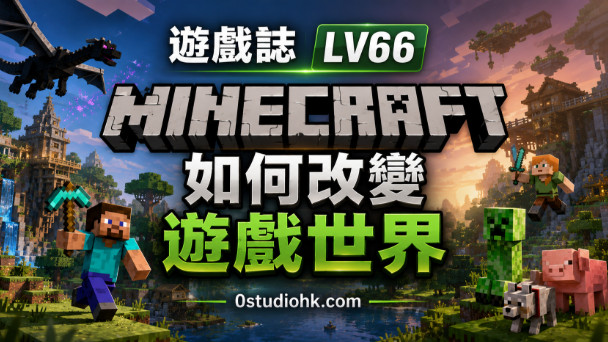
遊戲誌 LV66|Minecraft如何改變遊戲世界|Game Magazine LV66 | How Minecraft Changed the Gaming World

2009年,一款畫面看似簡單、充滿方塊的獨立遊戲悄悄誕生。沒有人料到,它日後不但成為史上銷量最高的電子遊戲,更改變了玩家創作、教育應用與遊戲設計的發展方向。《Minecraft》不只是遊戲,更是一個讓無數玩家自由發揮創意的數位世界。
When Minecraft first appeared in 2009, few imagined that its simple blocky graphics would grow into the best-selling video game of all time. More than just a game, Minecraft revolutionized creativity, education, and player-driven experiences, leaving an enduring impact on the gaming industry.
中文
《Minecraft》由瑞典程式設計師馬庫斯.佩爾松(Markus “Notch” Persson)於2009年開發,最初只是個人利用空餘時間製作的獨立遊戲。受到《Dwarf Fortress》、《Infiniminer》等作品啟發,他希望打造一個沒有固定劇情、沒有任務限制、完全由玩家自由探索與創造的世界。遊戲推出Alpha版本後,很快便憑藉獨特玩法吸引大量玩家,也促使Notch成立Mojang工作室,持續擴展遊戲內容。
《Minecraft》最大的創新,在於真正把「沙盒(Sandbox)」概念推向全球主流。遊戲沒有固定結局,也沒有強制玩家完成指定任務。玩家可以自由採集資源、建造房屋、探索洞穴、挑戰怪物,甚至設計複雜的機械裝置。雖然後來加入終界龍(Ender Dragon)等最終挑戰,但遊戲真正的核心始終是自由創造,而不是完成劇情。
另一項革命性的設計,是利用方塊建構整個世界。每一塊泥土、木材、石頭都可以被破壞,也可以重新組合,形成近乎無限的創作空間。玩家不僅能建造房屋與城堡,更重現世界名勝、城市、太空船甚至完整運作的電腦,充分展現玩家社群驚人的創造力。《Minecraft》也因此成為玩家自創內容(User-Generated Content,UGC)的代表作品之一。
除了建築,《Minecraft》的Redstone(紅石)系統更帶來另一場革命。透過紅石電路、開關、活塞與各種元件,玩家可以製作自動農場、電梯、密碼鎖,甚至簡單的計算機與遊戲裝置。這種結合創作與邏輯思維的玩法,令《Minecraft》同時具有娛樂與學習價值。
《Minecraft》的成功,也改變了全球遊戲社群文化。YouTube大量創作者透過實況、生存挑戰、建築教學及多人伺服器影片吸引數以億計觀眾;玩家建立大型多人社群,共同完成龐大建築計畫;各式Mod(模組)讓遊戲內容持續進化,使《Minecraft》即使推出多年,仍然保持極高人氣。
2014年,Microsoft以約25億美元收購Mojang,令不少玩家感到意外。然而,Microsoft並沒有停止《Minecraft》的發展,反而持續推出大型更新,並擴展至幾乎所有主要遊戲平台,包括Windows、PlayStation、Xbox、Nintendo Switch及流動裝置,令更多玩家能共同遊玩同一個世界。
《Minecraft》亦成功走出娛樂領域。Microsoft推出《Minecraft Education》,把遊戲應用於學校教育,協助學生學習數學、科學、程式設計、歷史及團隊合作。不少教師利用《Minecraft》重建古文明、設計物理實驗,甚至模擬城市規劃,使它成為教育科技的重要工具之一。
截至今天,《Minecraft》全球累計銷量已突破3億套,成為歷來銷量最高的電子遊戲之一,同時擁有數億註冊玩家。它不依靠逼真畫面,也沒有電影般的劇情,卻憑藉自由創造與無限可能,改變了整個遊戲產業對玩家創作的想像。
回顧《Minecraft》的成功,它證明一款偉大的遊戲,不一定需要最先進的技術或最華麗的畫面。真正吸引玩家的,是能夠激發創意、鼓勵探索,並讓每位玩家創造屬於自己的故事。正因如此,《Minecraft》不只是史上最成功的遊戲之一,更是電子遊戲發展史上一座重要的里程碑。
English Version
Minecraft was created in 2009 by Swedish programmer Markus “Notch” Persson as an independent side project. Inspired by games such as Dwarf Fortress and Infiniminer, he envisioned a world without scripted missions or fixed objectives, allowing players complete freedom to explore, build, and survive. The game’s early Alpha version quickly attracted a passionate community, leading to the creation of Mojang Studios and the continued expansion of the project.
Minecraft’s greatest innovation was bringing the sandbox concept into the mainstream. Rather than guiding players through a predetermined story, the game encourages exploration, resource gathering, construction, and creativity. Although later updates introduced the Ender Dragon as a final challenge, defeating it has never been the true goal. Instead, Minecraft’s core philosophy has always been giving players the freedom to create their own adventures.
Another revolutionary feature is its fully editable block-based world. Nearly every block can be mined, collected, and placed elsewhere, allowing players to construct everything from simple homes to famous landmarks, entire cities, spacecraft, and even functioning computers. This extraordinary level of creative freedom helped establish Minecraft as one of the greatest examples of user-generated content in gaming history.
The game’s Redstone system expanded those possibilities even further. Using Redstone circuits, switches, pistons, and other components, players created automated farms, elevators, security systems, calculators, and surprisingly sophisticated machines. These mechanics combined creativity with engineering and logical thinking, giving Minecraft educational value far beyond entertainment.
Minecraft also transformed online gaming culture. Millions of YouTube creators built enormous audiences through survival adventures, building tutorials, multiplayer servers, and creative challenges. At the same time, the game’s thriving modding community continually introduced new content, ensuring that Minecraft remained fresh and relevant years after its original release.
In 2014, Microsoft acquired Mojang for approximately US$2.5 billion. Rather than limiting the franchise, Microsoft expanded it across nearly every major gaming platform, including Windows, PlayStation, Xbox, Nintendo Switch, and mobile devices, allowing players from different ecosystems to share the same virtual worlds.
Minecraft’s influence extends well beyond gaming. Through Minecraft Education, schools around the world use the game to teach mathematics, science, programming, history, architecture, and teamwork. Teachers have recreated ancient civilizations, designed engineering projects, and developed interactive classroom experiences, demonstrating the game’s remarkable educational potential.
Today, Minecraft has sold more than 300 million copies worldwide, making it the best-selling video game in history. It achieved this without realistic graphics or cinematic storytelling. Instead, its greatest strength lies in giving players unlimited freedom to imagine, build, and share their own creations.
Looking back, Minecraft proved that technological realism is not the only path to success. A truly great game inspires creativity, encourages exploration, and empowers every player to tell their own story. More than fifteen years after its debut, Minecraft remains one of the most influential milestones in the history of interactive entertainment.