1980年代,中英兩國開始就香港前途展開歷史性談判。這場影響深遠的外交協商,不但改變香港政治命運,也深深影響數百萬香港人的未來與身份認同。
In the 1980s, Britain and China entered historic negotiations over Hong Kong’s future. The talks would reshape the destiny of the city, influence global politics in Asia, and leave a lasting impact on generations of Hong Kong residents.
中文
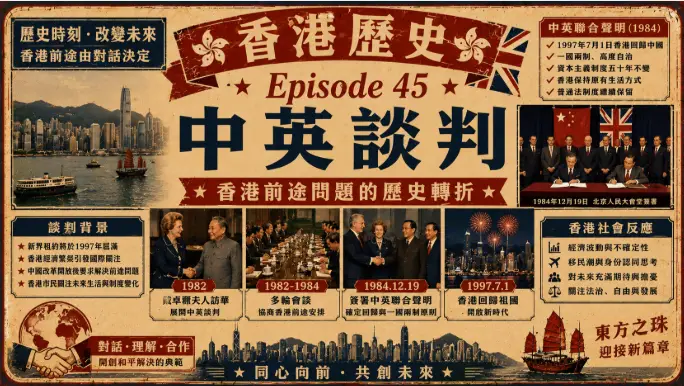
1980年代初期,香港社會開始面對一個無法迴避的重要問題,就是1997年後香港將會變成怎樣。這個問題源於歷史條約與殖民地制度。香港島與九龍部分地區是英國透過不同條約永久取得,而新界則是1898年以99年租借方式取得,租約將於1997年屆滿。隨著期限逐漸接近,中英雙方都明白,香港前途問題已無法再拖延。當時的香港,經濟正值繁榮年代,金融市場與國際貿易高速發展。大量市民早已習慣香港的資本主義制度與國際化生活方式,因此一旦談及主權與政治前途,社會自然產生不安與疑問。1978年中國開始改革開放後,北京政府亦希望透過穩定香港,維持對外經濟窗口的重要角色。1982年,英國首相戴卓爾夫人訪問北京,正式與中國領導人鄧小平展開香港前途談判。這場會面,被視為中英談判的重要起點。鄧小平明確表示,中國將於1997年恢復對香港行使主權,而香港問題不能只處理新界,必須整體解決。英方最初曾希望保留部分管治權,但隨著談判深入,英國逐漸接受香港將全面回歸中國的現實。談判期間,香港社會充滿不確定氣氛。股票市場與樓市曾出現波動,不少市民開始擔心未來生活方式是否會改變。部分家庭選擇移民加拿大、英國、澳洲與美國,希望為下一代尋找更穩定未來。移民潮逐漸形成,也成為1980年代香港社會的重要現象。與此同時,香港本地開始出現更多關於身份認同與政治制度的討論。市民除了關心經濟,更開始思考香港未來是否能維持法治、自由與原有生活方式。1984年,中英雙方正式簽署《中英聯合聲明》,確定香港將於1997年7月1日回歸中國。聲明同時提出「一國兩制」概念,表示香港回歸後將維持原有資本主義制度與生活方式五十年不變。香港特別行政區亦將擁有高度自治,保留普通法制度、金融體系與國際商業地位。這份聯合聲明,不但影響香港,也受到國際社會高度關注。因為香港不只是中國城市,同時也是全球重要金融與貿易中心。中英談判期間,香港街頭與媒體充滿對未來的討論。報紙每日報道談判進展,市民對「1997」這個年份產生複雜情緒。有人對中國改革開放充滿希望,認為香港未來能得到更大發展空間;亦有人擔心政治制度改變後,自由與法治受到影響。這種期待與不安並存的情緒,深深影響1980年代香港社會。另一方面,中英談判亦令香港政府開始思考政治改革與公共參與問題。1980年代後期,香港逐漸推動代議政制發展,希望增加市民參與公共事務。香港人對自身身份與未來的關注,也在這個年代明顯提升。從某程度而言,中英談判不只是外交事件,更是香港社會開始重新認識自己的重要時刻。這場談判最終決定香港主權回歸中國,但同時也開啟香港新的歷史階段。從殖民地到特別行政區,香港即將進入前所未有的政治轉型時代。無論對中國、英國還是香港市民而言,中英談判都是20世紀亞洲歷史中極具影響力的重要事件之一。
English Version
The negotiations between Britain and China over Hong Kong’s future became one of the most significant diplomatic events in late twentieth-century Asia. As the expiration date of the New Territories lease approached, both governments recognized that the future of Hong Kong could no longer remain uncertain. What followed was a complex political process that would influence international relations, financial markets, and the identity of millions of Hong Kong residents. The roots of the issue stretched back to the colonial treaties of the nineteenth century. While Hong Kong Island and part of Kowloon had been ceded permanently to Britain after the Opium Wars, the New Territories had only been leased for ninety-nine years beginning in 1898. By the late 1970s and early 1980s, it became increasingly clear that separating the leasehold territories from the rest of Hong Kong was unrealistic. Infrastructure, transportation, housing, and economic systems had become deeply interconnected across the entire colony. At the same time, Hong Kong had already become one of Asia’s leading financial and commercial centers. Its capitalist economy, legal system, and international business environment were viewed as essential to its success. As discussions about sovereignty emerged, many residents became deeply concerned about what changes might follow after 1997. China’s economic reforms under Deng Xiaoping added a new dimension to the negotiations. Beijing understood that Hong Kong served as an important gateway between China and the outside world. Stability in the colony was therefore politically and economically valuable. In 1982, British Prime Minister Margaret Thatcher traveled to Beijing to begin formal discussions with Chinese leader Deng Xiaoping. Their meetings became a defining moment in the history of Hong Kong. Deng firmly stated that China would resume sovereignty over the territory in 1997 and that the issue must be resolved as a whole rather than divided between different regions of Hong Kong. Britain initially explored possibilities for continued administrative involvement, but over time it became clear that full Chinese sovereignty was non-negotiable. Throughout the negotiation period, uncertainty spread across Hong Kong society. Financial markets reacted nervously, property prices fluctuated, and public debate intensified. Many families feared that political changes could affect civil liberties, legal protections, or economic stability. Emigration increased significantly during the 1980s as large numbers of residents moved to Canada, Australia, Britain, and the United States seeking alternative futures for their children. The question of identity also became increasingly important. Residents began discussing not only economic prospects but also the meaning of being “Hong Kong people” during a time of historic transition. In 1984, Britain and China officially signed the Sino-British Joint Declaration. The agreement confirmed that Hong Kong would return to Chinese sovereignty on July 1, 1997. It also introduced the principle of “One Country, Two Systems,” promising that Hong Kong would maintain its capitalist economy, legal framework, and way of life for fifty years after the handover. The future Hong Kong Special Administrative Region would retain a high degree of autonomy in many areas including finance, law, and trade. International attention toward the agreement was enormous because Hong Kong had become one of the world’s major financial centers. The future of the city mattered not only to China and Britain, but also to global investors, multinational corporations, and foreign governments. Inside Hong Kong, newspapers closely followed every stage of the negotiations, while ordinary citizens discussed the implications in offices, restaurants, schools, and homes. Some viewed China’s modernization with optimism and believed Hong Kong could benefit from closer integration with the mainland. Others worried about the future of political freedoms and institutional stability. These mixed emotions shaped much of Hong Kong’s social atmosphere during the 1980s. The negotiations also encouraged gradual political reforms and greater public participation in local governance. More importantly, they pushed Hong Kong society to reflect deeply on identity, citizenship, and the meaning of the city’s future. The Sino-British negotiations therefore represented far more than a diplomatic agreement. They marked the beginning of a historic transition that would redefine Hong Kong’s political status and transform its place within both China and the international community.
總結
中英談判改變了香港歷史方向,也開啟1997回歸前的重要過渡時代。這場外交協商,不但關乎主權問題,更深深影響香港人的身份認同與未來想像。
The Sino-British negotiations reshaped Hong Kong’s destiny and marked the beginning of a historic transition toward 1997. Beyond diplomacy and sovereignty, the talks transformed how Hong Kong people viewed their identity, future, and relationship with both China and the wider world.