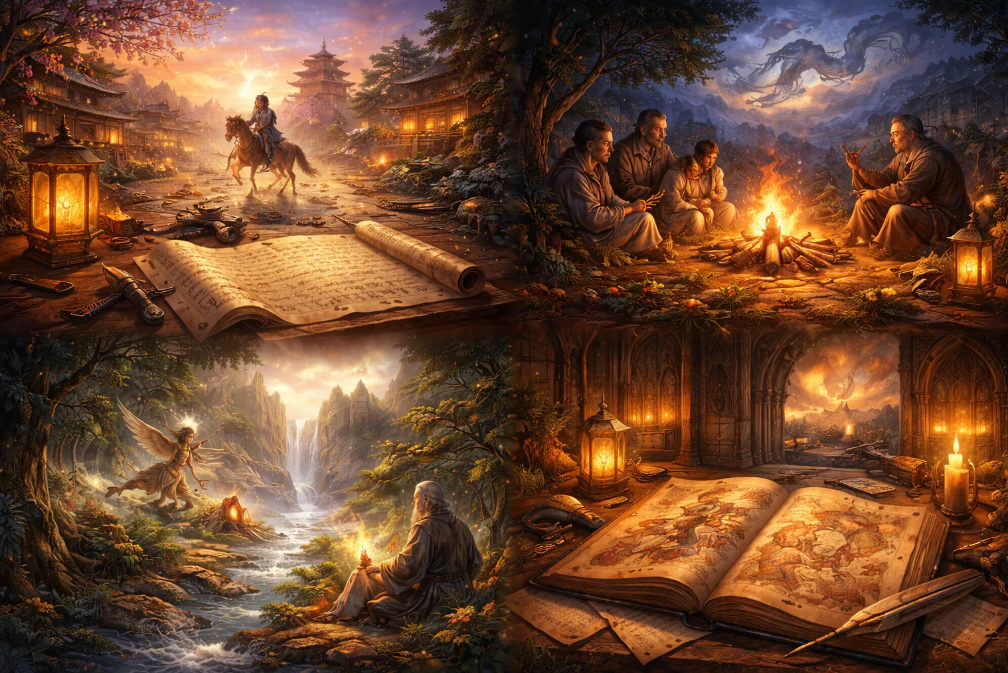
在世界文學史中,「佚名」代表作者姓名未被記錄的作品,這些創作往往源自民間與口述傳統,卻同樣具有深遠文化影響。
In world literature, “anonymous” refers to works without recorded authorship, often rooted in oral tradition yet holding lasting cultural significance.
在世界文學的發展歷史中,「佚名」是一個極具代表性的概念,指的是那些作者姓名未被記錄或已經失傳的作品。這類作品在古代文學與民間文學中尤為常見,原因在於當時的文化環境與記錄方式有限,許多創作並未刻意保留作者身份,甚至本身就是由群體共同完成的成果。在沒有現代出版制度與版權觀念的時代,文學作品往往透過口耳相傳的方式流傳,例如詩歌、神話與傳說在民間不斷被講述與改編,隨著時間推移逐漸形成固定文本,而原始創作者的身份則在流傳過程中消失。中國古典文學中有不少重要作品屬於佚名,例如《木蘭辭》這首描寫女子替父從軍的詩歌,以其鮮明人物與情感深度成為文化經典,雖然作者不詳,但其影響力跨越時代。另一組著名作品《古詩十九首》,形成於漢代,內容多描寫人生無常與離別之情,語言樸素卻富含情感,被視為中國詩歌的重要代表之一。在世界範圍內,佚名作品同樣廣泛存在,許多神話、史詩與民間故事都缺乏明確作者,例如各地流傳的英雄傳說與創世故事,往往經歷長時間口述與集體改編,最終形成文化記憶的一部分。這些作品的特點在於其集體性與流動性,內容會隨著不同地區與時代而有所變化,使作品具有多重版本與詮釋空間。與現代文學強調個人創作不同,佚名文學更像是一種文化共同創作的成果,反映整個社會的價值觀與想像力。在文學研究中,佚名作品具有重要價值,因為它們能夠揭示歷史時期的思想、信仰與生活方式。例如透過故事中的角色設定與情節發展,可以了解當時社會對於家庭、英雄、道德與命運的看法。此外,佚名文學也常具有教育與娛樂功能,許多寓言與傳說在流傳過程中被用來傳遞道德觀念或生活智慧。這些作品後來往往被文人收集整理,從口述形式轉化為書面文本,使其得以保存並流傳至後世。即使在沒有明確作者的情況下,這些作品仍然能夠成為文化象徵,甚至影響後來的文學與藝術創作。佚名文學的魅力在於其普遍性與包容性,由於沒有單一作者的限制,故事可以被不同文化與群體接受與再創造,從而形成跨越地域與時間的影響力。在現代社會,雖然作者身份與版權已成為重要議題,但佚名作品仍然提醒人們,文學的價值並不僅取決於作者本身,而在於作品所承載的情感與文化意義。這些無名創作者透過作品留下痕跡,使文學成為一種跨越個體與時代的文化傳承。
English Version
In the history of world literature, the concept of “anonymous authorship” represents works whose creators are unknown or unrecorded. These works are especially common in ancient and folk traditions, where storytelling often existed outside formal systems of authorship and documentation. In many early societies, literature was transmitted orally, with poems, myths, and narratives passed from one generation to another. As these stories circulated, they were adapted and reshaped by different storytellers, gradually evolving into stable forms while losing trace of their original creators. This process resulted in a body of literature that belongs not to a single individual but to a collective cultural experience. In Chinese literary tradition, well-known examples include “The Ballad of Mulan,” which tells the story of a woman who takes her father’s place in the army, embodying themes of courage and filial piety. Another significant example is the “Nineteen Old Poems,” a collection from the Han dynasty that explores themes of transience, longing, and human emotion with remarkable simplicity and depth. Despite the absence of identified authors, these works have achieved lasting literary significance. Across global traditions, anonymous works are equally prominent. Many myths, epics, and folktales—ranging from creation stories to heroic legends—have no identifiable authors, having developed over long periods of oral transmission. These narratives often exhibit multiple versions, reflecting the influence of different communities and historical contexts. This adaptability is one of the defining features of anonymous literature, allowing stories to remain relevant and meaningful across time and place. Unlike modern literary practices that emphasize individual authorship, anonymous works highlight the communal nature of storytelling. They capture shared values, beliefs, and imaginative expressions of a society, offering insight into how people understand the world around them. From a scholarly perspective, such works are invaluable sources for studying cultural history, as they reveal patterns of thought, social structures, and moral frameworks. Many anonymous texts also serve educational purposes, conveying lessons through allegory, symbolism, and narrative. Over time, these works have often been collected and preserved in written form by scholars and writers, ensuring their survival and accessibility. Even without known authors, they can become central to a culture’s identity, influencing later literature, art, and performance. The enduring appeal of anonymous literature lies in its universality and openness. Without a fixed authorial voice, these works invite reinterpretation and reinterpretation, making them adaptable to diverse audiences. In the modern era, where authorship and intellectual property are highly valued, anonymous works remind us that literature can transcend individual identity. They demonstrate that storytelling is a shared human activity, shaped by countless voices over time. Ultimately, anonymous authorship does not diminish the importance of a work; rather, it underscores its role as a cultural artifact that carries collective memory and meaning. These nameless creators, though forgotten in name, continue to influence literary traditions and cultural imagination, leaving an enduring legacy in the world of literature.