
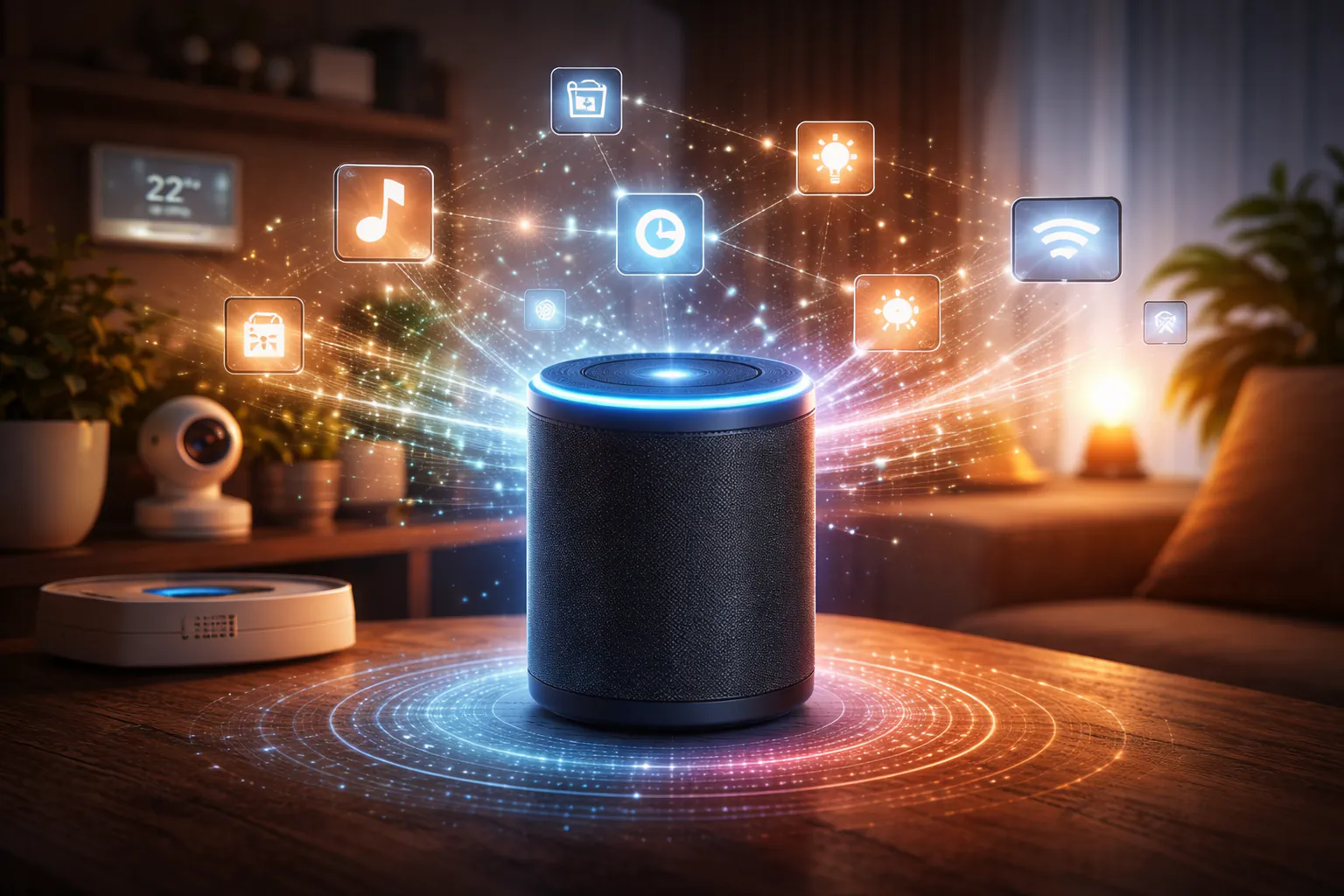
生活與科技 第15集 當AI住進家裡:如果每個家庭都有一個永遠不離開的個人AI | When AI Moves Into the Home: What Happens When Every Family Has a Permanent Personal AI
在過去,人們談論人工智慧時,往往想到的是雲端系統。
大型資料中心、全球網絡與遠端伺服器構成了人工智慧運作的基礎。當人們使用語音助理、翻譯工具或智能推薦時,很多運算其實是在遙遠的伺服器上完成。AI看起來像是一種存在於網絡之中的力量。
然而,另一種可能的未來正在出現。
人工智慧不一定要存在於雲端,它也可能住在家裡。
隨著運算晶片越來越強大,小型裝置也能執行複雜的人工智慧模型。未來的家庭或許會擁有一個「本地AI」,它不需要依賴外部網絡,也不需要把資料傳送到遠端伺服器,而是直接在家中運作。
這種AI就像家庭成員一樣,長期存在於同一個空間。
它可以協助安排日程、管理家庭設備、整理資訊,甚至陪伴人們進行日常對話。與傳統雲端服務不同,這個AI不必把每一次互動都傳送到網絡,它可以在本地記住家庭習慣與生活模式。
在某種程度上,它更像是一種「家庭智能」。
這種設計帶來的一個重要改變,是資料的位置。
在今天的網絡環境中,大量資料被儲存在遠端平台。搜尋紀錄、購物習慣、語音指令與日常行為都可能被收集並分析。這些資料通常存放在企業的伺服器中,並被用來改善服務或訓練演算法。
如果AI主要在家中運作,資料可能就不需要離開家庭。
個人資訊可以被保留在本地裝置中,而不是上傳到外部系統。這種方式可能讓人們對隱私更有控制權,也可能改變人們對人工智慧的信任。
然而,本地AI也會帶來新的問題。
當一個系統長期存在於家庭生活中,它可能會逐漸了解家庭成員的習慣、興趣與情緒。AI會知道什麼時間有人回家、什麼音樂被播放、什麼食物被訂購,甚至知道家庭日常的節奏。
這些資訊讓AI能夠提供更精準的幫助,但同時也讓它變得非常了解人類。
於是,一個新的問題出現:
當AI越了解人類,人類是否也會開始依賴AI?
在很多家庭中,人們已經習慣使用智能設備,例如智慧燈光、智能音箱或自動清潔機器。如果未來的AI可以整合所有設備,它可能會成為家庭生活的中心。
人們可能會詢問AI如何安排一天的行程、如何選擇晚餐、甚至如何解決某些生活問題。
在這種情況下,AI不再只是工具,而是一種生活基礎設施。
同時,本地AI也可能改變科技與家庭空間的關係。
過去,科技通常被視為外部工具,例如電腦、手機或網絡服務。人們使用它們完成任務,但科技本身並不屬於家庭的一部分。
如果AI長期存在於家中,它就像一個固定角色。
它可能擁有自己的聲音、記憶與互動方式,甚至形成一種獨特的「家庭個性」。不同家庭的AI可能會因為不同資料與互動方式,而逐漸發展出不同特徵。
這讓人工智慧變得更加個人化。
未來的AI不再只是同一個系統,而是許多不同版本的智能助手。每一個家庭的AI都會因為不同生活方式而變得不同。
然而,這種個人化也意味著新的責任。
如果AI在家庭中扮演重要角色,人們需要思考如何管理它。誰能夠控制AI?誰可以修改設定?如果AI出現錯誤或偏見,又應該如何修正?
這些問題顯示,人工智慧不只是技術問題,也是社會與文化問題。
在未來的某一天,AI可能不再只是存在於網絡平台,而是存在於日常生活空間。它不需要離開家,也不需要連接遠方伺服器,就能夠運作。
這樣的AI或許不會像電影裡那樣誇張,但它可能會安靜地存在於家庭角落,幫助人們處理日常生活。
而當人工智慧開始住進家裡時,人類與科技之間的距離,也可能變得比以往任何時候都更近。
English Version
In the past, when people talked about artificial intelligence, they often imagined cloud-based systems, vast data centers, global networks, and remote servers where most computations were performed far away from everyday life, making AI feel like something that existed somewhere in the background of the internet, accessed through voice assistants, translation tools, or recommendation systems, yet a different possibility is beginning to emerge, one in which artificial intelligence does not remain in the cloud but instead moves into the home, as advances in computing power allow smaller devices to run complex AI models locally, suggesting a future where each household may have its own “local AI” that operates without relying on constant internet connections or sending data to distant servers, existing instead as a continuous presence within the same physical space, and in this form AI begins to resemble a member of the household, capable of organizing schedules, managing devices, processing information, and even engaging in everyday conversations, while also learning the rhythms, habits, and preferences of the people it يعيش with, creating a kind of “domestic intelligence” that is shaped by the specific patterns of each home, and one of the most significant changes introduced by this model is the location of data, as in current systems large amounts of personal information such as search histories, purchasing behavior, voice commands, and daily routines are often stored and processed on external platforms, whereas a local AI could keep much of this data within the home itself, giving individuals greater control over privacy and potentially altering the way people trust and relate to technology, yet this shift also introduces new questions, because when an AI system exists continuously within a household it may gradually develop a detailed understanding of the people who live there, knowing when they return home, what they listen to, what they eat, and how their daily routines unfold, and while this knowledge enables more precise and personalized assistance, it also means that the system becomes deeply familiar with human life in ways that were previously limited to close personal relationships, raising the possibility that as AI becomes more capable and more integrated into daily routines, people may begin to rely on it not just for convenience but for guidance, asking it how to structure their day, what to cook, or how to make decisions, transforming AI from a tool into a kind of infrastructure that supports everyday living, and at the same time this development may change the relationship between technology and domestic space, as technology has traditionally been seen as something external, devices that are used when needed but remain separate from the identity of the home, whereas a permanent in-home AI becomes part of the environment itself, potentially developing its own voice, memory, and interaction style, contributing to a unique “personality” shaped by the household it belongs to, so that different homes may have different versions of AI shaped by their data and interactions, making artificial intelligence more personal and less uniform, yet this personalization also brings responsibility, as questions arise about who controls the system, who can modify its behavior, and how errors or biases should be addressed when the AI plays an important role in daily life, highlighting that artificial intelligence is not only a technical issue but also a social and cultural one, and as we move toward a future where AI no longer exists only on distant servers but within our living spaces, quietly assisting with everyday tasks, the distance between humans and technology may become smaller than ever before, not through dramatic change but through a gradual integration into the ordinary rhythms of life, where the presence of AI is no longer something we access but something we live with.