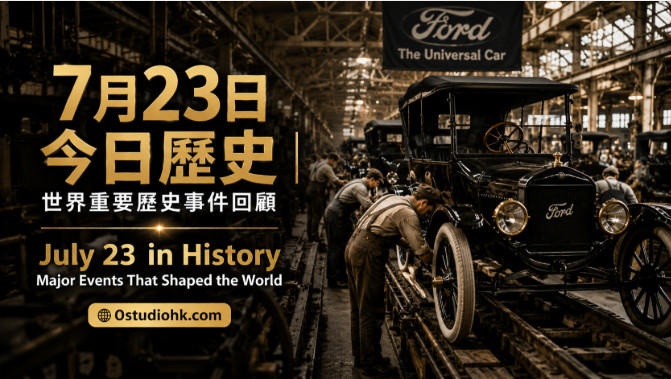
7月23日今日歷史|福特汽車改變世界工業生產 Today in History, July 23 | Ford Revolutionized Modern Industrial Production

7月23日見證了現代工業史上一個重要時刻。這一天,福特汽車透過嶄新的生產模式,讓汽車從奢侈品逐步走向大眾化,也改變了全球製造業、經濟發展與人們的生活方式,影響至今仍然深遠。
July 23 highlights one of the defining moments in industrial history. The rapid growth of Ford’s revolutionary manufacturing methods transformed automobiles from luxury items into products for ordinary families, reshaping industry, economies, and daily life across the world.
中文版本
每年的7月23日,都是回顧現代工業革命的重要日子。1903年7月23日,美國企業家亨利.福特正式出售首輛福特汽車Model A,象徵福特汽車公司開始走向改變世界的重要道路。當時,汽車仍然屬於少數富有人士才能擁有的交通工具,價格昂貴、產量有限,而且維修與製造成本極高。然而,福特並沒有把目標放在少數富豪市場,而是希望讓普通家庭也能買得起汽車。他相信,只要能夠降低成本、提升生產效率,汽車將成為每個家庭都能使用的交通工具。數年後,他進一步推出著名的Model T,並建立移動式流水生產線,大幅縮短組裝時間,使汽車價格持續下降,產量則快速增加。這種革命性的生產方式,不僅改變汽車工業,更深深影響全球各種製造產業。今天幾乎所有大型工廠,包括電子產品、家電、食品、醫療設備及物流系統,都能看到流水線概念的影子。福特的成功也帶動工人薪資制度改革。他提出每日五美元工資,在當時遠高於一般工資水平,雖然增加企業成本,但卻提升員工穩定性與生產效率,同時讓更多工人有能力購買自己生產的產品,形成新的消費經濟模式。這種理念對二十世紀資本主義發展產生巨大影響。汽車普及後,人們的生活開始改變。城市逐漸向外發展,道路建設迅速增加,旅遊業、石油工業、汽車保險、酒店及餐飲等產業亦同步成長,形成完整的汽車經濟鏈。科技發展從來不是單一發明,而是一連串制度、創新及市場共同推動的結果。福特汽車公司的成功,正好說明創新不只是發明新產品,更重要的是如何讓更多人能夠真正使用它。今天,全球汽車工業已邁向電動車、自動駕駛及人工智能的新時代,但許多現代生產管理方法仍然源自福特當年的理念。7月23日提醒我們,一項改變世界的創新,不一定來自最複雜的技術,有時來自重新思考生產方式、降低成本,以及讓更多人受惠的理念。歷史真正偉大的地方,不只是創造發明,而是把發明變成改變世界的力量。
English Version
July 23 marks an important milestone in the history of modern industry. On this day in 1903, the Ford Motor Company completed the sale of its first automobile, beginning a journey that would reshape transportation and manufacturing worldwide. At the beginning of the twentieth century, automobiles were expensive machines available only to wealthy buyers. Production was slow, labor-intensive, and costly, making widespread ownership almost impossible. Henry Ford envisioned a different future. Rather than building cars exclusively for the rich, he wanted ordinary working families to own reliable transportation. This vision required a completely new way of manufacturing. Ford later introduced the famous Model T along with the moving assembly line, dramatically reducing production time while increasing quality and consistency. As manufacturing became more efficient, prices dropped, making automobiles affordable for millions of people. The impact reached far beyond transportation. Ford’s production methods became a model for factories around the world, influencing industries ranging from electronics and household appliances to healthcare equipment and consumer goods. His approach demonstrated that innovation could come not only from inventing new products but also from redesigning how products were built. Ford also transformed labor practices by introducing higher wages that allowed workers to enjoy a better standard of living while reducing employee turnover. The idea that workers could become customers for the products they manufactured helped fuel the rise of the modern consumer economy. As automobiles became increasingly common, cities expanded, highways were constructed, and entirely new industries flourished, including tourism, fuel distribution, vehicle insurance, roadside services, and logistics. The automobile became one of the defining technologies of the twentieth century because it changed not only transportation but also where people lived, worked, and traveled. Today the automotive industry is entering another period of transformation with electric vehicles, autonomous driving systems, and artificial intelligence. Yet many manufacturing principles still reflect ideas first developed during Ford’s early years. Looking back at July 23 reminds us that true innovation is not measured solely by technological complexity. Lasting progress comes from creating practical solutions that improve everyday life and make new opportunities accessible to more people. Ford’s legacy continues to demonstrate how a single business vision can influence generations and reshape the global economy.
聲音版本
總結
7月23日見證福特汽車改變世界工業模式,也提醒我們真正的創新,在於讓更多人分享科技與進步帶來的成果。
July 23 celebrates the power of practical innovation, showing how new ideas can transform industries, improve lives, and shape the future for generations.