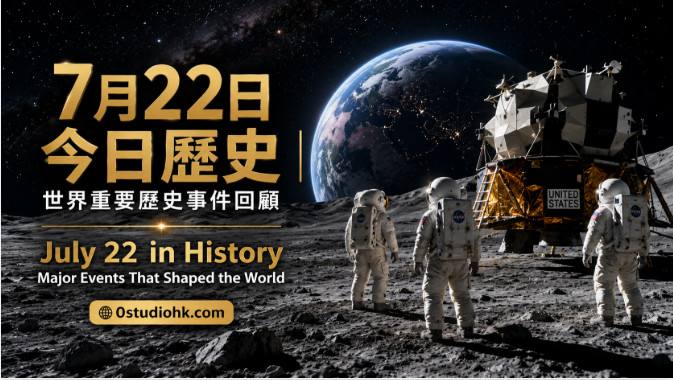
7月22日今日歷史|登月成功後人類迎向新時代 Today in History, July 22 | Humanity Entered a New Space Age

7月22日在人類歷史中承接了多項重大事件,其中最令人難忘的是阿波羅11號完成登月後,人類開始真正思考太空探索的新方向。這一天不只是一次任務的延續,更象徵文明跨越地球界限的重要里程碑。
July 22 represents a day when historic achievements continued to reshape humanity’s future. Following the success of Apollo 11, the world began to view space not as an unreachable frontier but as the next destination for scientific discovery, international cooperation, and human ambition.
中文版本
1969年7月22日,阿波羅11號完成登月任務後正式離開月球軌道,踏上返回地球的旅程。雖然人類首次踏上月球的歷史時刻已於前一天震撼全球,但7月22日同樣具有深遠意義,因為這代表整個登月任務已順利完成最關鍵的階段,人類首次成功完成登月、離月及返航三個重要程序,證明載人深空探索已由理論走向現實。阿波羅11號三位太空人尼爾.阿姆斯壯、巴茲.艾德林及米高.柯林斯,在全球數以億計觀眾關注下,完成了一項曾被認為不可能完成的任務。這次成功不僅代表美國於太空競賽取得重大成果,更改變了全球對科技發展的想像。從火箭設計、導航系統、電腦技術、通訊設備,到材料工程、醫療技術等不同領域,都因太空計畫而獲得快速發展。許多今天日常使用的科技,例如微型電子元件、數位影像技術、耐熱材料及精密導航,都曾受惠於太空科技研究。阿波羅11號帶回的月球岩石及土壤樣本,亦讓科學家深入了解月球形成歷史,推動地質學及行星科學研究。7月22日提醒我們,一項成功並非終點,而是一個新時代的開始。其後數十年間,美國完成多次阿波羅任務,人類亦建立太空梭計畫、國際太空站,以及近年重新展開探月計畫,包括美國的阿提米絲計畫、中國嫦娥探月工程及其他國家的深空探索,希望未來再次把人類送上月球,甚至前往火星。除了航天歷史之外,7月22日亦見證不少政治、文化及科技事件,有國家在這一天推行改革,有藝術家及科學家於這一天出生,他們的作品與研究持續影響世界。歷史從來不是由單一事件組成,而是無數重要時刻共同累積而成。當我們回望7月22日,看到的不只是一次太空任務,而是一種敢於挑戰未知、突破極限的精神。人類文明之所以不斷進步,正因每一代人都願意向前探索,把今天的不可能變成明天的現實。這一天提醒我們,歷史最大的價值,不只是記錄成功,更是保存人類追求知識、合作與創新的精神,讓未來世代繼續走向更遙遠、更廣闊的世界。
English Version
July 22 marks an important chapter in the story of Apollo 11, as the astronauts began their journey home after successfully completing humanity’s first landing on the Moon. While the famous first footsteps had already captured worldwide attention, the mission itself was far from over. Returning safely to Earth was an equally critical part of the achievement, proving that humans could travel to another celestial body and come back successfully. Neil Armstrong, Buzz Aldrin, and Michael Collins demonstrated not only extraordinary courage but also the remarkable capabilities of science, engineering, and international collaboration. Their success transformed the global perception of space exploration. Technologies developed for the Apollo program later influenced countless industries, including computing, telecommunications, materials science, navigation, medicine, and manufacturing. Many innovations that people use in everyday life today trace part of their origins to research conducted during the space race. The lunar samples collected during Apollo 11 also provided scientists with valuable information about the Moon’s geological history, helping researchers better understand the origins of both the Moon and Earth. July 22 therefore symbolizes more than the conclusion of a successful mission. It represents the beginning of humanity’s long-term presence in space exploration. In the decades that followed, additional Apollo missions expanded scientific knowledge, while the Space Shuttle program and the International Space Station demonstrated new forms of international cooperation. Today, new lunar missions led by agencies around the world continue building upon the achievements of Apollo 11. Programs such as Artemis and other international lunar projects aim to establish sustainable exploration of the Moon and prepare for future human missions to Mars. Beyond space exploration, July 22 has also witnessed notable developments in politics, science, literature, and culture across different countries. Every historic date contains multiple stories, each contributing to the broader progress of civilization. Looking back on July 22 reminds us that great achievements rarely happen overnight. They are built through years of preparation, countless experiments, teamwork, and perseverance. The success of Apollo 11 continues to inspire students, researchers, engineers, and dreamers around the world. It teaches us that curiosity drives discovery, and that every generation has the opportunity to push beyond existing limits. July 22 remains a celebration of human determination, reminding us that the greatest journeys begin with the courage to attempt what once seemed impossible.
總結
7月22日象徵人類完成首次登月任務的重要階段,也代表探索精神從未停止,持續推動科技、文明與未來發展。
July 22 celebrates the successful completion of one of humanity’s greatest achievements and reminds us that every historic breakthrough opens the door to even greater discoveries.