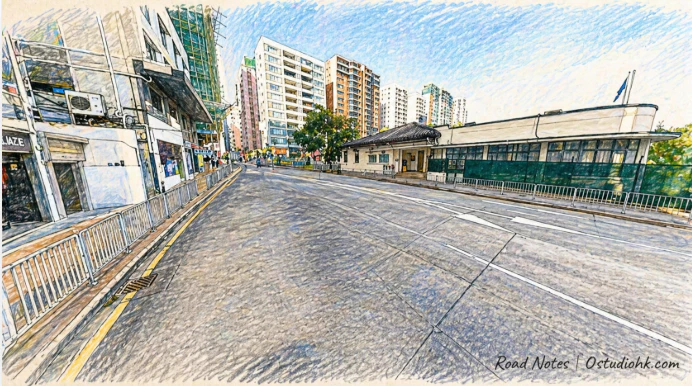
在香港九龍油尖旺之間,柯士甸道靜靜橫跨城市脈絡,它的名字來自殖民年代,而街道本身則連接着歷史與旅人流動的軌跡。
Stretching across the urban fabric of Yau Tsim Mong, Austin Road reflects a layered passage where colonial naming meets the constant movement of people and time.
中文
柯士甸道(Austin Road)位於香港九龍油尖旺區,是一條連接佐敦與尖沙咀的重要道路,其名稱源自19世紀英國殖民時期官員威廉·亨利·奧斯汀,反映出當時以殖民人物命名街道的慣例,這種命名方式在香港城市發展初期相當普遍,亦成為今日城市歷史的一部分。柯士甸道的形成可追溯至九龍半島逐步開發的時期,當英國於19世紀中後期取得九龍後,開始規劃道路與城市佈局,以配合人口增長與商業發展,柯士甸道正是在這樣的背景下逐漸建立,成為連接不同區域的重要通道。早期的柯士甸道周邊發展較為初步,建築密度不高,但隨著20世紀的發展,特別是戰後人口增加及經濟起飛,油尖旺區迅速成為高度城市化地帶,柯士甸道亦逐漸被納入繁忙的城市網絡之中。歷史上,該區鄰近碼頭與交通樞紐,使柯士甸道不僅服務本地居民,也承載着來往旅客的流動,形成一種帶有過渡性質的空間。進入近代,隨著基建發展及城市更新,柯士甸道附近出現大型商業設施、酒店及交通設施,例如高鐵西九龍站的啟用,使該區人流進一步增加,街道功能亦隨之提升。從城市變化角度來看,柯士甸道展現了香港由殖民港口城市轉變為國際交通與旅遊樞紐的過程,其角色由單純的連接道路,逐漸轉變為一條承載流動與交匯的城市空間。街道特色方面,柯士甸道具有典型市區道路特徵,道路寬闊,兩旁分布住宅、商業大樓及酒店,亦有不同類型的商舖與餐廳,形成多元化的城市面貌。街道氣氛隨時間變化,白天以交通與商業活動為主,夜晚則帶有較為放鬆的城市節奏,顯示出都市生活的多面性。由於其地理位置接近旅遊與交通節點,這裡經常可見本地居民與旅客交錯,形成一種獨特的流動感。今日的柯士甸道,不僅是一條交通道路,更是一條城市過渡帶,它連接不同區域、不同節奏與不同人群,在不斷流動之中,街道本身亦成為城市故事的一部分,讓人於經過之時,或許未必停留,但仍在無形之中參與着香港的城市節奏。
English Version
Austin Road, located in the Yau Tsim Mong District of Kowloon, functions as a key connector between Jordan and Tsim Sha Tsui, embodying both historical significance and contemporary urban movement. Named after William Henry Austin, a British colonial official, the road reflects a period when Hong Kong’s urban spaces were shaped and labeled through colonial governance. Established during the early phases of Kowloon’s development in the late 19th century, Austin Road emerged as part of a broader effort to organize and expand the peninsula following British acquisition. Initially surrounded by relatively low-density structures, the area gradually transformed as Hong Kong experienced rapid growth in the 20th century. Post-war population expansion and economic development intensified urban density, turning the surrounding districts into vibrant commercial and residential zones. Austin Road evolved alongside these changes, becoming integrated into a complex urban network that supports both local life and external connectivity. Its proximity to waterfront areas and transport hubs historically positioned it as a corridor of movement, accommodating flows of goods, residents, and visitors. In more recent decades, major infrastructure projects, including the development of the West Kowloon Cultural District and the high-speed rail terminus, have further elevated its importance, increasing both pedestrian and vehicular traffic. From an urban perspective, Austin Road represents the transformation of Hong Kong from a colonial trading port into a global transit and tourism hub. Architecturally, the street is defined by a mix of residential buildings, commercial establishments, and hotels, creating a layered environment that shifts in character throughout the day. The presence of both locals and tourists contributes to a dynamic atmosphere where everyday routines intersect with transient experiences. Today, Austin Road is more than a route of passage—it is a space of convergence, where history, movement, and urban identity overlap. It captures the essence of a city constantly in motion, where even a brief journey along the street becomes part of a larger narrative shaped by time, place, and human activity.