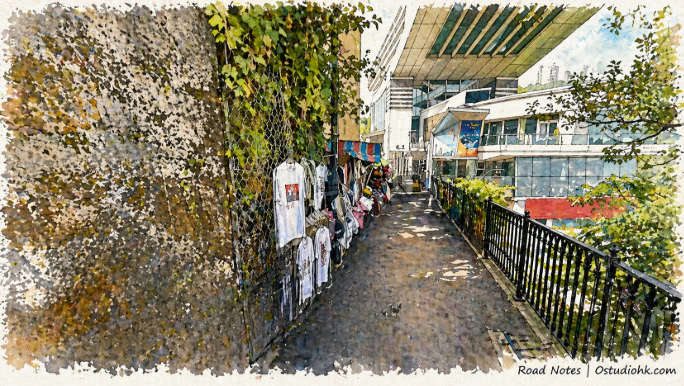
在香港港島半山之間,舊山頂道蜿蜒而上,這條古老路徑不只是通往山頂,更承載着一段關於階級與城市發展的歷史記憶。
Winding through the Mid-Levels of Hong Kong Island, Old Peak Road is more than a route to Victoria Peak—it reflects a layered history of class, access, and urban evolution.
中文
舊山頂道(Old Peak Road)位於香港島中西區,是一條連接半山與山頂的重要歷史道路,其名稱中的「Old」直接表明其歷史性,區別於後來建成的其他通往山頂的道路。這條路徑的起源可追溯至19世紀中期香港開埠初期,當時山頂地區逐漸被視為理想的居住地,特別是對歐洲人而言,由於氣候較涼爽,亦遠離低地密集與潮濕環境,因此吸引殖民地官員與上層階級居住,而舊山頂道正是早期通往山頂的主要路線之一。在纜車(Peak Tram)尚未於1888年投入服務之前,人們主要依靠步行或轎子沿此路上山,這使舊山頂道成為當時極具象徵性的通道,不僅是地理上的連接,更反映出社會結構與生活方式。殖民時期,山頂曾實施居住限制政策,主要供歐洲人居住,進一步強化了這條道路與階級分層之間的關係,舊山頂道因此不僅是一條山路,更是一條體現權力與身份的空間。隨著時間推移,香港逐步發展,交通方式改變,Peak Tram及其他道路的出現降低了對舊山頂道的依賴,但這條路仍然保留下來,並轉變為一條兼具步行與車行功能的道路。進入20世紀後,隨著社會結構變化及城市擴展,山頂逐漸向不同階層開放,舊山頂道亦失去原有的階級象徵,轉而成為一條連接住宅區與自然環境的路徑。從城市變化角度來看,舊山頂道見證了香港由殖民地分層社會轉變為現代多元城市的過程,其歷史意義不再只限於功能,而是成為一種文化記憶。街道特色方面,舊山頂道具有明顯山路特徵,道路蜿蜒且坡度明顯,沿途多為樹木、石牆及住宅建築,部分路段可遠望維多利亞港,形成一種結合自然與城市景觀的空間體驗。由於人流相對較少,整體氛圍較為安靜,使人行走其中時能感受到與城市節奏不同的時間感。今日的舊山頂道,不僅是一條通往山頂的路,更是一段歷史的延續,它保留了香港早期發展的痕跡,讓人能在現代城市之中,重新感受到過去的步伐與空間層次,這條路所承載的,不只是距離,而是一段由過去延伸至現在的城市記憶。
English Version
Old Peak Road, located on Hong Kong Island, is one of the earliest routes connecting the Mid-Levels to Victoria Peak, carrying both historical and symbolic significance. The inclusion of “Old” in its name distinguishes it from later-developed roads and highlights its origins in the early days of Hong Kong’s colonial development. In the mid-19th century, as the British established their presence in Hong Kong, Victoria Peak became a highly desirable residential area, particularly for European residents who sought cooler temperatures and distance from the crowded and humid conditions of the lower city. Before the Peak Tram began operation in 1888, access to the Peak was largely limited to walking or being carried in sedan chairs along routes such as Old Peak Road. This made the road not just a physical pathway, but a representation of social hierarchy and exclusivity. During the colonial period, residency on the Peak was restricted, reinforcing divisions between different social groups and embedding these distinctions into the geography of the city. Over time, as transportation infrastructure improved and social barriers gradually diminished, the functional importance of Old Peak Road shifted. While newer routes and mechanized transport reduced reliance on the path, it remained as a quieter alternative, adapting to modern needs while retaining its historical character. In the 20th century and beyond, the opening up of residential areas and the diversification of Hong Kong society transformed the road’s meaning. What was once a symbol of exclusivity became part of a more inclusive urban landscape. Spatially, Old Peak Road is defined by its winding alignment, steep gradients, and integration with natural surroundings. Stone walls, greenery, and glimpses of the harbor contribute to a layered sensory experience that contrasts sharply with the density of the urban core below. Today, Old Peak Road stands as more than a route to a destination; it is a narrative path through time, where the traces of colonial history, social transformation, and environmental context coexist. It invites those who traverse it to experience the city not just in terms of movement, but through reflection on how space, access, and identity have evolved over time.