
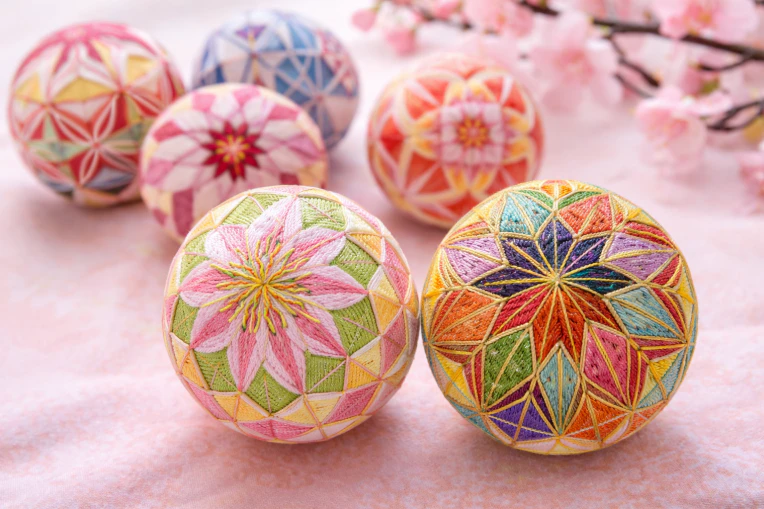
手鞠(Temari)是日本傳統工藝與玩具,最初由簡單的球體演變而來,後來發展成以彩線精緻刺繡的藝術品。其幾何圖案與鮮豔色彩象徵祝福與幸福,常作為新年或成長禮物。手鞠不僅是遊戲工具,更是一種承載祝願與美感的文化象徵。
Temari are traditional Japanese embroidered balls that evolved from simple play objects into intricate works of art. Decorated with colorful threads forming geometric patterns, they symbolize happiness, prosperity, and good wishes. Often given as gifts during New Year or special occasions, temari represent both playful origins and refined craftsmanship, blending cultural meaning with visual beauty.
手鞠(Temari)是一種融合遊戲、工藝與文化象徵的日本傳統物件,其起源可以追溯至古代,最初是由布料或絲綢包裹而成的簡單球體,用於兒童遊戲與娛樂。隨著時間推移,手鞠逐漸從實用玩具轉變為精緻的藝術品,特別是在江戶時代,刺繡技術的發展使手鞠表面出現各種複雜且對稱的幾何圖案,這些圖案不僅具有視覺美感,也蘊含深厚的象徵意義。製作手鞠的過程需要高度的耐心與技巧,通常先以布料或線團構成球體基底,再用彩色絲線一針一線地繡出圖案,每一條線的角度與位置都需要精確計算,以確保整體對稱與平衡。這種製作方式使手鞠不僅是一件工藝品,更是一種數學與藝術結合的體現。從文化角度來看,手鞠常被視為祝福的象徵,特別是在新年或女孩成長的重要時刻,家人會贈送手鞠,寓意幸福、健康與美好的未來。其圓形本身象徵圓滿與和諧,而交織的線條則象徵人與人之間的連結與命運的交錯。不同地區與時代的手鞠在圖案與色彩上也有所差異,反映出地方文化與審美風格的多樣性。從遊戲角度而言,早期的手鞠主要用於拋接與踢球等簡單活動,是兒童日常生活的一部分,但隨著其藝術價值的提升,現代手鞠更多被視為裝飾品與收藏品。這種從玩具到藝術品的轉變,顯示出文化如何賦予物件新的意義與價值。在現代社會中,雖然手鞠已不再是普遍的遊戲工具,但其製作技藝仍被保存並傳承,許多工藝家致力於創作新的圖案與設計,使傳統元素在當代繼續發展。對於觀者而言,手鞠的魅力在於其細膩與和諧,每一個圖案都像是一個小宇宙,展現出秩序與美感的結合。它提醒我們,即使是最簡單的球體,也可以透過人的雙手與心意,轉化為承載情感與文化的藝術形式。手鞠不僅是一件物品,更是一種時間與記憶的結晶,將過去的工藝精神與現代的審美連結在一起。
English Version
Temari are traditional Japanese objects that beautifully blend play, craftsmanship, and cultural symbolism. Their origins can be traced back to ancient times when they were simple balls made from scraps of cloth or silk, used by children for casual games. Over time, however, temari evolved into highly refined decorative art forms, particularly during the Edo period, when advancements in embroidery techniques allowed artisans to create intricate and symmetrical geometric patterns on their surfaces. These patterns are not only visually striking but also rich in symbolic meaning. The process of making temari requires exceptional patience and precision; a base ball is first formed using cloth or thread, and then colorful threads are meticulously stitched over its surface to create elaborate designs. Each stitch must be carefully placed to maintain balance and symmetry, making the craft a harmonious fusion of mathematics and art. Culturally, temari are often associated with blessings and good wishes, commonly given as gifts during the New Year or to celebrate the growth of young girls. The spherical shape symbolizes completeness and harmony, while the interwoven threads represent human connections and the intertwining paths of life. Variations in patterns and color schemes across different regions reflect diverse local traditions and aesthetic sensibilities. From a functional perspective, early temari were used in simple games such as tossing and kicking, forming part of everyday childhood activities. However, as their artistic value increased, they gradually transitioned from toys into decorative and collectible objects. This transformation highlights how cultural significance can elevate an everyday item into a work of art. In contemporary society, while temari are no longer widely used as playthings, the craft continues to be preserved and practiced by artisans who innovate new designs while honoring traditional techniques. For observers, the beauty of temari lies in their intricate detail and harmonious structure; each pattern resembles a miniature universe, embodying a balance between order and creativity. They serve as a reminder that even the simplest forms can be transformed into meaningful expressions of culture and emotion through human skill and intention. Temari are not merely objects but vessels of time and memory, connecting past traditions with present appreciation.