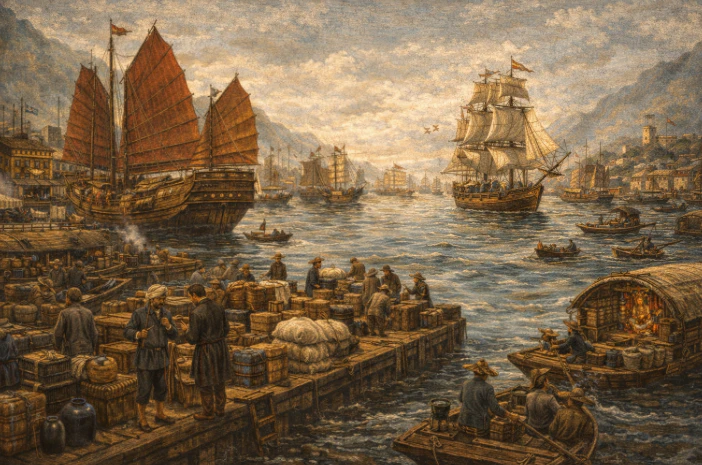
南中國海自古以來是重要的海上貿易通道,各類商船穿梭於港口之間,形成龐大的經濟網絡。本文探討商船運作、港口發展與區域貿易如何互相影響,並說明香港在這一體系中的關鍵角色。
The South China Sea has long been a vital maritime trade corridor, with merchant ships connecting numerous ports across the region. This article examines how shipping operations, port development, and regional trade networks interacted, highlighting Hong Kong’s emerging role within this dynamic system.
南中國海作為連接東亞與東南亞的重要海域,自古以來便是商船往來頻繁的貿易中心,各類型商船包括中國帆船與外來商船在此穿梭,將絲綢、茶葉、瓷器等貨物運往不同港口,同時亦將香料、金屬與其他海外商品帶回中國內地,這種雙向流動形成了一個高度活躍的海上經濟網絡,在這個網絡之中,港口扮演著不可或缺的角色,不僅是貨物裝卸與交易的場所,更是資訊交流與文化互動的節點,許多港口逐漸發展成為區域性的商業中心,吸引商人、勞工與移民聚集,促進城市的形成與繁榮,在航運技術方面,商船依賴風力與季風進行長距離航行,因此航線安排與港口選擇往往與氣候條件密切相關,船隊需要在適當季節出發與停靠,以確保航行安全與效率,香港位於這一航運體系的關鍵位置,鄰近珠江口並擁有天然深水港,使其成為理想的停泊與轉運地點,商船可在此補給物資、進行交易或等待航行時機,這些優勢逐漸提升香港在區域貿易中的地位,然而隨著貿易活動的增加,海上風險亦隨之上升,包括風暴、暗礁與海盜威脅,這些因素促使各地加強港口設施與防禦系統,以保障航運安全與商業利益,從更宏觀的角度來看,南中國海的商船與港口不僅是一個經濟運作系統,更是一個跨文化交流的平台,不同地區的語言、宗教與生活方式在此交匯,形成多元且動態的海洋文化,這些歷史發展最終促成香港由一個沿海據點轉變為國際貿易樞紐,並在全球航運網絡中佔據重要地位
English Version
The South China Sea has long served as a crucial maritime corridor linking East Asia and Southeast Asia, facilitating the constant movement of merchant ships that carried goods across vast distances and connected diverse ports into an extensive trade network, traditional Chinese junks as well as foreign vessels transported commodities such as silk, tea, and porcelain outward while bringing back spices, metals, and other valuable products from overseas regions, creating a dynamic system of exchange that fueled economic growth across multiple societies, within this network ports functioned as essential hubs not only for loading and unloading cargo but also for commercial negotiation, information exchange, and cultural interaction, many of these ports gradually evolved into thriving commercial centers attracting merchants, laborers, and migrants whose presence contributed to urbanization and regional development, navigation in this era relied heavily on wind patterns and monsoon cycles which meant that shipping schedules and port selection were closely tied to seasonal conditions, vessels often had to wait in safe harbors for favorable winds before continuing their journeys, Hong Kong occupied a particularly advantageous position within this system due to its proximity to the Pearl River estuary and its natural deep-water harbor which made it an ideal location for anchorage, resupply, and transshipment, these geographic advantages enhanced its importance within regional trade routes allowing it to serve as a key intermediary between inland China and international markets, however increased maritime activity also brought heightened risks including storms, hidden reefs, and piracy which posed constant threats to ships and cargo, in response ports and governing authorities invested in infrastructure improvements and defensive measures to ensure the safety and stability of trade, from a broader perspective the merchant ships and ports of the South China Sea represented more than just economic mechanisms they formed a vast interconnected system of cultural exchange where languages, religions, and social practices intersected and influenced one another, over time these historical processes contributed to Hong Kong’s transformation from a coastal waypoint into a major international trading hub firmly embedded within the global maritime network