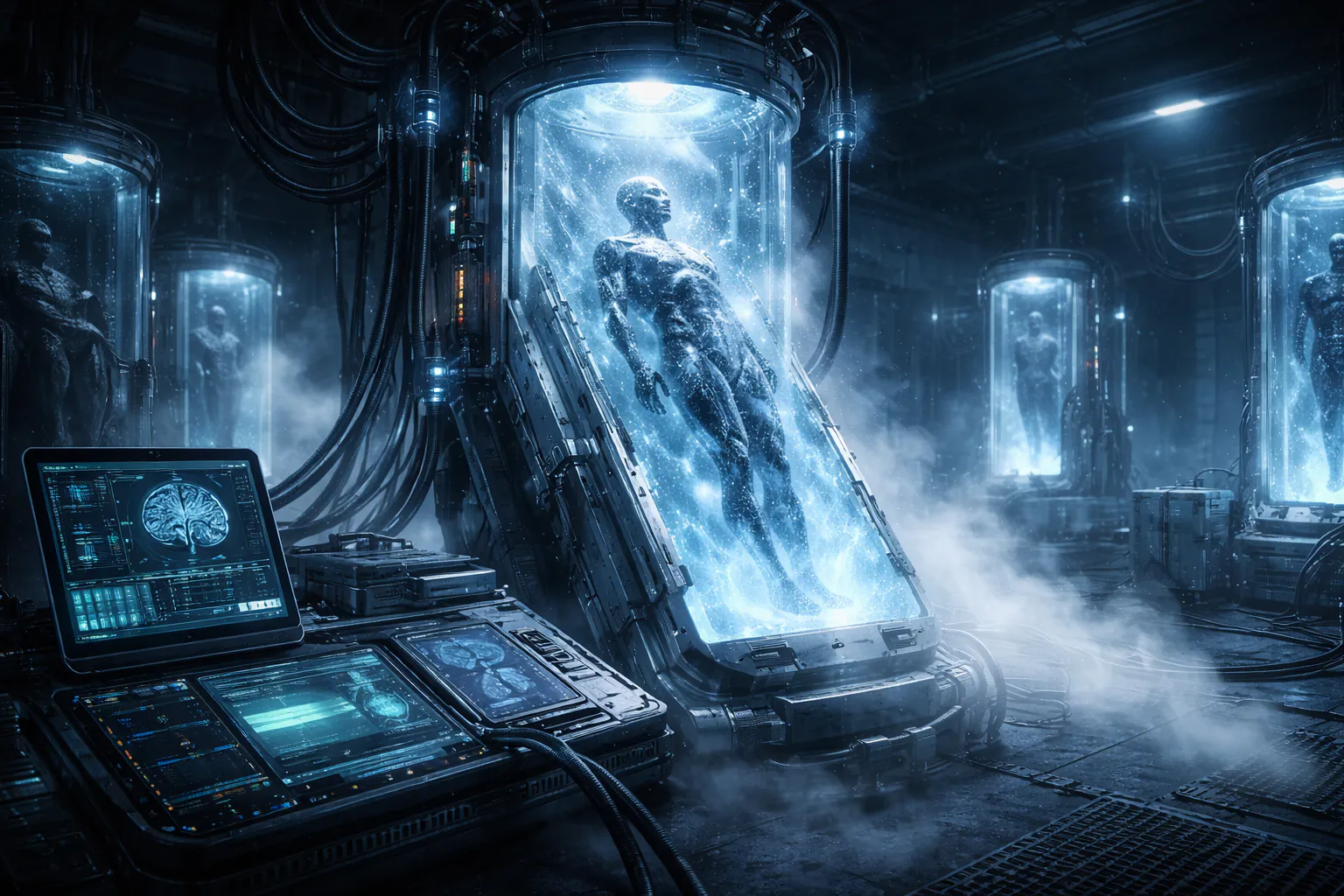
冷凍保存技術的研究和應用已經成為科學領域的一大焦點,其核心目標是探索如何在未來復活生命。然而,這個技術所引發的問題不僅僅局限於生物學層面,更涉及哲學、倫理以及心理學等多方面的思考。從科學角度來看,冷凍保存的原理是通過極低溫將細胞代謝活動幾乎完全停止,以保存身體的完整性,並希望在未來利用更先進的技術重新啟動生命。然而,雖然技術上存在可能性,這並不意味著其所涉及的深層次問題能夠輕易解決。
首先,從生物學角度分析,冷凍保存的成功復活需要滿足多項條件。例如,DNA的完整性、大腦結構的保存、以及記憶的維持等都是不可或缺的要素。若這些條件得以實現,復活後的個體在生物層面上仍然可以被視為原來的人。然而,人類的存在並非僅僅依賴於生物學定義。人類是一種高度社會化的存在,其身份認同深深植根於時間的連續性和與環境的互動之中。
冷凍保存本質上是一種生命暫停的狀態。在這段暫停期間,世界仍然在不斷向前發展,而被冷凍的人則完全脫離了這種進程。當他們被復活時,他們不僅面臨著身體上的重新啟動,更需要面對心理和文化上的巨大衝擊。熟悉的世界可能早已不復存在,語言、文化、價值觀或許已經發生了翻天覆地的變化。這樣的斷裂對於個人的身份認同來說是一種挑戰,甚至可能導致深刻的心理危機。
此外,人類身份認同的一個重要基礎是時間的連續性。人類不僅是記憶的集合,更是一種共享時間的存在。與家人、朋友、社會共同經歷成長、錯誤、挑戰和改變,這些經驗構成了個人的生命故事和身份意義。然而,冷凍保存打斷了這種連續性,使得被復活的人在心理上與周圍環境產生隔閡。他們可能會感到孤立無援,甚至質疑自我存在的意義。
在倫理層面上,冷凍保存技術也引發了諸多爭議。一方面,它可能為那些患有無法治癒疾病的人提供希望,讓他們等待未來醫療技術的突破;另一方面,它也可能帶來資源分配的不公平。冷凍保存技術需要大量資金和能源支持,而這些資源是否應該投入到延續個人生命上,而非用於改善更多人的生活條件,這是一個值得深思的問題。
同時,我們也不能忽視冷凍保存對社會結構可能造成的影響。如果大量個體選擇冷凍保存並在未來復活,社會是否能夠承受如此多「新生」人口的壓力?這些復活的人如何融入新的社會?他們是否能適應新的文化和價值體系?這些問題都需要深入探討,以避免可能出現的社會紊亂。
最後,我們需要考慮的是生命本身的特性。生命是一個持續進行的過程,它包含了時間的流動、經驗的累積以及與他人的互動。當生命被暫停並重新啟動時,它是否仍然能保持原來的完整性?科學可以解釋如何保存生命,但無法回答生命本身是否可以重新開始。因為生命不僅僅是生物學上的存在,它更是一種充滿意義和歸屬感的旅程。
綜上所述,冷凍保存技術雖然在科學上具有可行性,但其背後涉及到諸多超越科學範疇的重要問題。被復活的人是否仍然是原來的人?他們是否能夠重新找到自己的身份和歸屬感?這些問題需要哲學、倫理以及心理學等多方面共同探討。生命可以重新啟動,但「做人」這件事並沒有暫停鍵。被復活的人或許能再次活著,但他們將以一種全新的方式重新開始自己的生命旅程。
English Version
The idea of cryonic preservation, in which a human body is frozen at extremely low temperatures with the hope of being revived in the future, is often framed as a scientific challenge, yet it quickly expands into deeper philosophical, ethical, and psychological questions about identity and what it truly means to be a person, because while the biological premise suggests that if cellular structures, DNA integrity, and especially the brain’s architecture and memory can be preserved, then in theory a revived individual could remain the same person at a physical level, human identity cannot be reduced to biology alone, as it is also shaped by continuity in time, relationships, and lived experience, and cryonic preservation introduces a fundamental interruption to that continuity, effectively placing a life on pause while the world continues to move forward without it, so that upon revival the individual would not simply be returning to life but entering an entirely different reality, one in which familiar people, social structures, cultural norms, and even language may have changed or disappeared altogether, creating a profound disconnection between the individual’s past and present, and this temporal gap challenges the very foundation of identity, because being human is not only about retaining memories but about sharing time with others, growing through experiences, making mistakes, adapting, and participating in a continuous narrative, and when that narrative is broken, the revived individual may struggle to reconcile who they were with the world they now inhabit, potentially experiencing isolation, loss, or even a crisis of meaning, as their sense of belonging becomes uncertain, and beyond the personal dimension there are also ethical considerations, as cryonic preservation raises questions about fairness and resource allocation, given that such technologies require significant financial and technological investment, prompting debate over whether extending individual life in this way should take precedence over improving conditions for the broader population, while also introducing societal challenges, as large numbers of revived individuals could place pressure on future systems, requiring integration into cultures and economies that may be vastly different from those they once knew, and adaptation would not be guaranteed, as differences in values, expectations, and ways of life could create friction between revived individuals and contemporary society, and at a deeper level this scenario forces us to reconsider the nature of life itself, as life is not merely a state of biological activity but a continuous process shaped by time, interaction, and meaning, and when that process is interrupted and later resumed, it raises the question of whether it can truly be considered the same life or whether it becomes something fundamentally new, because while science may eventually explain how to preserve and restart biological functions, it cannot fully address whether the continuity of identity, purpose, and belonging can be restored, and in this sense cryonic preservation reveals the limits of technology in defining what it means to be human, suggesting that even if revival becomes possible, the person who awakens may not simply continue their previous life but instead begin a new and uncertain chapter, shaped not only by what was preserved but also by everything that was lost in the passage of time, reminding us that while life may be paused in a biological sense, the experience of being human is inseparable from the flow of time, and once that flow is broken, it cannot be perfectly reconstructed.