穀雨:春天最後一場雨,城市與農事之間的距離 | Grain Rain: The Last Rain of Spring and the Distance Between City Life and Farming | 24節氣記憶系列 第6章
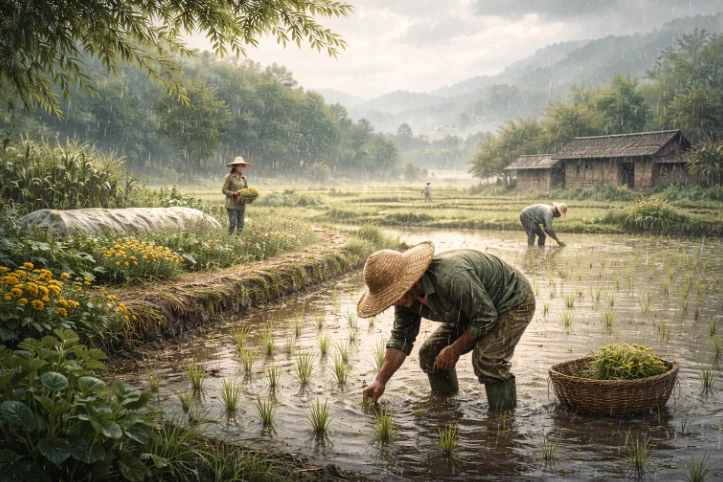
穀雨,是春天最後一場雨,也是農事最關鍵的時刻。對農人而言,它意味著播種與生長;對城市人來說,卻只是天氣變化。本篇從節氣出發,探討穀雨如何揭示人與土地的距離,以及現代生活中逐漸消失的自然節奏。
Grain Rain marks the final rainfall of spring, a crucial moment for agriculture and renewal. For farmers, it signals sowing and growth, while for urban dwellers, it often passes as mere weather. This piece explores how Grain Rain reveals the widening gap between modern city life and the rhythms of the land.
穀雨,是春天的最後一個節氣,也是春雨最具意義的一場降臨,它不像驚蟄的雷聲那樣驚動萬物,也不像春分那樣象徵平衡,穀雨的存在更為務實,它直接關係到土地的濕潤程度,關係到種子的發芽與未來的收成,在傳統農業社會裡,穀雨是一個不能錯過的時間點,人們會依著雨水的節奏進行播種,因為這一場雨,不只是水,更是一種保證,是大地對農人最直接的回應,然而在城市之中,穀雨幾乎失去了原本的重量,雨仍然會下,但人們對它的感知卻變得表面,天氣預報取代了經驗判斷,屋簷與玻璃隔絕了泥土的氣味,雨水不再與生產連結,而只是影響交通與心情的因素,這種差異,其實正是現代生活的一種縮影,當人與自然的距離被不斷拉開,節氣也逐漸變成一種文化符號,而不再是生活的依據,小時候對雨的記憶,往往是自由的,是踩水坑、撐傘奔跑,是一種與環境直接互動的感受,但隨著年齡增長,雨變成了需要避開的東西,是濕滑與麻煩,是行程被打亂的原因,很少有人再去思考,這場雨對遠方的土地意味著什麼,穀雨所帶來的,其實是一種提醒,它提醒人們,城市的穩定與便利,背後仍然依賴著看不見的農業系統,超市裡整齊排列的蔬果,不會告訴你它們經歷了多少氣候的變化,也不會讓你感受到那一場關鍵的雨水,但那場雨確實存在,並且決定了許多事情的走向,當人們開始重新關注節氣,某種程度上,是在試圖找回與自然的連結,穀雨因此變得不只是農業的節點,而是一種反思的契機,它讓人意識到,生活不應該完全脫離自然的節奏,否則即使物質豐富,感知卻可能變得貧乏,在快速變動的城市之中,人們習慣以效率與結果來衡量一切,但穀雨所代表的,是一種需要等待的過程,是一種無法被加速的時間,種子需要雨水,也需要時間,這種緩慢的成長,與現代生活形成強烈對比,也因此顯得更加珍貴,當春天即將結束,穀雨作為最後一場具有象徵意義的雨,彷彿在提醒人們,不要忘記最初的來源,不要忘記所有看似理所當然的事物,其實都建立在自然的循環之上,而我們與土地之間的距離,或許並不只是空間上的,而是感知與理解上的距離
English Version
Grain Rain arrives quietly at the end of spring, not with the dramatic awakening of thunder nor the symbolic balance of equinox, but with a grounded and practical significance that ties directly to the soil, to seeds, and to the future of harvests, in traditional agricultural societies, this moment is critical, not to be missed or ignored, as the timing of rain determines when crops are sown and how they will grow, the rain is not simply water, but assurance, a form of communication between land and those who depend on it, yet in modern urban life, this meaning has largely faded, rain still falls, but it no longer carries the same weight, it becomes background noise, forecasted in advance, experienced through windows rather than skin, disconnected from production and survival, instead influencing mood, inconvenience, and daily logistics, this contrast reveals something deeper about contemporary existence, as the distance between humans and nature expands, seasonal markers like Grain Rain transform from lived experiences into abstract cultural references, something to be noted rather than felt, childhood memories of rain often involve immediacy and interaction—jumping into puddles, running freely, engaging with the environment without hesitation—but adulthood reframes rain as disruption, something to avoid, something that interferes with carefully planned schedules, rarely do people pause to consider what that rain might mean elsewhere, beyond the city, for fields that rely on its timing and presence, Grain Rain serves as a quiet reminder that the stability and convenience of urban life are supported by systems that remain largely invisible, the abundance displayed in supermarkets conceals the fragile dependence on weather, climate, and timing, the critical rainfall that determines growth leaves no trace on the polished surfaces of modern consumption, yet it is always there, shaping outcomes from a distance, to revisit the idea of Grain Rain is, in some ways, to attempt reconnection, to recognize that life cannot be entirely separated from natural rhythms without losing something essential, even in a world of efficiency and acceleration, there are processes that resist compression, growth that cannot be rushed, seeds that require both water and time, this slow unfolding stands in contrast to the speed of urban existence, making it all the more meaningful, as spring draws to a close, Grain Rain becomes more than a seasonal term, it becomes a moment of awareness, a subtle call to remember origins, to acknowledge that what appears ordinary is sustained by cycles beyond immediate perception, and that the distance between humans and the land is not merely physical, but perceptual, shaped by what we choose to notice and what we allow ourselves to forget