
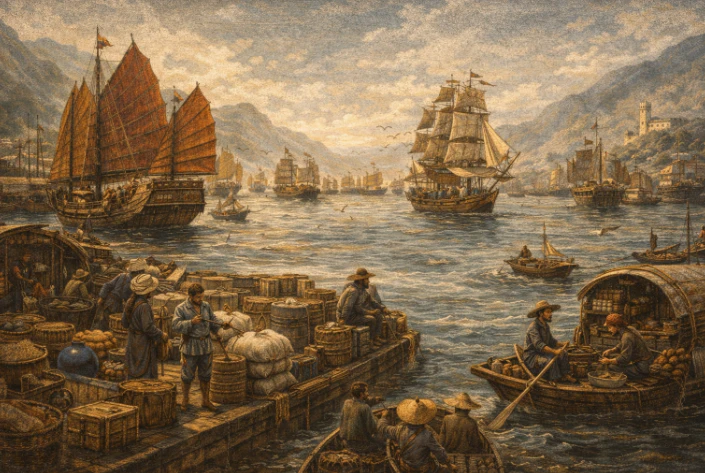
清朝時期,南中國海海盜活動猖獗,尤其以張保仔海盜聯盟最具規模,對沿海地區構成重大威脅。本文探討清政府如何建立海防體系、調動水師力量,並最終透過軍事與招安策略重塑海上秩序,反映香港與華南沿岸在歷史中的重要角色。
During the Qing Dynasty, piracy flourished across the South China Sea, with Cheung Po Tsai’s pirate confederation posing a significant threat to coastal communities. This article explores how the Qing government developed coastal defense systems, mobilized naval forces, and ultimately restored maritime order through a combination of military action and amnesty policies, highlighting the strategic importance of Hong Kong and the South China coastline in regional history.
清朝初期,南中國海一帶海盜活動頻繁,沿海地區包括廣東與香港一帶經常遭受襲擊,漁民與商船長期生活在不安之中,隨著貿易發展與人口增加,海上利益變得更加龐大,也吸引更多武裝勢力加入掠奪行列,其中最具代表性的便是張保仔所領導的海盜聯盟,其勢力曾經橫跨整個珠江口與南中國海,擁有數百艘船隻與數萬人規模,甚至建立類似軍事組織的制度,包括紀律、分贓規則與指揮體系,使其不僅是海盜,更像一支海上政權,清政府面對如此龐大的威脅,逐步強化海防體系,首先在沿海設置炮台與瞭望點,加強對海上動態的監控,同時重組水師力量,提升戰船與武器配置,希望以正規軍事力量壓制海盜活動,然而由於海盜熟悉地形且行動靈活,加上部分地方官員腐敗或與海盜勾結,使清軍初期多次圍剿未能奏效,在這樣的背景下,清政府逐漸意識到單靠武力難以徹底消滅海盜,因此開始採取「招安」策略,即以赦免與官職換取海盜投降,這一政策在張保仔身上取得顯著成效,最終他接受招安,轉為清朝官員,並協助清政府維持海上秩序,這一轉變不僅削弱了海盜勢力,也象徵清朝在海防政策上的調整與成熟,香港地區在此過程中扮演重要角色,由於其地理位置接近珠江口,是船隻往來的重要節點,同時亦是海盜藏身與補給的據點,因此成為清軍重點防守區域之一,透過建立更完善的防禦網絡與港口管理制度,清政府逐步恢復對沿海的控制,這段歷史不僅展現出清朝在面對海上威脅時的策略演變,也反映出海盜與政權之間複雜的關係,從對抗到合作,從混亂到秩序,最終塑造了南中國海新的海上格局,也為香港後來成為重要港口奠定歷史基礎
English Version
In the early Qing Dynasty, piracy was a persistent and escalating problem across the South China Sea, with coastal regions including Guangdong and the waters around Hong Kong frequently subjected to raids, leaving fishing communities and merchant vessels in a constant state of insecurity as maritime trade expanded and economic opportunities grew, the scale of seaborne wealth attracted increasingly organized pirate groups, among which the confederation led by Cheung Po Tsai stood out as one of the most powerful maritime forces of its time, controlling hundreds of ships and tens of thousands of followers while operating under a structured system that included discipline, profit-sharing rules, and a clear command hierarchy, effectively transforming piracy into a semi-political maritime regime that challenged imperial authority, in response to this growing threat the Qing government began to strengthen its coastal defense by constructing fortifications such as coastal batteries and watch posts to monitor maritime activity while simultaneously reorganizing its naval forces to improve combat capability through better ships and weaponry, however early suppression campaigns proved largely ineffective due to the pirates’ superior knowledge of coastal geography and their mobility as well as the presence of corruption among local officials who sometimes colluded with pirate groups, recognizing the limitations of purely military solutions the Qing administration gradually adopted a policy of amnesty known as “pacification,” offering pardons and official positions in exchange for surrender, this strategy proved decisive in the case of Cheung Po Tsai who eventually accepted integration into the Qing system and became an officer serving the very authority he once resisted, his submission marked a turning point that significantly weakened pirate networks while demonstrating the Qing government’s pragmatic approach to governance and conflict resolution, throughout this period Hong Kong played a crucial strategic role due to its location near the Pearl River estuary making it an essential transit point for trade as well as a convenient refuge and supply base for pirate fleets, as a result it became a focal area for Qing defensive efforts, through the gradual establishment of a more coordinated coastal defense network and improved port administration the Qing state was able to reassert control over its maritime frontier, this historical episode illustrates not only the adaptive strategies employed by the Qing Dynasty in dealing with maritime threats but also the complex relationship between state power and non-state actors where confrontation could evolve into cooperation and disorder could eventually give way to stability, ultimately shaping a new maritime order in the South China Sea and laying important groundwork for Hong Kong’s later emergence as a significant international port