
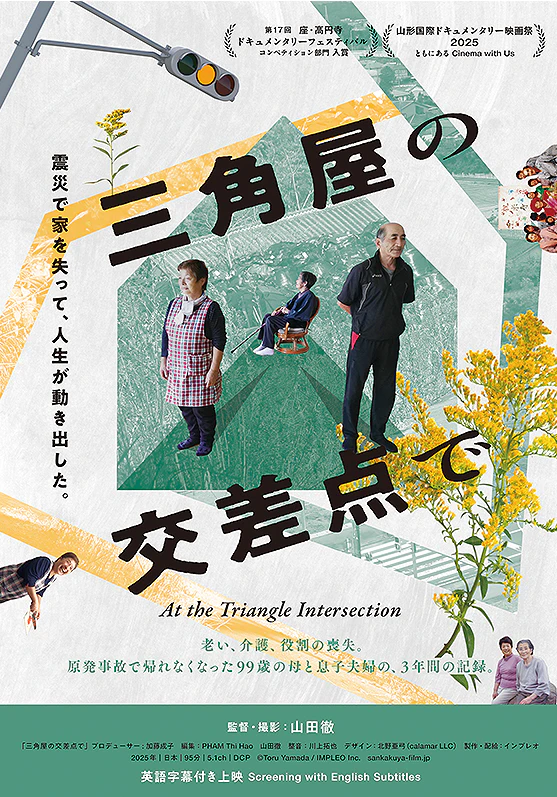
一個家庭,在災難之後的歲月中尋找去向。《三角屋の交差点で》以靜默凝視,刻畫「家」與記憶的重量。
A family struggles between past and future after disaster. At the Crossroads of Sankakuya quietly reflects on memory, home, and identity.
中文
由山田徹執導的紀錄片《三角屋の交差点で》,以極為克制而細膩的影像語言,記錄了一個在巨大災難之後持續生活的家庭樣貌。影片背景源自2011年的東日本大震災與福島第一原発事故,這場複合性災難不僅摧毀了土地與家園,也徹底改變了無數人的人生軌跡。故事聚焦於一個從福島縣浪江町撤離的一家三口,他們在災後七年仍未能真正決定未來的方向,是回到充滿不確定性的故鄉,還是在新的城市繼續生活,這樣的選擇成為一種持續存在的心理拉鋸。片中99歲的母親テツ,身體與記憶逐漸衰退,但對出生地大熊町的情感卻異常清晰,她的存在如同一座活的記憶庫,承載著過去的時間與地方,也象徵著一種難以割捨的「歸屬」。她的兒子タケマサ則是一位寡言且內斂的人,震災之後,他不得不結束長年經營的印刷事業,轉而面對一種被迫重構的人生,但他在家庭中的角色仍停留在傳統的父權位置,將照顧母親的責任大多交由妻子承擔。這樣的安排並非出於惡意,而是一種長期形成的習慣與結構,卻在新的生活環境中逐漸顯露出裂痕。妻子シゲコ作為家庭中實際的照顧者,她長期默默承擔著照護與家務,但在災後的生活裡,她開始反思自身的存在價值與選擇,這種內在的覺醒,使得家庭關係產生細微卻深刻的變化。影片並未刻意製造戲劇衝突,而是透過長時間的觀察,捕捉日常生活中的沉默、停頓與微小情緒,讓觀眾在細節中體會時間的重量與關係的轉變。導演在2018年至2021年的三年間持續拍攝,使作品具有時間累積的厚度,也讓人物的變化自然呈現。居住在いわき市的災害公營住宅中,這個家庭的生活看似平靜,卻始終被過去與未來的選擇所牽引,「家」不再只是物理空間,而是一種記憶、責任與情感交織的存在。《三角屋の交差点で》以極簡的敘事方式提出深刻提問:當故鄉無法回去,新的地方又難以完全歸屬,人該如何定義「家」?而在長期被社會角色所規範的人生中,「我」又是否有重新選擇的可能?這部作品不僅是對災後日本的記錄,也是對普世人類處境的凝視,讓觀眾在平靜之中感受到持續震盪的情感餘波。
English Version
Directed by Toru Yamada, At the Crossroads of Sankakuya is a quietly powerful documentary that captures the lingering aftermath of disaster through the lens of everyday life. Set in the wake of the Great East Japan Earthquake and the Fukushima Daiichi nuclear disaster, the film follows a displaced family from Namie, Fukushima, as they navigate the uncertain terrain between memory and survival. Seven years after the catastrophe, their lives remain suspended between two choices: returning to their abandoned hometown, where safety and infrastructure remain uncertain, or continuing to build a new existence elsewhere. At the center of the narrative is Tetsu, a 99-year-old woman whose fading memory contrasts sharply with her unwavering emotional attachment to her birthplace, Okuma. She embodies a living archive of place and identity, representing a generation for whom “home” is inseparable from memory. Her son Takemasa, a reserved and stoic figure, struggles with the loss of his printing business following the disaster, yet continues to inhabit a traditional familial role, delegating much of the caregiving responsibility to his wife. This dynamic is not portrayed as conflict-driven but as a reflection of ingrained social structures that begin to shift under new circumstances. Shigeko, the daughter-in-law, emerges as a quietly transformative presence within the household. Having long accepted her role as caregiver, she gradually begins to question her identity and the expectations placed upon her, signaling subtle but meaningful changes in the family’s internal balance. Filmed over a three-year period from 2018 to 2021, the documentary allows time itself to shape the narrative, revealing emotional transitions through silence, routine, and observation rather than overt drama. The family’s residence in public disaster housing in Iwaki becomes a symbolic space—neither fully temporary nor truly permanent—mirroring their psychological state of in-betweenness. Through its restrained storytelling, the film invites viewers to reflect on broader existential questions: What defines a home when one cannot return to the past, and cannot fully belong to the present? And within the constraints of social roles and expectations, is it possible to reclaim a sense of self? At the Crossroads of Sankakuya transcends its specific context to offer a universal meditation on displacement, memory, and identity, presenting a deeply human story shaped by time, loss, and quiet resilience.