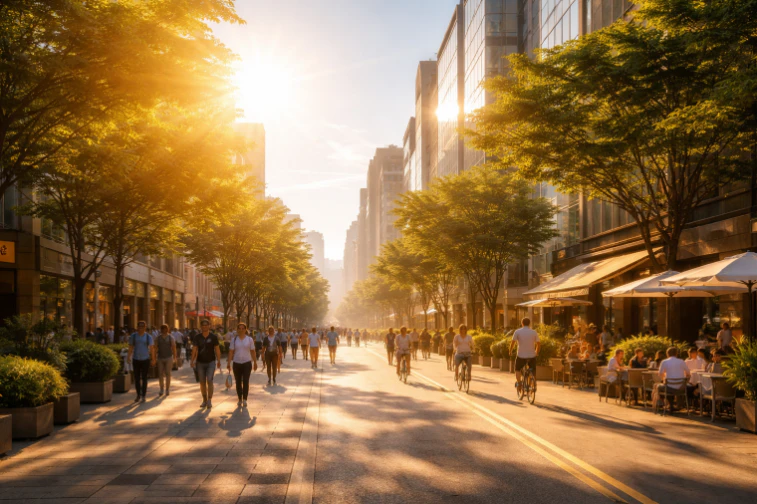
夏至,是一年之中白晝最長的一天,陽光幾乎填滿整個城市。時間彷彿被拉長,人們在漫長的日光中生活、工作、等待夜晚。這一天不只是節氣,更是一種關於光與時間的感覺記憶。
The Summer Solstice marks the longest day of the year, when sunlight stretches across the city from early morning to late evening. Time feels expanded, as people move through extended hours of brightness. It is not only a seasonal marker, but also a sensory memory shaped by light, heat, and the rhythm of a day that seems endless.
中文
夏至,是二十四節氣之中最具存在感的一天,因為它不需要解釋,人們單憑身體就能感受到它的到來。清晨天亮得特別早,還未完全清醒,窗外已經充滿光線;到了傍晚,太陽卻遲遲不肯落下,城市像被拉長了一樣,時間變得鬆散而緩慢。這一天的特別,不只是日照時間最長,而是光線改變了生活節奏。人們會不自覺地延長活動時間,下班後仍有陽光,可以散步、購物、運動,甚至只是坐在街邊發呆。夏至的光,帶著一種幾乎過量的存在感,它不像春天那樣溫柔,也不像秋天那樣收斂,而是一種直白而持續的照射。古人觀察夏至,不只是為了農事安排,更是一種對天地運行的理解,陽氣在這一天達到極致,之後便開始轉弱,這種「盛極而衰」的觀念,也滲透在文化之中。城市中的夏至,則少了農田的節奏,卻多了一種屬於現代生活的疲憊與矛盾。長時間的日照意味著炎熱與消耗,冷氣機的運轉聲成為背景音,人們在室內與室外之間切換,試圖尋找舒適的平衡。街道被陽光曬得發白,空氣帶著熱浪的顫動,遠處景物微微扭曲,像是一種視覺上的幻象。夏至的記憶,往往與學生時代緊密相連,那是學期接近尾聲的日子,考試、放假、以及對暑假的期待交織在一起。午後的操場空無一人,熱氣從地面升起,時間彷彿停滯,但心中卻充滿即將解放的躁動。對上班族而言,夏至則是另一種感受,漫長的白天讓工作時間顯得更長,回家的路上仍是明亮的天色,難以分辨工作與休息的界線。這種光線的延續,使人產生一種錯覺,好像一天可以做更多事情,但同時也更容易感到疲倦。夏至也隱含著一種轉折的意味,雖然是光最盛的一刻,但也意味著接下來日子將逐漸縮短,這種微妙的變化並不容易被察覺,卻真實存在。就像人生中的某些高峰,看似持續,其實已經悄悄開始下降。節氣的意義,正是在這些細微變化中體現出來。當夜晚終於降臨,氣溫仍未完全下降,城市的熱仍在空氣中滯留,燈光接替了陽光,延續了白天的明亮。人們走在街上,汗水與晚風交錯,這種不完全的夜晚,正是夏至的另一種面貌。它不是一個瞬間,而是一整天的延伸,是光與時間共同構成的記憶。在這一天,我們不只是經歷了一個節氣,而是經歷了一種被拉長的人生片段。
English Version
The Summer Solstice is one of the most physically perceptible moments in the seasonal calendar, a day that does not require explanation because the body instinctively feels its presence. Dawn arrives unusually early, often before one is fully awake, as light quietly fills the room. In the evening, the sun lingers, refusing to set, stretching the day into something that feels unusually long and almost surreal. What defines this day is not merely the extended daylight, but the way light reshapes the rhythm of life. People unconsciously prolong their activities; after work, there is still sunlight left to walk, shop, exercise, or simply sit and observe the passing city. The light of the Summer Solstice carries an intensity that feels excessive, neither gentle like spring nor restrained like autumn, but direct and persistent. Historically, this moment was not only important for agricultural planning but also for understanding the balance of natural forces. It marks the peak of yang energy, after which it begins to decline, embodying the idea that extremes inevitably lead to reversal. In modern urban life, the agricultural meaning fades, replaced by a different tension. Extended daylight brings both vitality and exhaustion. Air conditioners hum constantly, creating an artificial refuge from the relentless heat, while people move between indoor and outdoor spaces in search of comfort. Streets appear bleached under the sun, and the air shimmers with heat, slightly distorting distant views into wavering illusions. Memories of the Summer Solstice are often tied to school days, when the academic year approaches its end. Exams, the anticipation of holidays, and the quiet emptiness of sunlit playgrounds form a distinct emotional landscape. Time feels suspended in the heat, yet filled with a restless expectation of freedom. For working adults, the experience shifts. The prolonged daylight blurs the boundary between work and rest, making days feel longer and sometimes more draining. The brightness on the way home creates an illusion that there is still time left, encouraging activity while quietly accumulating fatigue. Beneath this brightness lies a subtle turning point. Although it is the peak of light, it also signals the beginning of its gradual decline. This transition is almost imperceptible, yet deeply real, much like the quiet turning points in life where a peak has already begun to fade. The meaning of seasonal markers resides precisely in these subtle shifts. When night finally arrives, the heat does not fully dissipate. The city remains warm, and artificial lights take over from the sun, extending the sense of daytime into the evening. People walk through streets where sweat and warm breezes intermingle, experiencing a night that feels incomplete. The Summer Solstice is not a single moment, but an extended state of being, a day shaped by light and the perception of time. It is a reminder that sometimes what we experience is not just a day, but a stretched fragment of life itself.