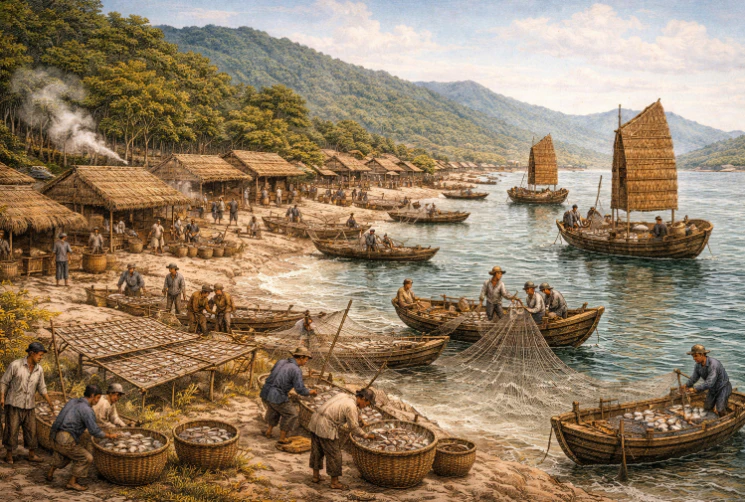
宋朝時期是中國經濟與海洋貿易快速發展的時代。隨著南方經濟的繁榮,珠江口與嶺南沿海逐漸形成許多漁村與小型聚落。香港位於珠江口外海的島嶼與海岸地帶,在宋朝時期開始出現較為穩定的沿海村落。當地居民依靠捕魚、採鹽與沿岸航行維生,並與周邊地區保持聯繫。這些沿海村落雖然規模不大,但已經構成香港最早的人類社會之一。本章將帶你了解宋朝時期香港沿海村落的形成,以及海洋生活如何影響當地居民的生活方式。
宋朝是中國歷史上一個經濟與文化高度發展的時代。隨著人口增加與農業技術進步,南方地區逐漸成為中國經濟的重要中心。特別是在南宋時期,政治中心南移,使得嶺南與珠江流域的地位更加重要。海上貿易與沿海交通在這一時期變得更加活躍。香港位於珠江口附近,地理位置靠近南中國海航道。雖然在宋朝時期這裡仍然不是大型城市,但沿海地區已經出現穩定的人類聚落。這些聚落通常是小型漁村或沿海村落。居民主要依靠海洋資源維持生活。捕魚是當時最重要的生計之一。漁民利用小型木船在近海捕魚,並利用潮汐與海流尋找魚群。除了魚類之外,貝類與海藻也是沿海居民的重要食物來源。沿岸採集活動在當地生活中十分常見。除了漁業之外,一些沿海地區也從事鹽業活動。利用海水曬鹽是中國南方沿海常見的產業。鹽不僅是重要的生活用品,也是重要的貿易商品。沿海居民可能透過鹽業與其他地區進行交換。宋朝時期的海上交通逐漸發展。商船沿著南中國海航行,往來於中國沿海與東南亞之間。香港附近的海域正位於重要航線附近。雖然當地村落規模不大,但航海者可能會在附近海岸停靠補給。這些活動使香港沿海逐漸融入更大的海洋網絡。宋朝時期的沿海村落通常由幾個家族或家庭組成。村民之間有密切的合作關係。捕魚、修船與建造房屋等活動往往需要集體合作。這些村落逐漸形成早期的社會結構。村落中的房屋多以木材與竹子建造,屋頂覆蓋茅草。這些房屋適合沿海潮濕的氣候,也能抵禦季風與風暴。村落通常建在靠近海岸但地勢較高的地方,以避免潮水與洪水。考古研究顯示,在香港與珠江口周邊地區發現了一些宋代遺物,例如陶瓷器物與生活用品。這些文物證明當時沿海地區已經有人類長期生活。這些發現為研究香港早期村落提供了重要線索。宋朝時期的香港仍然是一片以自然環境為主的地方。山丘、森林與海岸構成主要景觀。然而在人類活動的影響下,一些沿海地區逐漸形成固定聚落。這些村落成為後來香港社會發展的重要基礎。宋朝的經濟繁榮與海上交通,使南中國海逐漸形成一個活躍的海洋世界。香港的沿海村落雖然規模不大,但已經參與其中。居民透過海洋與周邊地區建立聯繫。這些早期村落代表香港歷史發展的重要階段。從這些小型漁村開始,香港逐漸形成自己的社會與文化。這些沿海村落為後來的歷史發展奠定了基礎。
The Song dynasty was a period of remarkable economic and cultural development in Chinese history. As agricultural productivity increased and population expanded, the southern regions of China gradually became major centers of economic activity. During the Southern Song period in particular, the political center of China moved southward, giving greater importance to the Lingnan region and the Pearl River basin. Maritime trade and coastal transportation became increasingly active during this time. Hong Kong is located near the Pearl River estuary along the southern coast of China. Although the region was not a major city during the Song dynasty, stable human settlements had begun to appear along its coastline. These settlements were typically small fishing villages or coastal communities. Local residents relied heavily on marine resources for their livelihood. Fishing was one of the most important economic activities. Fishermen used small wooden boats to catch fish in nearby coastal waters. They relied on their knowledge of tides and ocean currents to locate fish. In addition to fish, shellfish and seaweed were also important sources of food for coastal communities. Gathering marine resources along the shore was a common part of daily life. Besides fishing, some coastal communities were involved in salt production. The production of sea salt by evaporating seawater was a common industry along the southern coast of China. Salt was not only essential for daily life but also an important commodity for trade. Coastal villagers may have exchanged salt with other inland communities. Maritime transportation expanded significantly during the Song dynasty. Merchant ships sailed across the South China Sea, connecting the Chinese coast with Southeast Asia and other regions. The waters near Hong Kong were located close to these important maritime routes. Although the local villages were small, sailors traveling through the region may have used nearby coastal areas as temporary stopping points or supply locations. These interactions gradually connected Hong Kong’s coastal communities to the wider maritime network. Coastal villages during the Song dynasty were usually composed of a few families or clans. Cooperation among villagers was essential for survival. Activities such as fishing, repairing boats, and constructing houses often required collective effort. Over time these communities developed basic social structures. Houses in these villages were typically built using wood and bamboo, with roofs covered by thatch. Such construction methods were suitable for the humid coastal climate and provided protection against seasonal monsoon winds and storms. Villages were often built on slightly elevated land near the coast to avoid flooding and high tides. Archaeological research has uncovered Song dynasty artifacts in Hong Kong and surrounding areas of the Pearl River Delta. These artifacts include ceramics and everyday objects used by local communities. Such discoveries demonstrate that people were already living in these coastal areas for extended periods. These findings provide valuable insights into the early development of villages in Hong Kong. During the Song dynasty, Hong Kong remained largely a natural landscape of hills, forests, and coastlines. However, human activities gradually transformed certain coastal areas into permanent settlements. These early villages became an important foundation for the later development of Hong Kong society. The economic prosperity and maritime trade of the Song dynasty helped create a vibrant maritime world across the South China Sea. Although Hong Kong’s coastal villages were small, they were already connected to this broader network. Through the sea, local residents maintained contact with surrounding regions. These early settlements represent an important stage in the historical development of Hong Kong. From these small fishing communities, the foundations of Hong Kong’s later society and culture gradually began to emerge.