
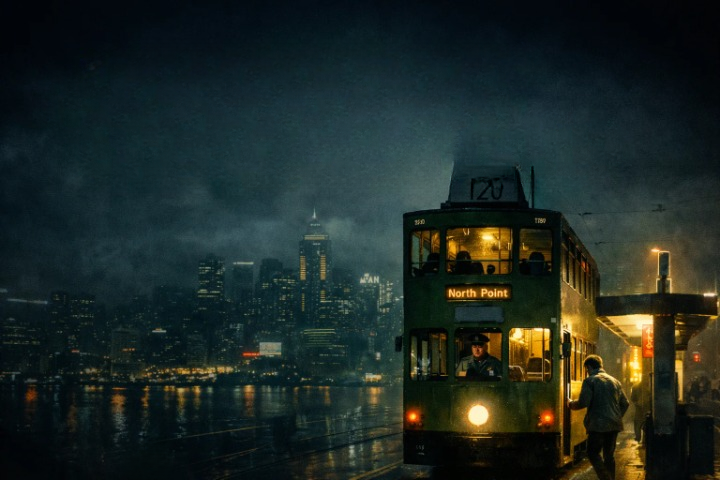
不可思議故事 第一篇 | 最後一班仍然有人上車的電車 | The Last Bus That Still Picks Up Passengers: A Haunted Night Route Through a City That Never Sleeps
深夜的台北,街燈昏黃,街道彷彿沉入了一片靜謐的海洋。午夜的時鐘敲過十二點,路上的車輛稀稀落落,偶爾傳來幾聲機車引擎的轟鳴聲,迅速消失在遠處。這座城市在白日裡充滿喧囂,但到了夜晚,卻像是披上了一層神秘的面紗。
老林是台北市一名資深的公車司機,專跑夜班線。他在這條線上已經開了將近二十年,對每一個路口、每一個站牌都瞭如指掌。夜班的工作雖然單調,但老林早已習慣。他知道哪些站點到了深夜一定不會有人上車,也知道哪些路段需要格外小心。但即便如此,他依然一絲不苟地完成每一趟班次。
然而,有一班車讓老林始終心存敬畏——最後一班公車。
這班車的路線從新店出發,一直開到北投。通常到了這個時間,乘客已經寥寥無幾,有時甚至整輛車空無一人。即便如此,老林仍然按照規定操作,每到一站都會停車、開門、關門。他知道,這是他的職責,也是他對工作的尊重。
那天晚上,天氣陰沉,空氣中瀰漫著濕冷的氣息。老林駕駛著公車緩緩行駛在空蕩的街道上,車內只有幾盞昏暗的燈光,映照著空無一人的座位。當公車駛過幾個站後,依然沒有乘客上車。
直到接近公館站。
老林熟練地將車停下,按下按鈕打開車門。他環顧四周,站牌旁空無一人。正當他準備關門繼續出發時,耳邊卻突然響起了「嗶」的一聲——悠遊卡感應器清脆的聲音在寂靜的車廂內顯得格外刺耳。
老林愣了一下,下意識地透過後視鏡往車廂裡看去。前排空著,中間也沒有人影,但最後一排靠窗的位置卻似乎有些異樣。那裡的座椅微微下陷,就像是有人坐了下去。
他深吸了一口氣,握緊方向盤,再次確認四周沒有其他人影。他告訴自己,也許是機器故障了,也許是錯覺。於是,他沒有多想,繼續駕駛。
公車在夜裡行駛得平穩而安靜,只有輪胎壓過柏油路面的聲音與引擎的低鳴聲交織成一種奇異的旋律。每經過一個轉彎,老林都能感覺到車身後部似乎有些重量偏移,那種感覺很輕微,但對於駕駛經驗豐富的他來說,卻無比真實。
接下來的站點是圓山捷運站,一個平時人潮湧動的地方,但此刻卻空無一人。老林再次停車、開門、關門,一切按照程序進行。然而,那個座位上的異樣依舊存在。每次他透過後視鏡望去,都能看到那微微下陷的座位,彷彿有什麼無形的物體正靜靜地坐在那裡。
老林感覺到了一絲寒意,但他並沒有表現出來。他明白,在這樣的情況下,最重要的是保持冷靜。他告訴自己,只要專注於駕駛,就不會有事。
終於,公車抵達了北投終點站。老林停下車,打開所有車門。他坐在駕駛座上等了一會兒,但仍然沒有人下車。他轉頭看向後方,那張座位依然微微下陷。他猶豫了一下,最終還是起身走向車廂後排。
當他走近那個座位時,他發現椅子上的確有些異樣——椅墊上有一道模糊的水漬,就像是剛剛真的有人坐過一般,而那水漬似乎還散發著淡淡的寒氣。
老林沒有說話,他只是靜靜地看著那張椅子片刻,然後轉身走回駕駛座。他關上所有車門,發動引擎,把車開回了總站。
回到總站後,一名年輕的同事湊了過來,好奇地問:「林叔,聽說你跑夜班這麼多年,有沒有遇過什麼怪事?」
老林抬起頭,看了看對方,又低下頭整理自己的制服。他語氣平淡地說:「有些事,不知道比較好。」
年輕人愣了一下,又追問:「那你不會害怕嗎?」
老林沉默了一會兒,然後淡淡地笑了笑:「怕什麼?只要佢付錢,我就送佢到目的地。」
說完,他拿起自己的包,慢慢走向休息室,只留下年輕人呆立在原地,一臉疑惑。
台北這座城市從不曾真正入睡,即使在最深沉的夜晚,也有故事在角落裡悄然發生。那些看似平凡無奇的場景背後,也許隱藏著我們無法理解的真相。但正如老林所說,只要「佢」遵守規矩,那就無需害怕。
或許,這正是這座城市獨特之處——它包容一切,即便是那些已經不屬於這個世界的人,也能找到自己的歸宿。在夜色籠罩下,台北依然運轉著,承載著無數未曾說出口的秘密與故事。
English Version
In the quiet depths of the city after midnight, when the streets seemed to sink into a muted stillness beneath dim streetlights and the distant hum of engines faded into the background, the urban landscape took on a different character altogether, as though a thin veil had settled over everything, separating the living from something less easily defined, and for Old Lam, a veteran bus driver who had spent nearly two decades driving night routes across the city, this transformation was something he had come to understand without ever fully questioning, because in his line of work, routine mattered more than curiosity, and discipline mattered more than fear he knew every stop, every turn, every stretch of road where passengers might appear and where they almost certainly would not, and among all his routes, there was one that carried a quiet weight he never spoke about—the final bus of the night, a journey that began in one part of the city and ended in another, usually empty, often silent, yet never entirely uneventful in ways that defied simple explanation; on that particular night, the air was damp and heavy, the kind of cold that clung to the skin, as he guided the bus through nearly deserted streets, its interior lights dim and casting long shadows across rows of empty seats, and as he stopped at each station along the way, he followed the same procedure—halt, open the doors, wait, close them—regardless of whether anyone was there, because that was the rule, and rules, he believed, were what kept things in order even when the world itself felt uncertain; for several stops, no one boarded, and the journey continued in quiet monotony until he approached a station where he knew, from years of experience, that no passengers ever appeared at such an hour, and yet as he opened the doors and prepared to move on, a sharp electronic beep echoed through the bus, the unmistakable sound of a fare being registered, and the suddenness of it caused him to pause, his grip tightening slightly on the steering wheel as he instinctively checked the mirrors, scanning the interior for any sign of movement; the front seats were empty, the aisle clear, but toward the back of the bus, something caught his attention—not a figure, not a shape he could clearly define, but a subtle indentation in one of the seats by the window, as though an invisible presence had settled there, pressing down just enough to leave a trace of weight; he exhaled slowly, steadying himself, telling his mind to remain focused, to treat the moment as nothing more than a malfunction or illusion, because acknowledging anything beyond that would only complicate what needed to remain simple, and so he closed the doors and continued driving, the bus moving smoothly through the night, its engine humming softly as the city passed by in a blur of dim lights and empty intersections; yet as he navigated turns and curves, he could feel it—the faint but undeniable shift in balance at the rear of the vehicle, a slight redistribution of weight that corresponded with the seat he had seen in the mirror, a sensation that only someone with years of driving experience would notice, subtle enough to ignore, yet too consistent to dismiss entirely; when he reached the next stop, one that was usually crowded during the day but now stood completely empty, he repeated the routine without hesitation, opening and closing the doors while avoiding any unnecessary glance toward the back, maintaining the same discipline he had relied on for years, because in moments like these, routine was not just habit but protection; the journey continued in this manner, each stop reinforcing the same quiet tension, each glance in the mirror confirming that the seat remained slightly depressed, occupied by something that did not reveal itself, and though a chill lingered in the air, he refused to let it distract him, focusing instead on the road ahead until finally the bus reached its terminal stop, the last point on the route where the journey would officially end; he brought the bus to a halt, opened all the doors, and waited, giving whatever—or whoever—might be there the opportunity to leave, but no footsteps followed, no movement disturbed the silence, and after a moment, he rose from his seat and walked slowly toward the back, each step deliberate, his expression calm despite the quiet tension that filled the space, and when he reached the seat in question, he saw what he had only sensed before—a faint patch of moisture on the cushion, as though someone had indeed been sitting there, leaving behind a trace of presence in the form of a damp imprint that still carried a subtle chill; he stood there for a moment, observing without reacting, before turning away and returning to the driver’s seat, closing the doors and guiding the bus back toward the depot as if nothing out of the ordinary had occurred; later, when a younger colleague asked him whether he had ever encountered anything strange during his years on the night shift, Old Lam simply looked at him for a moment before lowering his gaze and responding in a calm, measured tone that suggested both experience and restraint, saying that some things were better left unknown, and when pressed further about whether such experiences frightened him, he allowed himself a faint smile and replied that as long as the passenger paid their fare, it was his job to take them to their destination, a statement that seemed simple on the surface yet carried a deeper implication, one that acknowledged a truth he had come to accept without needing to fully understand it; the city, after all, never truly slept, and within its endless movement and quiet corners, there existed stories that unfolded beyond ordinary perception, stories that did not demand explanation but instead coexisted with the living in subtle, almost invisible ways, and as long as those unseen passengers followed the same unspoken rules, there was no reason to fear them, only to continue the journey, because in a place where countless lives intersect and overlap, even those who no longer belong to the world of the living may still find their way home, carried through the silent streets by someone willing to drive the final route without asking too many questions, guided only by routine, duty, and the quiet understanding that not every passenger needs to be seen in order to exist.