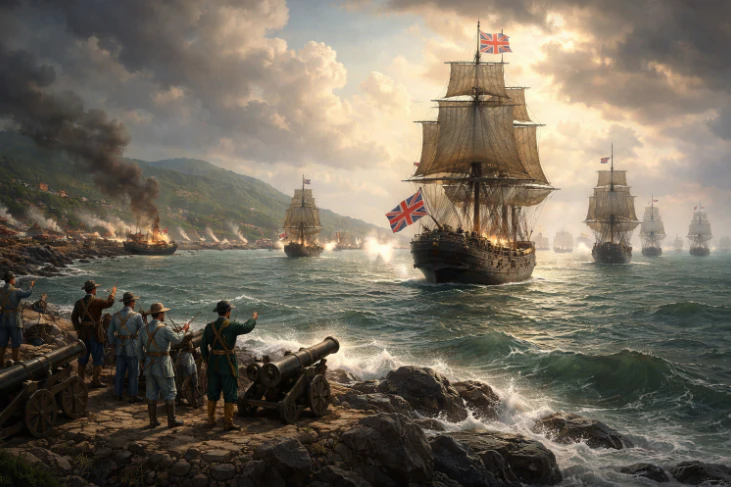
鴉片戰爭不僅改變中國歷史,也重塑香港的命運。從貿易衝突到軍事對抗,這場戰爭揭開近代中國的序幕。
The Opium War reshaped China’s history and Hong Kong’s fate, marking the transition from trade conflict to military confrontation and the dawn of modern China.
19世紀初期,清朝仍以「天朝上國」自居,對外貿易採取嚴格限制政策,只允許外國商人在廣州進行有限度的交易,形成所謂的「一口通商」制度。然而,隨著英國對中國茶葉、絲綢和瓷器需求大增,貿易長期處於逆差狀態,為了扭轉局面,英國商人開始大量向中國輸入鴉片,這種來自印度的毒品迅速在中國社會蔓延,造成嚴重的社會與經濟問題,白銀大量外流,民眾健康受損,社會秩序逐漸動搖。清政府最初對鴉片問題採取消極態度,但隨著問題惡化,道光皇帝最終決定嚴厲禁煙,並派遣欽差大臣林則徐前往廣州執行禁煙政策。1839年,林則徐在虎門展開大規模禁煙行動,查封洋行並收繳超過兩萬箱鴉片,隨後於虎門海灘公開銷毀,史稱「虎門銷煙」,這一行動被視為中國近代史上重要的反外侵與反毒行動,但同時也直接觸發了中英之間的武裝衝突。英國政府以保護商業利益與國民安全為由,決定對清朝發動軍事行動,1840年英國艦隊抵達中國沿海,封鎖珠江口並向北推進,正式揭開鴉片戰爭的序幕。戰爭初期,清軍由於武器落後與戰術保守,難以抵抗英軍的現代化海軍與火炮,廣州、廈門、寧波等沿海城市相繼受到攻擊,戰局迅速對清朝不利。香港在這場衝突中逐漸浮現其戰略價值,由於地理位置優越,港灣深水且易守難攻,英軍於1841年佔領香港島,並將其作為軍事與貿易據點,這一事件成為香港歷史的重要轉折點。隨著戰事持續,清政府最終無力抵抗,被迫與英國談判,並於1842年簽訂《南京條約》,正式割讓香港島予英國,開放五口通商,並支付巨額賠款,標誌著中國主權首次遭受重大削弱。鴉片戰爭的開始不僅是一場軍事衝突,更象徵中國從傳統帝國體制走向近代國際體系的開端,也為香港從漁村轉變為國際港口奠定基礎,影響深遠且持續至今,其歷史意義遠超戰爭本身,成為理解東亞近代史不可或缺的一頁。
English Version
In the early 19th century, the Qing dynasty regarded itself as a superior empire and maintained strict control over foreign trade through the Canton System, allowing limited commerce only in Guangzhou. However, as British demand for Chinese tea, silk, and porcelain surged, a persistent trade imbalance emerged, with silver flowing heavily into China. To correct this deficit, British traders increasingly relied on opium exported from India, introducing the drug into Chinese markets on a massive scale. The widespread consumption of opium soon triggered serious social and economic consequences, including addiction, financial drain, and administrative instability, as silver reserves rapidly declined and public health deteriorated. Initially, the Qing government struggled to respond effectively, but as the crisis intensified, the Daoguang Emperor appointed Commissioner Lin Zexu to enforce a strict anti-opium campaign in Guangdong. In 1839, Lin Zexu carried out decisive measures in Canton, confiscating over 20,000 chests of opium from foreign merchants and publicly destroying them at Humen, an event known as the Humen Opium Destruction. While this act demonstrated China’s determination to defend sovereignty and social order, it also escalated tensions with Britain, ultimately serving as the immediate catalyst for war. The British government, citing the need to protect its trade interests and citizens, launched a military expedition against China in 1840, sending naval forces to blockade the Pearl River Delta and advance along the Chinese coastline. This marked the official beginning of the Opium War. The Qing military, hindered by outdated weaponry and conservative strategies, struggled against the technologically advanced British navy equipped with modern artillery and steam-powered ships. Coastal cities such as Guangzhou, Xiamen, and Ningbo came under attack, and the balance of power quickly tilted in Britain’s favor. During this conflict, Hong Kong emerged as a strategically significant location due to its deep natural harbor and advantageous geographic position. In 1841, British forces occupied Hong Kong Island and established it as a military and trading base, a move that would permanently alter the island’s destiny. As the war progressed, the Qing government found itself unable to resist effectively and was compelled to negotiate. This led to the signing of the Treaty of Nanking in 1842, under which China ceded Hong Kong Island to Britain, opened five treaty ports to foreign trade, and agreed to substantial indemnities. The outbreak of the Opium War was not merely a military confrontation but a transformative moment that marked China’s forced entry into the modern international system. It also laid the foundation for Hong Kong’s evolution from a modest fishing community into a global port city, shaping its historical trajectory for generations to come.