
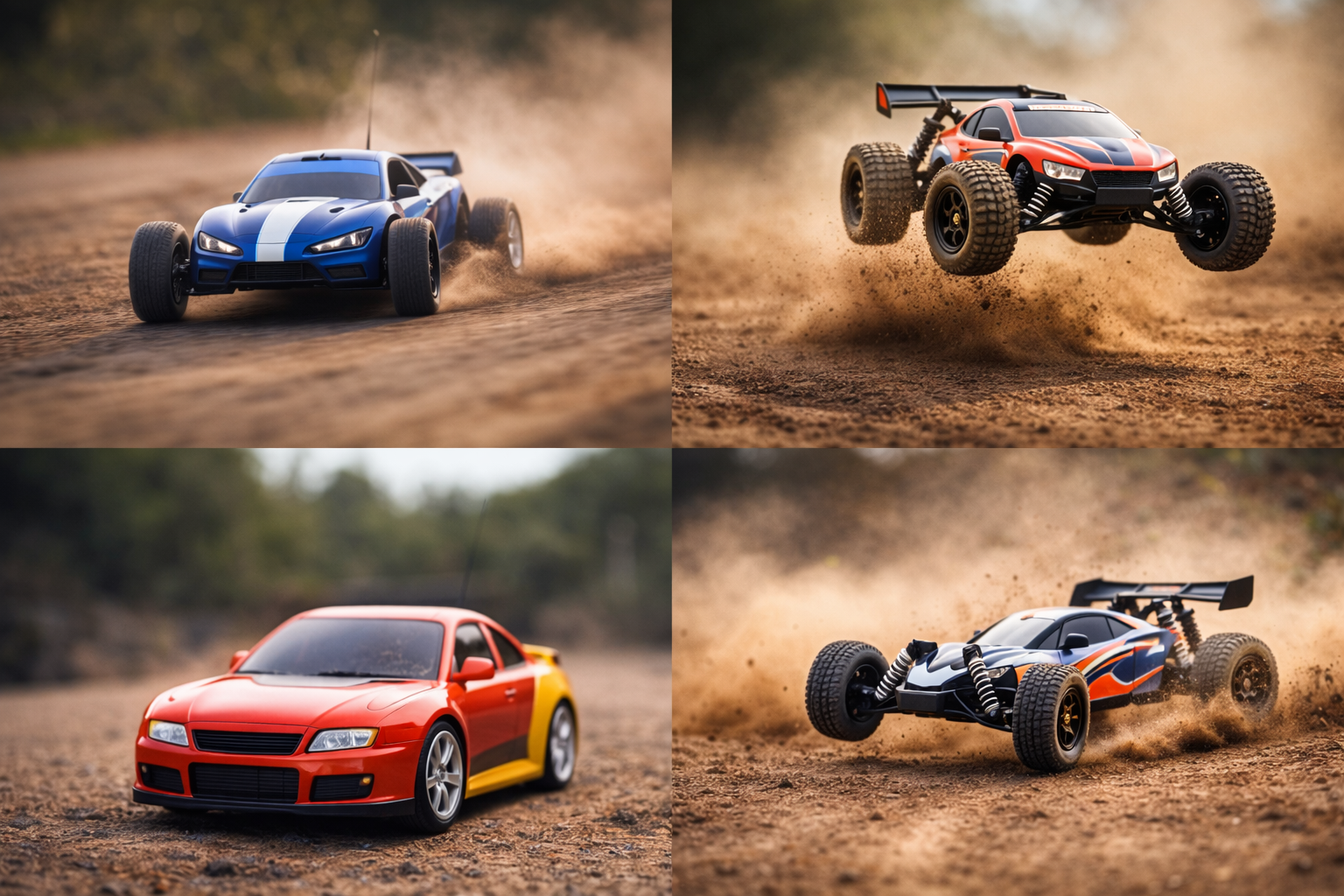
在許多孩子的童年記憶之中,遙控車總帶著一種特別的魅力。只要按下遙控器上的按鍵,一輛小小的車便能在地面上快速前進、轉彎甚至漂移。與傳統玩具不同,遙控車讓玩家第一次體驗到「控制機械」的感覺。這種操控與速度結合的樂趣,使它成為二十世紀最受歡迎的玩具之一。
遙控車的誕生,其實與無線電技術的發展密切相關。在電子技術逐漸成熟的年代,人們開始嘗試把無線電訊號應用在模型與玩具上。早期的遙控模型主要出現在飛機與船隻之中,而汽車模型則是在之後才慢慢普及。隨著電子元件越來越小型化,遙控車終於成為可以大量生產的玩具。
最初的遙控車結構相當簡單。車內通常只有一個小型電動馬達,用來驅動車輪前進,另外再透過簡單的轉向機構控制方向。遙控器會發出無線訊號,車上的接收裝置再把訊號轉換成動作。雖然這些技術今天看來十分普通,但在當時卻是一種令人驚奇的體驗。
對許多孩子來說,遙控車帶來的第一種感覺就是速度。當小車在地面快速奔跑時,玩家會自然地追著它跑,嘗試控制每一個轉彎。這種互動方式與一般靜態玩具不同,因為玩家不再只是觀察,而是直接參與其中。
隨著市場需求增加,遙控車的種類也變得越來越多。有些設計模仿真實汽車,例如跑車或越野車;有些則專門為速度而設計,車身低矮而流線。不同結構會影響車子的性能,例如加速能力、轉彎穩定度與最高速度。
其中最受歡迎的類型之一是越野遙控車。這種車輛擁有較大的輪胎與懸吊系統,可以在泥地、草地或砂石地上行駛。當它高速衝過地面時,車輪會揚起塵土,畫面看起來就像縮小版的越野賽車。這種真實感使玩家更加投入。
另一個重要發展是競技遙控車。隨著技術提升,一些玩家開始追求更高速度與更精準操控。專業遙控車不再只是玩具,而是一種高度精密的模型機械。車內包含馬達、電池、電子速度控制器與轉向伺服機構,每一個部件都會影響整體表現。
在專業玩家的世界裡,遙控車甚至發展成正式的競技活動。各地會舉辦遙控車比賽,參賽者需要在專門設計的賽道上完成多圈競速。賽道通常包含彎道、跳台與不同地形,考驗車輛性能與玩家操控技巧。比賽中常常可以看到遙控車在空中跳躍或高速過彎,場面十分刺激。
除了競速之外,改裝也是遙控車文化的重要部分。玩家可以更換不同的輪胎、齒輪與馬達,甚至重新設計懸吊系統,以提升性能。這種改裝過程讓許多人對機械與工程產生興趣。對某些孩子來說,遙控車甚至成為接觸科技與工程的第一步。
隨著科技進步,現代遙控車的性能已經遠遠超過早期產品。高效能電池能提供更長的運行時間,而無刷馬達則能產生更強動力。部分高階遙控車的速度甚至可以超過每小時一百公里。當這些小型車輛在賽道上奔跑時,幾乎就像真正的賽車一樣。
然而,遙控車之所以能夠長久流行,不只是因為速度。更重要的是那種操控帶來的參與感。玩家不只是觀看玩具,而是透過遙控器直接影響它的行動。每一次轉彎、每一次加速,都來自玩家的決定。
在電子遊戲高度發展的時代,遙控車依然保留著一種獨特魅力。它把虛擬世界中的操控感帶回現實,讓人們在真實空間中體驗速度與競技。當一輛小車在地面上飛馳時,玩家與機械之間形成了一種奇妙的連結。
也許正因為如此,遙控車始終在玩具世界中佔有一席之地。它不只是娛樂工具,也是速度、機械與想像力的結合。從第一次按下遙控器開始,孩子們就像駕駛著一輛屬於自己的小型賽車,在地面上展開一場充滿樂趣的冒險。
English Version
RC cars, or radio-controlled cars, represent a fascinating fusion of technology, play, and imagination, allowing users to directly control speed, direction, and movement through handheld transmitters. Unlike traditional toy vehicles or autonomous racing systems, RC cars place the experience of motion firmly in the hands of the player, creating an immediate and immersive connection between human input and mechanical response. This direct interaction transforms play into a dynamic dialogue between operator and machine, where skill, timing, and control become essential elements of the experience. The origins of RC vehicles can be traced back to advancements in radio technology during the mid-20th century, when hobbyists began experimenting with remote control systems to operate small-scale models. Over time, improvements in electronics, battery efficiency, and materials led to the development of increasingly sophisticated RC cars capable of higher speeds, greater durability, and more precise control. Today, RC cars range from simple toy-grade models designed for casual play to high-performance hobby-grade machines that can reach impressive speeds and navigate complex terrains. The mechanics behind RC cars involve a combination of transmitter and receiver systems, electric motors or internal combustion engines, steering servos, and suspension components. The transmitter sends radio signals to the car’s receiver, which interprets the commands and translates them into movement, controlling acceleration, braking, and steering. This system allows for real-time responsiveness, making the experience both intuitive and engaging. For beginners, the basic controls offer immediate satisfaction, while more advanced users can explore fine-tuning aspects such as suspension settings, tire selection, and power systems to enhance performance. From an educational perspective, RC cars provide an accessible introduction to engineering principles, including electronics, mechanics, and aerodynamics. Users often learn through experimentation, adjusting components and observing how changes affect performance, thereby developing problem-solving skills and technical understanding. For many enthusiasts, the process of building, modifying, and maintaining RC cars becomes as rewarding as driving them, turning the hobby into a continuous cycle of learning and improvement. Socially, RC cars have fostered communities of hobbyists who gather for races, demonstrations, and collaborative projects. Organized competitions, such as circuit racing, off-road challenges, and drift events, showcase different aspects of skill and design, encouraging participants to push the limits of both their vehicles and their abilities. These events also highlight the diversity within the RC world, where creativity and innovation are celebrated alongside technical proficiency. In terms of cultural impact, RC cars embody a broader fascination with speed, control, and mechanical mastery. They allow individuals to experience the thrill of driving and racing in a scaled-down, accessible format, bridging the gap between imagination and reality. For children, RC cars often represent an entry point into the world of machines, sparking curiosity about how things work and inspiring future interests in engineering or technology. For adults, they can serve as both a recreational activity and a continuation of childhood passions, blending nostalgia with ongoing exploration. In the digital age, RC cars have also integrated with modern technologies, including app-based controls, camera systems, and even autonomous features, expanding their capabilities and appeal. However, the core experience remains rooted in the tactile and real-time interaction between user and machine. The sensation of guiding a vehicle through physical space, responding to terrain and obstacles, and refining control skills offers a level of engagement that virtual simulations cannot fully replicate. Ultimately, RC cars capture the essence of a childhood mechanical dream—the desire to command motion, to explore speed, and to bring machines to life through human input. They transform abstract concepts of control and movement into a tangible, interactive experience, creating a lasting connection between player and machine that continues to evolve across generations.