
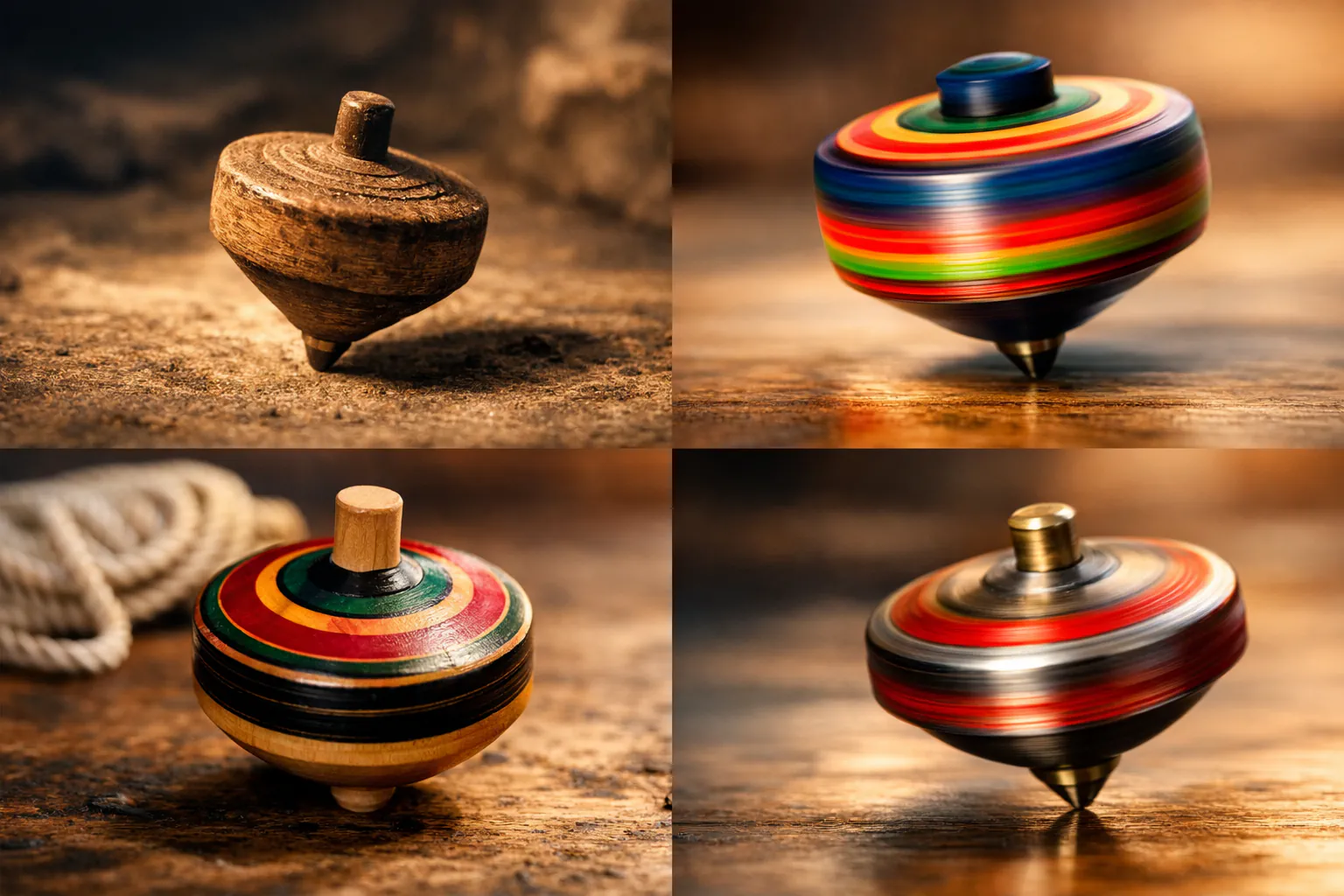
在人類所有玩具之中,陀螺可能是歷史最悠久的一種。這個看似簡單的小物件,只需要一個尖端、一個重心,再加上一點力量,就能在地面上長時間旋轉。它沒有電池,沒有螢幕,也沒有複雜結構,但卻能讓無數孩子沉迷其中。正因為這種純粹與直接,陀螺在世界各地的文明之中都曾出現,並且跨越數千年依然存在。
考古學家在不同地區的遺址中,都發現過陀螺的痕跡。最早的陀螺可以追溯到古代中國、古希臘與古羅馬時期。早期的材料通常十分簡單,例如木頭、陶土、骨頭或石頭。孩子們只需要用手旋轉,或用繩子拉動,便能讓陀螺開始轉動。雖然形式樸素,但旋轉帶來的穩定與速度,往往讓人感到不可思議。
在中國傳統民間遊戲之中,「打陀螺」曾經是非常常見的娛樂。玩家會先用繩子纏繞陀螺,再用力拉出,使陀螺在地面高速旋轉。當陀螺開始減速時,人們會使用鞭子輕輕抽打,使其再次加速。這種玩法不只是遊戲,也是一種技巧的比拼。誰能讓陀螺轉得更久、更穩定,往往就能成為孩子群體中的高手。
在北方地區,冬天結冰的河面或廣場更成為打陀螺的理想場地。光滑的冰面能讓陀螺旋轉得更久,也讓比賽更加激烈。孩子們會帶著自己的陀螺聚在一起,互相比較形狀、重量與技巧。某些特別設計的陀螺甚至能旋轉數分鐘以上,成為整個遊戲中的焦點。
除了中國,陀螺在日本也有深厚的文化。日本人稱陀螺為「獨樂」。在江戶時代,陀螺不僅是孩子的玩具,也成為職人展示技巧的工具。許多木工師傅會製作精美的木製陀螺,並在表面繪上鮮豔的圖案。當陀螺旋轉時,色彩會形成特殊的視覺效果,看起來像一個旋轉的彩色圓盤。
日本的陀螺表演還發展出各種高難度技巧,例如將陀螺拋到手掌再接住,或在繩子上進行旋轉。這些表演常出現在節慶或街頭活動之中,使陀螺從一個普通玩具,變成兼具娛樂與藝術的表演形式。
從科學角度來看,陀螺之所以能保持直立旋轉,是因為角動量與陀螺效應。當物體快速旋轉時,它會傾向維持自己的旋轉軸方向,因此不容易倒下。這種現象看似神奇,但其實是物理學中的基本原理。許多科學教育者甚至會利用陀螺來解釋旋轉運動與力學概念,讓學生更容易理解抽象的物理理論。
陀螺的原理也被應用在現代科技之中。例如飛機與航天器的導航系統,常常需要利用陀螺儀來保持方向穩定。智能手機中的感應裝置,也會使用類似的旋轉感測技術。換句話說,一個古老的童年玩具,其實與現代科技世界有著密切關係。
進入二十世紀之後,陀螺再次迎來新的發展。塑膠與金屬材料的出現,使玩具設計更加多樣化。某些設計會在陀螺內部加入金屬環,使重量集中在邊緣,從而延長旋轉時間。這些改良讓陀螺不再只是簡單玩具,而是一種可以研究平衡與速度的設計。
到了二十一世紀,陀螺甚至與動畫、漫畫和遊戲結合,形成全新的競技玩具。孩子們不只是讓陀螺旋轉,而是在專門的競技場中進行對戰。不同的陀螺擁有不同重量、形狀與攻擊方式,玩家可以透過組裝與調整,設計出自己的戰術。這種玩法讓陀螺從單純娛樂,變成具有策略與競技性的玩具。
即使在電子遊戲高度發展的今天,陀螺仍然沒有消失。原因也許很簡單。它不需要電源,也不需要複雜規則,只要輕輕一轉,就能開始運動。當人們看到陀螺穩定地旋轉時,往往會產生一種難以言喻的吸引力。
或許正是因為這種簡單與純粹,使陀螺能夠穿越數千年的歷史。不同時代的人們,都曾經蹲在地上,看著一個小小的物體不停旋轉。那個畫面,在古代與現代之間幾乎沒有差別。
在玩具世界裡,有些玩具會隨著科技進步而消失,有些玩具則會被新的娛樂方式取代。但陀螺似乎屬於另一種存在。它不依賴任何時代,也不需要複雜技術。只要有人願意輕輕地把它轉動,它就能繼續旋轉下去。
也許正因如此,陀螺才會在歷史的長河裡,一直沒有停止。從古代孩子的手中,到今天的玩具店貨架,它始終保持著同樣的魅力。那是一種來自旋轉的樂趣,也是人類童年最簡單、最持久的遊戲之一。
English Version
The spinning top is one of the oldest toys in human history, with origins that can be traced back over five thousand years across multiple civilizations, making it a universal symbol of play, motion, and curiosity. Despite its simple form—a solid body designed to spin around a central axis—the spinning top embodies complex physical principles and cultural meanings that have allowed it to endure across generations. From ancient clay and wooden tops discovered in archaeological sites to modern precision-engineered versions made from plastic and metal, the evolution of the spinning top reflects both technological advancement and the timeless appeal of rotational motion. At its core, the spinning top operates on the principles of angular momentum and gyroscopic stability. When set into motion, the top spins rapidly, creating a stabilizing force that allows it to maintain its upright position despite the influence of gravity. This phenomenon, though intuitive in play, represents a fundamental concept in physics that continues to be studied and applied in various scientific and engineering contexts. The act of spinning a top transforms invisible forces into a visible and mesmerizing display, making abstract principles tangible and accessible. Across cultures, spinning tops have taken on diverse forms and meanings, often reflecting local materials, craftsmanship, and traditions. In some regions, tops were used in competitive games, where players would test their skill in achieving the longest spin or knocking opponents’ tops out of a designated area. In others, they held symbolic or ritual significance, representing cycles, balance, or the passage of time. This cultural versatility highlights the adaptability of the spinning top as both a toy and a cultural artifact. The methods of spinning also vary widely, from simple hand-twisting techniques to the use of strings, sticks, or mechanical launchers, each adding a different layer of skill and engagement. From a developmental perspective, the spinning top offers valuable benefits, particularly in enhancing hand-eye coordination, timing, and motor control. Successfully launching a top requires precise movement and an understanding of force application, encouraging players to refine their technique through practice. This process of trial and error fosters patience and persistence, as small adjustments can lead to significant improvements in performance. Additionally, observing the top’s motion can spark curiosity about how and why it behaves as it does, providing an entry point into scientific thinking. In the modern era, spinning tops have experienced periodic revivals, often influenced by trends, competitions, or popular media. Contemporary variations include battling tops with customizable components, high-speed performance models, and even digital integrations, demonstrating the toy’s ability to adapt while retaining its fundamental essence. However, the traditional spinning top continues to hold a special place due to its simplicity and the directness of its interaction. Unlike many modern toys that rely on electronics or predefined functions, the spinning top invites open-ended exploration, allowing each user to discover their own techniques and experiences. Socially, spinning tops have historically brought people together, whether in friendly competitions or communal play, reinforcing the idea that simple objects can create shared moments of joy and connection. For many adults, the spinning top evokes strong feelings of nostalgia, recalling childhood memories of outdoor play and hands-on engagement. For children today, it remains a captivating introduction to motion and balance, offering a sensory experience that is both entertaining and educational. Ultimately, the spinning top endures because it captures a fundamental aspect of human fascination—the beauty of motion and the challenge of control. It transforms a basic physical action into a rich and rewarding experience, bridging the gap between play and understanding. As a toy that has persisted for millennia, the spinning top stands as a testament to the enduring power of simplicity, demonstrating that even the most basic forms can hold profound depth and universal appeal.