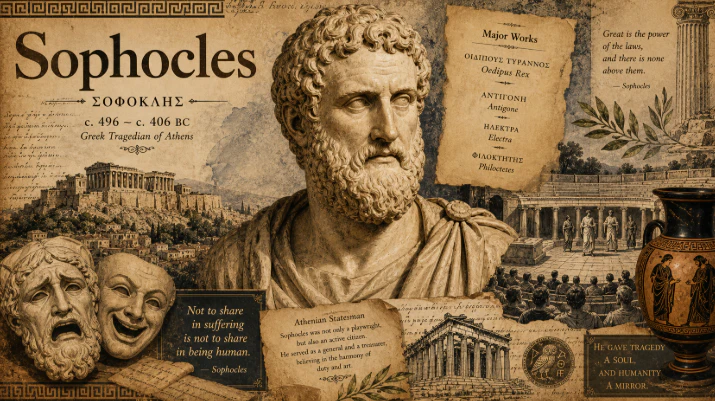
Sophocles以深刻的人性描寫與命運主題,將古希臘悲劇推向巔峰,其作品至今仍深刻影響戲劇與哲學思考。
Sophocles stands as one of the greatest tragedians of ancient Greece, shaping drama through powerful explorations of fate, human conflict, and moral responsibility.
中文
索福克勒斯生於雅典的黃金時代,是古希臘三大悲劇詩人之一,他的一生橫跨政治與文化高度繁榮的時期,深受民主制度與宗教信仰的影響,年輕時便以才華在戲劇競賽中嶄露頭角,據傳他一生創作超過百部劇作,並多次在酒神祭中奪得冠軍,這些作品不僅展現高度的詩性與結構美,更深入探討人性、命運與神意之間的衝突,在他的代表作中,《伊底帕斯王》被視為悲劇藝術的巔峰之作,故事講述一位試圖逃避命運的國王,最終卻一步步走向早已注定的悲劇,他在不知情的情況下弒父娶母,當真相揭開時,面對的不是外在懲罰,而是內心的崩潰與自我審判,這種對命運不可抗拒的描寫,使觀眾產生深刻的震撼與反思,《安提戈涅》則展現個人良知與國家法律的對立,女主角為了遵循內心的道德選擇違抗王命,最終付出生命代價,這種衝突凸顯了人類在權力與信念之間的掙扎,索福克勒斯在戲劇形式上也帶來重要革新,他增加了舞台上的演員數量,使角色互動更加複雜,同時強化情節推進與心理描寫,讓戲劇更具現實感與張力,他的語言優雅而富有節奏,能在詩意與戲劇性之間取得平衡,觀眾不僅被故事吸引,更被人物內心的掙扎所打動,在他的作品中,人並非單純的受害者,而是在命運與選擇之間承擔責任的存在,他讓悲劇不只是命運的安排,更是人性與決策的結果,這種深層思考影響後世無數文學與哲學作品,索福克勒斯不僅是戲劇家,更是人性觀察者,他透過舞台呈現人類最根本的困境與矛盾,使觀眾在觀看時不只是感受悲傷,而是重新思考生命的意義與價值,他的作品跨越時代,至今仍被反覆演出與研究,成為理解古希臘文化與人類命運觀的重要窗口,他所建立的悲劇結構與人物塑造方式,至今仍是現代戲劇與敘事藝術的重要基礎,他讓戲劇成為探討倫理、責任與存在的場域,使藝術與思想在舞台上交織出永恆的力量
English Version
Sophocles emerged during the height of Athenian cultural achievement, becoming one of the most influential playwrights in the history of drama, his career flourished in a society where theatre was both artistic expression and civic ritual, allowing him to explore the tensions between individual will and divine order, he composed over a hundred plays and earned repeated victories in dramatic festivals, gaining recognition not only for his poetic skill but also for his innovative approach to storytelling, among his surviving works Oedipus Rex stands as a defining example of tragic structure, following a king determined to uncover the truth about a plague that devastates his city, only to discover that he himself is the source of the curse, his journey is marked by determination and blindness, both literal and symbolic, revealing how human knowledge can lead to devastating self realization, Sophocles crafts a narrative where fate is unavoidable yet deeply intertwined with personal choices, creating a powerful emotional experience for the audience, in Antigone he shifts focus to the clash between moral conviction and political authority, portraying a young woman who defies the king to honor her family and divine law, her resistance highlights the enduring conflict between conscience and power, and raises questions about justice, obedience, and sacrifice, Sophocles also transformed theatrical technique by expanding the number of actors on stage and reducing the dominance of the chorus, allowing for more dynamic dialogue and psychological depth, his characters are complex and driven by inner conflicts that feel strikingly modern, his language balances lyrical beauty with dramatic clarity, drawing audiences into both the emotional and intellectual dimensions of the story, rather than presenting fate as an external force alone, he reveals how human decisions contribute to inevitable outcomes, making tragedy a reflection of responsibility as much as destiny, his influence extends far beyond ancient Greece, shaping Western literature, philosophy, and dramatic theory for centuries, his works continue to be performed and studied because they confront universal questions about identity, truth, and the limits of human control, Sophocles demonstrates that tragedy is not merely about suffering but about understanding the fragile balance between knowledge, power, and human vulnerability, ensuring his place as a timeless voice in the exploration of the human condition