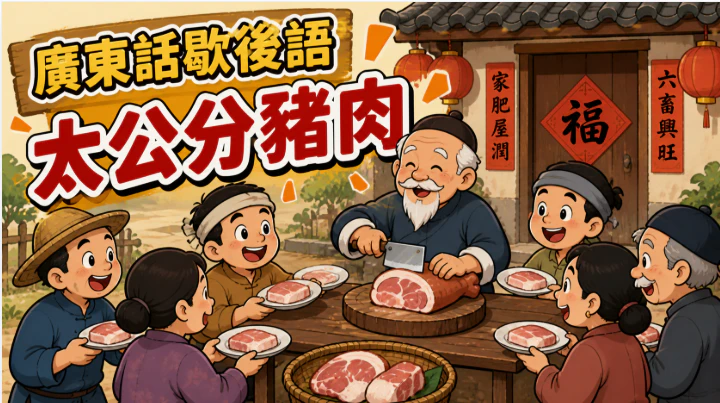
分配資源時,公平往往是最重要的原則。《太公分豬肉》正好描繪一種人人有份、講求平均的分配方式。
When it comes to sharing resources, fairness is often the guiding principle. This Cantonese saying illustrates a situation where everyone receives an equal share.
意思
中文
「太公分豬肉」這句廣東話歇後語,源於傳統農村或宗族社會中長者主持分配食物的情景,尤其是將一整頭豬分給不同家庭時,強調公平與平均。「太公」象徵德高望重、具權威的人,而「分豬肉」則是一項需要公正與細心的工作。這個畫面引申為一種處事方式,即在分配資源、利益或機會時,盡量做到人人有份,不偏不倚。這句歇後語帶有正面含義,強調公平與均衡,但在某些語境下亦可能帶有輕微批評意味,例如當分配過於平均而忽略實際差異或貢獻時。它反映出社會對公平的重視,同時也提醒人們,在追求平均的同時,是否亦應考慮效率與實際需要。在現代社會中,這種說法常用於描述資源分配、政策安排或團隊合作中的分工與回報問題,既可以是讚賞,也可以是反思。
English Version
This idiom originates from traditional communal settings where a respected elder would oversee the fair distribution of food, such as dividing a whole pig among families. The “elder” represents authority and trust, while the act of dividing meat requires careful judgment to ensure fairness. Figuratively, the phrase describes situations where resources, benefits, or opportunities are distributed equally among all parties involved. It generally carries a positive connotation, emphasizing fairness and inclusiveness. However, in some contexts, it may also suggest an overly equal distribution that overlooks differences in contribution or need. The expression reflects a cultural appreciation for fairness, while also inviting reflection on whether equality always leads to the best outcome. In modern settings, it is often used to describe how resources are allocated in organizations, policies, or collaborative efforts, highlighting both its strengths and potential limitations.
用法
中文
這句歇後語常用於形容平均分配的情況,例如利益、資源或工作機會人人有份。可用於讚賞公平,也可帶點調侃,例如:「今次真係太公分豬肉,人人有份。」
English Version
This expression is used to describe situations where things are shared equally among everyone. It can be used positively to praise fairness, or humorously to comment on equal distribution regardless of differences.
小故事:
中文
阿美所在的公司年終發放獎金時,一向按照表現評分分配。今年,公司管理層決定改變方式,採取平均分配,讓所有員工都能獲得相同金額。消息公布後,有人感到高興,因為每個人都有收穫;也有人覺得不太公平,因為努力與成果沒有被區分。阿美聽到同事討論時說:「今次真係太公分豬肉,人人有份。」她自己則抱著平常心,認為這種方式雖然未必最理想,但至少能維持團隊氣氛。之後,公司在下一年重新調整制度,結合平均與績效,讓分配更平衡。這次經歷讓大家明白,公平有不同形式,而最重要的是找到適合整體的方式。
English Version
Amy’s company used to distribute year-end bonuses based on performance evaluations. This year, however, management decided to divide the bonus equally among all employees. When the announcement was made, some people were pleased because everyone received something, while others felt it was unfair since individual effort was not recognized. During a discussion, Amy remarked, “It’s like everyone gets an equal share this time.” She personally remained neutral, seeing the approach as a way to maintain team harmony, even if it wasn’t perfect. The following year, the company adjusted its system again, combining equal distribution with performance-based rewards. Through this experience, employees realized that fairness can take different forms, and the key is finding a balance that works for everyone.
結語
中文
公平不只是一種分配方式,更是一種需要平衡的智慧。人人有份之中,也需兼顧差異。
English Version
Fairness is not just about equal sharing, but about thoughtful balance. True equity considers both inclusion and difference.