《香港百貨 013》香港八佰伴百貨歷史|阿信傳奇與新市鎮百貨黃金年代 | Yaohan Hong Kong History|From Oshin’s Legacy to Hong Kong’s Retail Empire
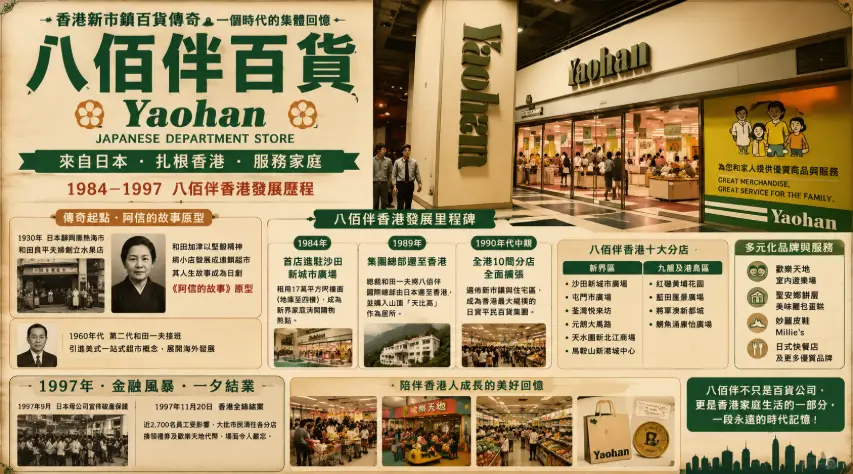
八佰伴曾是香港1980至1990年代最具代表性的日資百貨品牌之一,以平民化日式百貨模式攻佔新市鎮市場。從沙田新城市廣場開始,八佰伴不但改變香港人的購物習慣,更成為無數家庭與小朋友的集體回憶。
Yaohan became one of Hong Kong’s most recognizable Japanese retail giants during the 1980s and 1990s. By bringing affordable Japanese-style department stores into emerging residential districts, the company transformed shopping culture for an entire generation of Hong Kong families.
中文
香港八佰伴(Yaohan)是1980至1990年代香港最具代表性的日資平民百貨集團之一,其發展故事不僅與日本零售業歷史緊密相連,更與風靡亞洲的經典日劇《阿信的故事》有深厚淵源。八佰伴起源於1930年的日本靜岡縣熱海市,由和田良平與妻子和田加津創辦,最初只是一間街邊小型水果店。戰後日本經濟困難,和田加津憑著堅毅不屈精神,與丈夫一步步把小店發展成地方連鎖超市。由於著名編劇橋田壽賀子曾是和田家鄰居,深受其奮鬥經歷感動,因此以和田加津的人生故事作藍本,創作出轟動亞洲的勵志劇《阿信的故事》,令八佰伴家族成為日本商界傳奇之一。1960年代,第二代掌門人和田一夫接班後,把美國大型超級市場與一站式購物概念引入日本,並開始積極推動八佰伴國際化。其後集團大舉進軍海外市場,包括東南亞、中國及香港。與大丸、三越、崇光等主要集中於港島核心商業區的日資百貨不同,八佰伴選擇以新市鎮與住宅區作為發展重心,主打家庭式與平民化路線,成功建立獨特市場定位。1984年,香港首間八佰伴於沙田新城市廣場正式開幕。當時新城市廣場剛落成不久,而八佰伴一口氣租下由地庫至四樓共約17萬平方呎樓面,規模極為龐大,幾乎成為整個商場核心。店內設有大型日式超級市場、食品部、時裝部、家品部、美食廣場與兒童玩具區,成為新界居民全新的消閒與購物中心。由於當時沙田與新界東人口快速增長,八佰伴迅速成為家庭周末活動熱點。很多香港人首次接觸日本食品、日式便當、日本家居用品與平價日系時裝,都是從八佰伴開始。1980年代後期,八佰伴在香港發展極為成功,總裁和田一夫更高度看好香港與中國市場。1989年,他作出震驚日本商界的決定,把八佰伴國際總部由日本遷至香港,象徵香港正式成為集團全球發展核心。和田一夫更斥資購入山頂豪宅「天比高」,顯示對香港前景充滿信心。進入1990年代後,八佰伴進入全盛時期,香港分店數目增至10間,遍布全港大型住宅區與新市鎮,包括沙田新城市廣場、屯門市廣場、荃灣悅來坊、元朗大馬路、天水圍新北江商場、馬鞍山新港城中心、紅磡黃埔花園、藍田匯景廣場、將軍澳新都城與鰂魚涌康怡廣場等。與其他日資百貨相比,八佰伴更加貼近香港普通家庭生活。它不只售賣日本進口商品,更把超級市場、家庭百貨、美食、玩具與娛樂元素結合,形成大型綜合式購物體驗。當時不少香港家庭習慣一家大小到八佰伴購物、吃飯與玩樂,小朋友則對店內玩具部及歡樂天地遊樂場留下深刻回憶。除了百貨業務外,八佰伴集團亦積極擴展其他品牌,包括經營室內遊樂場「歡樂天地」、聖安娜餅屋、妙麗鞋店及多間日式快餐店,幾乎滲透香港家庭日常生活。八佰伴亦是最早積極進軍中國市場的日資零售集團之一。1995年,全球建築面積最大的百貨商場「上海第一八佰伴」正式開幕,開幕首日錄得超過107萬人次進場,更創下健力士世界紀錄。和田一夫當時積極推動全球化擴張,希望建立橫跨亞洲的大型零售帝國。然而,這種高速擴張策略亦埋下巨大危機。為了支持全球開店計劃,八佰伴大量舉債及發行公司債券,加上中國及海外市場投資成本龐大,令集團財務結構日漸脆弱。1990年代中期,日本泡沫經濟爆破後,日本本土消費市場長期低迷,而1997年亞洲金融風暴爆發更成為致命打擊。香港與亞洲零售市道急速下滑,日本八佰伴於1997年9月率先申請破產保護,震驚亞洲商界。同年11月20日,香港八佰伴突然宣布全線結業,遣散接近2700名員工。當日大批持有八佰伴禮券的市民與家長趕往分店退款或換購貨品,亦有不少小朋友捧著歡樂天地代幣排隊,場面成為香港90年代最經典集體回憶之一。雖然八佰伴最終因金融危機與過度擴張而倒下,但它曾深刻改變香港新市鎮的零售文化,亦成為無數香港人成長記憶中不可取代的一部分。
English Version
Yaohan was one of the most influential Japanese retail chains in Hong Kong during the 1980s and 1990s, remembered not only for its department stores but also for the family lifestyle culture it introduced to the city’s rapidly growing new towns. The company’s roots began in 1930 in Atami, Shizuoka Prefecture, when Ryohei Wada and his wife Katsu Wada opened a small fruit stall. Their humble beginnings later inspired one of Japan’s most beloved television dramas. During the difficult post-war years, Katsu Wada became known for her determination and resilience as she helped transform the small family business into a local supermarket chain. Screenwriter Sugako Hashida, who had once lived near the Wada family, used Katsu’s life story as inspiration for the famous television series Oshin, which became a cultural phenomenon across Asia. As a result, the Yaohan story became closely associated with perseverance, family values, and entrepreneurial spirit. In the 1960s, the founders’ son Kazuo Wada took over the company and introduced the American-style one-stop supermarket concept to Japan. Under his leadership, Yaohan expanded aggressively overseas, targeting rapidly developing Asian markets including Hong Kong, China, and Southeast Asia. Unlike Japanese department stores such as Daimaru, Mitsukoshi, and Sogo that focused mainly on prime commercial districts, Yaohan adopted a completely different strategy in Hong Kong. The company concentrated on newly developed residential areas and emerging satellite towns, positioning itself as a family-oriented department store for ordinary households rather than luxury shoppers. In 1984, the first Hong Kong Yaohan store opened inside New Town Plaza in Sha Tin. The branch was enormous by local standards, occupying approximately 170,000 square feet across multiple levels from the basement to the fourth floor. It quickly became the centerpiece of the newly opened shopping complex. The store combined a Japanese supermarket, fashion departments, household goods, toy sections, food halls, and restaurants under one roof, creating a modern retail experience that was still relatively new in Hong Kong. For many residents in the New Territories, Yaohan became more than a department store — it became a weekend destination where families could spend entire afternoons shopping, dining, and relaxing together. Many Hong Kong people experienced Japanese snacks, bento meals, stationery, home appliances, and affordable Japanese fashion for the first time through Yaohan. Following the success of the Sha Tin flagship, Yaohan expanded rapidly across Hong Kong throughout the late 1980s and early 1990s. Kazuo Wada became extremely optimistic about Hong Kong and mainland China’s future economic potential. In 1989, he shocked Japanese business circles by relocating Yaohan International’s global headquarters from Japan to Hong Kong, symbolizing the company’s growing focus on Asia outside Japan. Wada also purchased the luxury Peak residence “Skyhigh,” demonstrating his confidence in Hong Kong’s future. At its peak during the mid-1990s, Yaohan operated ten branches across Hong Kong, all strategically located in major residential districts including Sha Tin, Tuen Mun, Tsuen Wan, Yuen Long, Tin Shui Wai, Ma On Shan, Whampoa Garden, Lam Tin, Tseung Kwan O, and Kornhill. The company’s approachable image and family-friendly atmosphere made it especially popular among middle-class households. Unlike many traditional department stores, Yaohan integrated supermarkets, toy stores, restaurants, entertainment zones, and lifestyle products into a single shopping environment. One of the most memorable features for children was “Wonderland,” the indoor amusement center operated by the group. Yaohan also expanded into bakery chains, shoe stores, and Japanese fast-food restaurants, becoming deeply woven into everyday Hong Kong life. Beyond Hong Kong, Yaohan pursued ambitious expansion plans throughout Asia and mainland China. In 1995, the company opened Shanghai No. 1 Yaohan, which became the world’s largest department store by floor area at the time. The grand opening attracted more than one million visitors in a single day and earned a Guinness World Record. However, behind the rapid growth lay severe financial risks. Yaohan relied heavily on debt financing and aggressive borrowing to support its international expansion. At the same time, Japan’s economic bubble had already collapsed, weakening the company’s domestic operations. When the Asian Financial Crisis erupted in 1997, retail markets across Hong Kong and Asia deteriorated rapidly. Yaohan’s fragile financial structure collapsed under the pressure. In September 1997, Yaohan Japan filed for bankruptcy protection, shocking the international retail industry. On November 20, 1997, Yaohan Hong Kong suddenly announced the closure of all branches and dismissed nearly 2,700 employees. Scenes of customers rushing to redeem gift vouchers and children lining up with leftover amusement tokens became some of the most unforgettable images of Hong Kong’s retail history during the late 1990s. Although Yaohan ultimately fell because of overexpansion and financial crisis, its influence on Hong Kong’s shopping culture remains enormous. For many residents who grew up during the 1980s and 1990s, Yaohan was not just a department store but a symbol of family life, childhood memories, and the golden age of Hong Kong’s new town culture.
總結
八佰伴曾是香港新市鎮百貨文化的代表,以平民化日式購物模式深入家庭生活,即使最終因金融風暴倒下,仍然是無數香港人的童年與黃金年代回憶。
Yaohan transformed shopping habits for an entire generation in Hong Kong, blending Japanese retail culture with everyday family life and leaving behind a lasting legacy despite its dramatic collapse during the Asian Financial Crisis.